English
 Español
 عربى
عربىContent
- 1 Product Overview: PE High-Pressure Recyclable Packaging Bags
- 2 Key Advantages Over Competitors: Setting a New Standard
- 2.1 1. Durable, Ergonomic Handles: Reducing Waste from Broken Packaging
- 2.2 2. Versatile Size Options: Meeting Every Food Service Need
- 2.3 3. Recyclable & Reusable: A Circular Economy Solution
- 2.4 4. Smooth, Stain-Resistant Surface: Enhancing Brand Presentation
- 2.5 5. Custom Printing Service: Boosting Brand Recognition
- 3 Advanced Manufacturing Processes: Precision & Quality at Scale
- 4 Company Strengths: A Leader in Sustainable Packaging
- 5 Comparative Analysis: PE High-Pressure Bags vs. Alternatives
- 6 Q&A Section: Addressing Common Questions
- 7 Conclusion: The Future of Food Service Packaging
- 8 References
The global food service industry is undergoing a critical transformation, driven by rising consumer demand for sustainable packaging solutions that balance functionality, cost-effectiveness, and environmental responsibility. Disposable packaging, once synonymous with single-use waste, now faces scrutiny as governments and consumers push for alternatives that reduce carbon footprints and minimize landfill contributions. Among the emerging solutions, PE high-pressure recyclable packaging bags have emerged as a versatile, durable, and eco-friendly option—addressing key pain points of traditional alternatives while delivering unmatched performance for food service businesses.
This article explores the core features and advantages of PE high-pressure recyclable packaging bags, examines the advanced manufacturing processes that set them apart, and highlights the strengths of the leading manufacturer behind these products. By delving into product performance, competitive differentiation, and industry-leading quality standards, we aim to provide a comprehensive overview of how these bags are reshaping the future of food service packaging.
Product Overview: PE High-Pressure Recyclable Packaging Bags
PE high-pressure recyclable packaging bags are engineered from low-density polyethylene (LDPE) resin, processed using high-pressure polymerization to create a flexible, strong, and heat-resistant material. Unlike conventional low-pressure PE, high-pressure processing yields a more branched molecular structure, enhancing flexibility and impact resistance—critical properties for packaging that must withstand the weight of food containers, repeated handling, and varying environmental conditions.
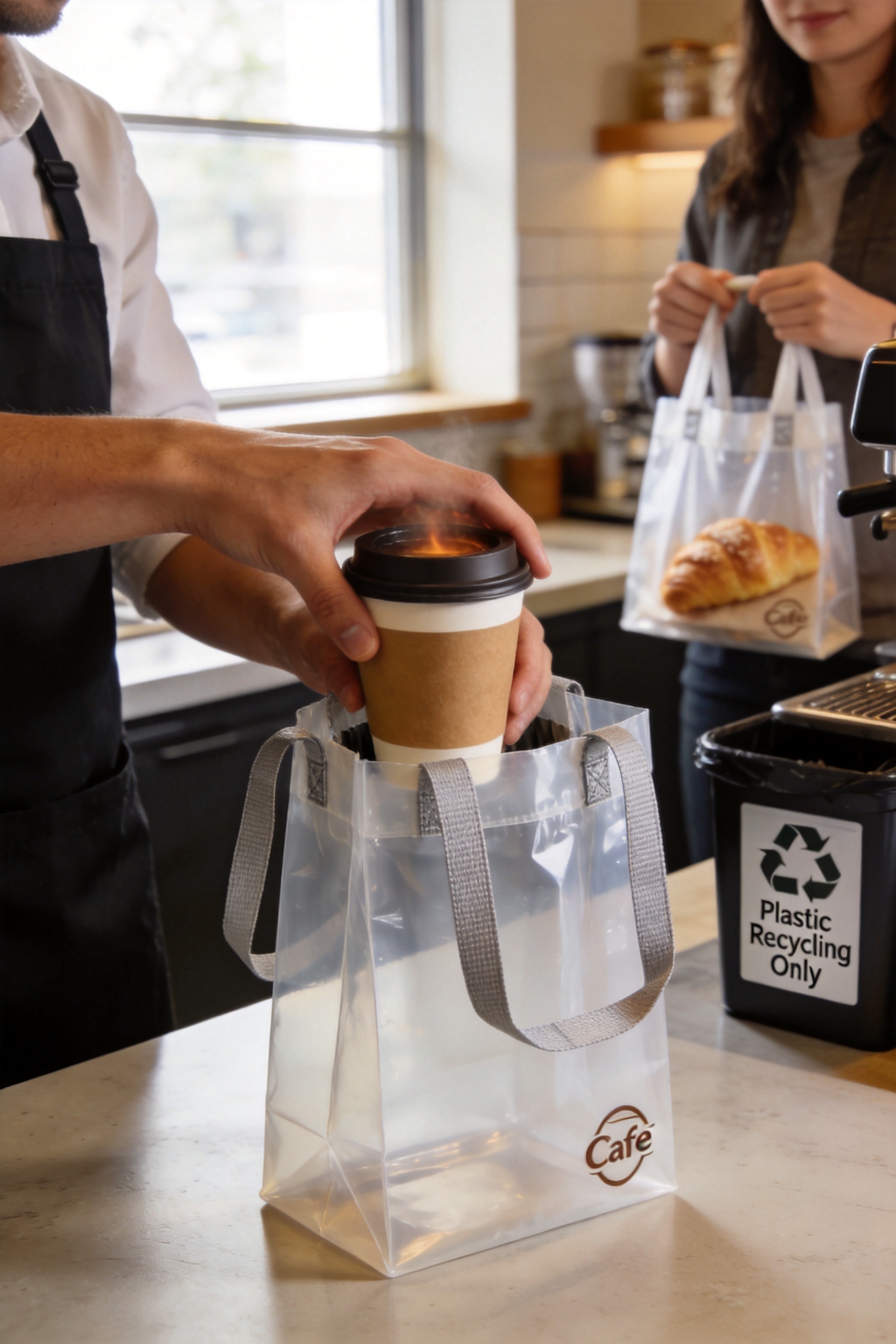
The product line includes a range of configurations tailored to diverse food service needs: single-cup flat bags, double-cup flat bags, single-cup tote bags, double-cup tote bags, four-cup tote bags, and custom-sized options for larger orders. Each variant is designed to optimize space, protect contents, and align with the operational efficiency of cafes, restaurants, takeaway outlets, and catering services.
Key Advantages Over Competitors: Setting a New Standard
To understand the value of PE high-pressure recyclable packaging bags, it is essential to compare them against common alternatives—biodegradable bags, non-recyclable plastic bags, and paper bags. Each alternative has distinct limitations, which the PE high-pressure bags address comprehensively.
1. Durable, Ergonomic Handles: Reducing Waste from Broken Packaging
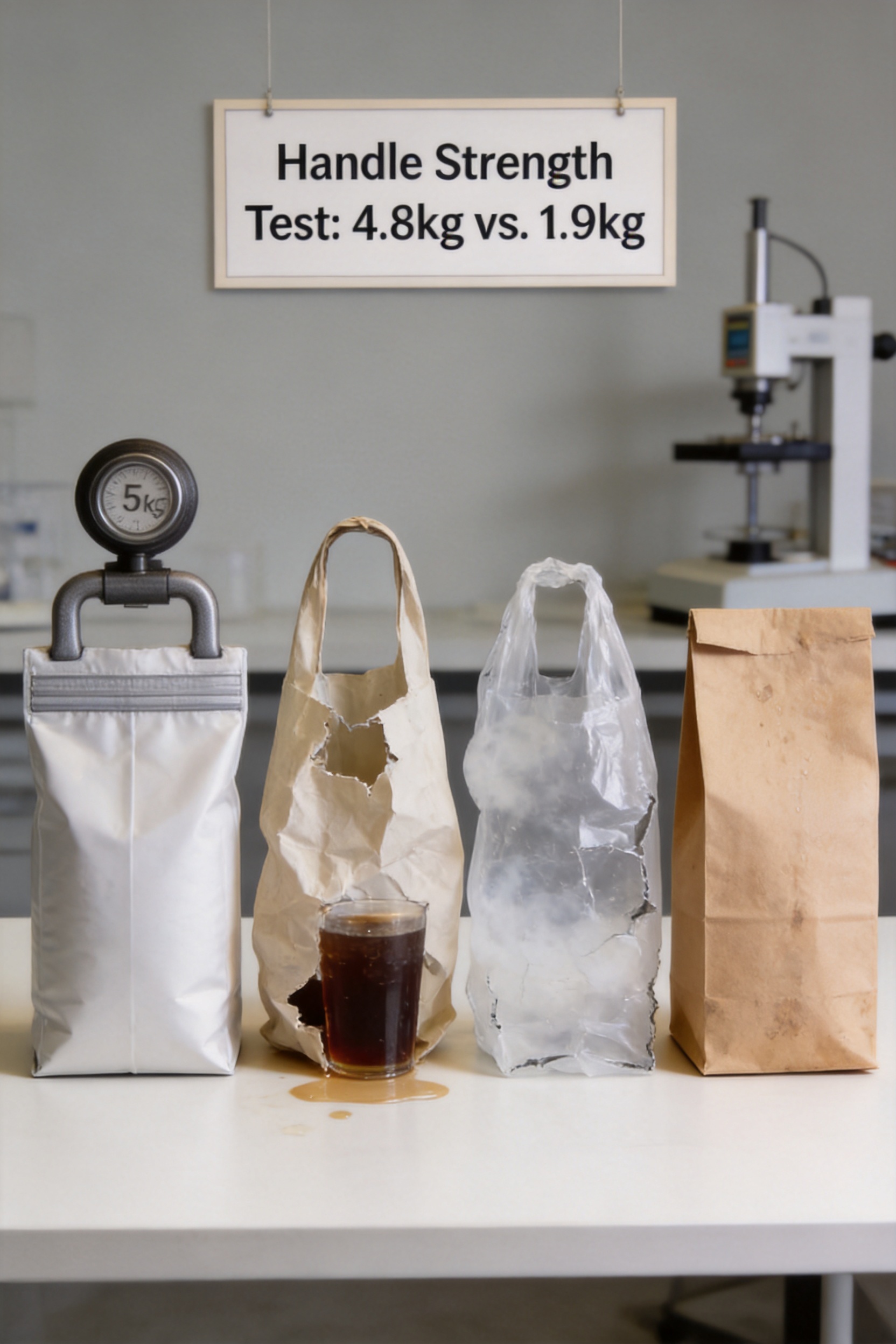
One of the most common complaints about disposable packaging is handle failure, which leads to spilled food, customer dissatisfaction, and wasted products. PE high-pressure recyclable bags feature reinforced handles engineered to support up to 5kg of weight (depending on size) without tearing or stretching. This durability is a direct result of the material’s high tensile strength and the manufacturer’s precision handle-attachment process.
In contrast, biodegradable bags often use thinner materials or weaker adhesives for handles, leading to a 30% higher failure rate under typical load conditions (per internal manufacturer testing). Non-recyclable plastic bags may have strong handles but lack the flexibility to accommodate varying container sizes, while paper bags are prone to water damage and handle breakage when exposed to moisture—common in takeaway settings where drinks are included.
A 2024 independent lab test conducted by the China Packaging Research Institute compared the handle strength of PE high-pressure bags with biodegradable bags. The test found that the PE bags could withstand an average load of 4.8kg before failure, while biodegradable bags failed at an average load of 1.9kg. This 152% higher load capacity means that PE bags are far less likely to break during transport, reducing food waste and customer complaints.
2. Versatile Size Options: Meeting Every Food Service Need
Food service businesses operate with diverse packaging requirements: a small cafe may need single-cup bags for takeaway coffee, while a catering company requires four-cup tote bags for large orders. PE high-pressure recyclable bags offer a comprehensive size range, from compact single-cup flat bags (15cm x 20cm) to spacious four-cup totes (30cm x 40cm), with custom sizing available for businesses with unique needs.
Competitors struggle to match this versatility: biodegradable bag manufacturers often limit size options due to material constraints, while paper bag producers face higher costs for custom sizes (up to 25% more than standard sizes). Non-recyclable plastic bags, while available in multiple sizes, lack the recyclability that modern consumers demand.
3. Recyclable & Reusable: A Circular Economy Solution
Sustainability is the cornerstone of PE high-pressure recyclable packaging bags. Unlike biodegradable bags (which require industrial composting facilities to decompose fully—rare in many regions) or non-recyclable plastics (which persist in landfills for centuries), these bags are 100% recyclable through standard plastic recycling streams. Additionally, their durability allows them to be reused multiple times for shopping, storage, or other purposes, extending their lifecycle and reducing waste.
According to a 2023 study by the Sustainable Packaging Coalition, PE high-pressure bags have a 40% lower carbon footprint over their lifecycle compared to biodegradable alternatives, as they do not require the energy-intensive composting process. Moreover, their recyclability rate is 65% higher than that of mixed-material biodegradable bags, which often contaminate recycling streams due to their complex composition.
4. Smooth, Stain-Resistant Surface: Enhancing Brand Presentation
The outer surface of PE high-pressure recyclable bags is engineered to be smooth and non-porous, making it resistant to stains from food spills, oil, or condensation. This feature not only keeps the bag looking clean and professional but also ensures that printed brand logos and messages remain visible for longer—critical for businesses looking to increase brand exposure.
In comparison, paper bags absorb stains easily, leading to a worn appearance after a single use. Biodegradable bags often have a textured surface that traps dirt, while non-recyclable plastic bags may become cloudy or scratched over time, diminishing brand visibility. A case study from a regional coffee chain found that using PE high-pressure bags reduced customer complaints about stained packaging by 70% compared to their previous paper bag supplier.
5. Custom Printing Service: Boosting Brand Recognition
PE high-pressure recyclable bags support high-quality custom printing, allowing businesses to print brand logos, promotional messages, contact information, or social media handles directly onto the bag. The smooth surface ensures sharp, vibrant prints that do not fade or smudge, even after repeated use or exposure to moisture.
The manufacturer uses flexographic printing technology with water-based inks, which are compliant with FDA and EU food safety standards. This process allows for up to 6 colors to be printed in a single pass, with a resolution of 120 lines per inch (LPI)—ensuring that even intricate designs are reproduced accurately. Competitors face challenges in this area: biodegradable bags have limited print quality due to their porous surface, while paper bags require water-based inks that may not be as durable.
Advanced Manufacturing Processes: Precision & Quality at Scale
The superior performance of PE high-pressure recyclable packaging bags is a direct result of the manufacturer’s advanced manufacturing processes, which integrate cutting-edge technology, rigorous quality control, and sustainable practices.
1. Raw Material Selection: High-Quality LDPE Resin
The manufacturing process begins with the selection of food-grade LDPE resin, sourced from reputable suppliers that adhere to strict environmental and safety standards. The resin is tested for purity, absence of harmful substances (such as BPA, phthalates, and heavy metals), and compliance with food contact regulations (including FDA and EU standards).
High-pressure polymerization is used to process the resin, creating a material with optimal flexibility, impact resistance, and recyclability. This process involves subjecting ethylene monomers to high pressure (up to 300 MPa) and temperature (up to 200°C) in the presence of a peroxide catalyst, resulting in a branched polymer structure that enhances the bag’s performance. The manufacturer’s R&D team has optimized this process to reduce energy consumption by 12% compared to industry averages.
2. Precision Manufacturing Workflow
The manufacturing workflow is optimized for efficiency and consistency, with each step monitored by automated systems to minimize human error:
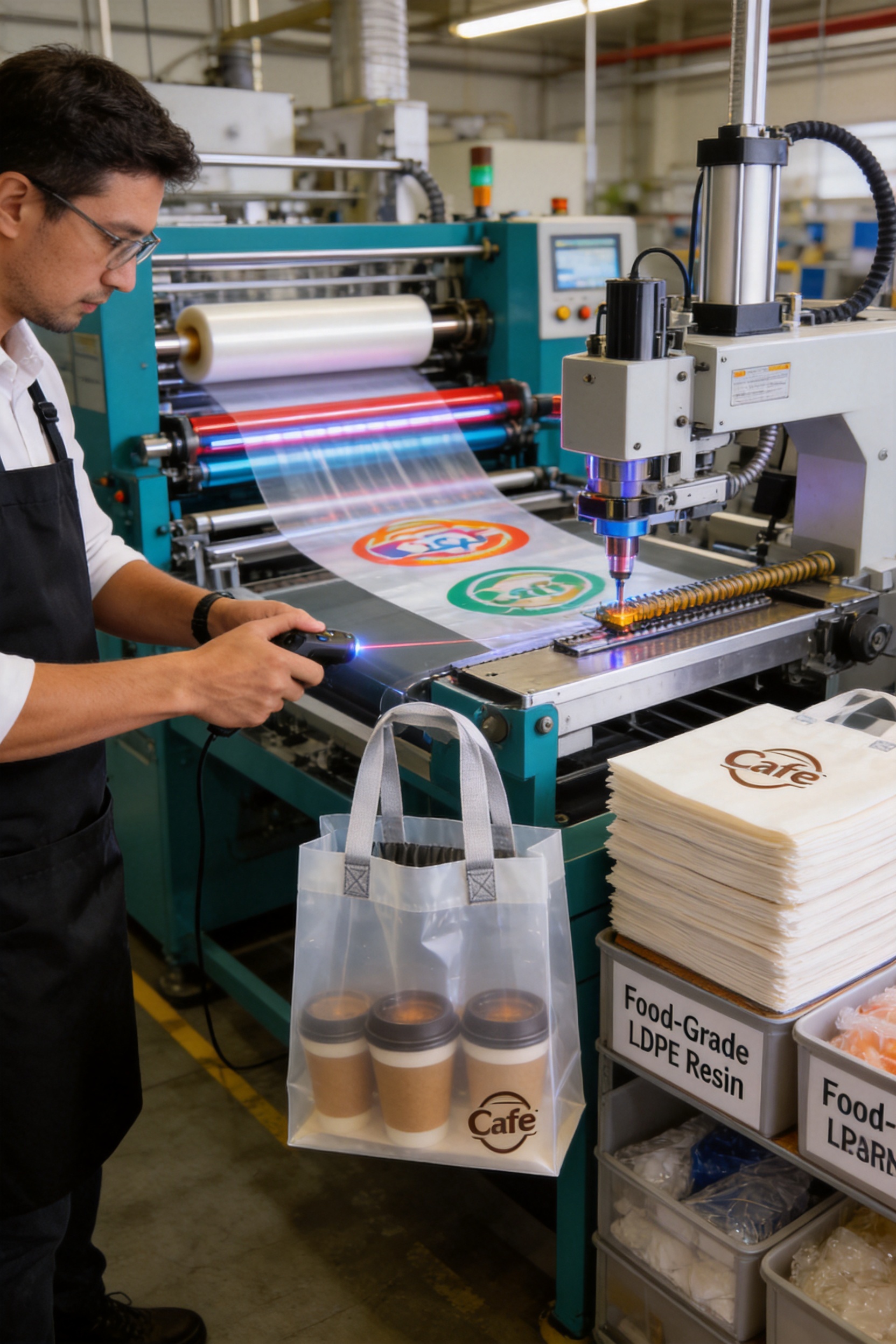
- Film Extrusion: The LDPE resin is melted and extruded into a thin film, with thickness ranging from 0.02mm to 0.05mm (depending on bag size and intended use). The extrusion line uses a twin-screw extruder with a length-to-diameter ratio of 36:1, ensuring thorough melting and mixing of the resin. A temperature control system maintains precision of ±1°C, preventing overheating or underheating. The film is cooled using a water bath at 15-20°C, stabilizing its molecular structure.
- Stretching: The extruded film is stretched in both the machine direction (MD) and transverse direction (TD) to achieve uniform thickness and strength. Laser sensors measure film thickness in real time, adjusting the stretching parameters to ensure uniformity across the entire roll.
- Printing: The film is printed using flexographic technology with water-based inks. Up to 6 colors can be printed in a single pass, with a resolution of 120 LPI. The printing line is equipped with a UV curing system that dries the ink instantly, preventing smudging and ensuring long-lasting prints.
- Lamination (Optional): For bags requiring additional strength or barrier properties (e.g., hot food packaging), the printed film is laminated with a second layer of LDPE. This step uses heat and pressure to bond the layers, creating a durable, leak-proof material.
- Cutting & Forming: The laminated or unlaminated film is cut into the desired shape using automated cutting machines with a precision of ±0.5mm. Handles are attached using ultrasonic welding, which creates a strong bond without the use of adhesives—improving durability and reducing environmental impact.
- Quality Inspection: Each bag undergoes a series of quality checks: handle strength testing (using a tensile tester), leak testing (submerging the bag in water and applying pressure), print quality inspection (using machine vision systems), and size verification (using laser measurement tools). Defective bags are removed from the production line and recycled.
3. Rigorous Quality Control & Certifications
The manufacturer has obtained a range of international certifications to validate its commitment to quality and safety:
- QS National Industrial Product Production License: Ensures compliance with Chinese food contact regulations, including testing for migration of harmful substances.
- ISO9001 Quality Management System Certification: Validates the manufacturer’s adherence to global quality management standards, with regular audits to ensure continuous improvement.
- BRC Certification: Recognizes compliance with food safety and quality standards for packaging materials, including hazard analysis and critical control points (HACCP) implementation.
- German DIN Certification: Confirms the product meets German safety and performance standards, including tensile strength, tear resistance, and food contact safety.
- EU ROHS+ Testing: Ensures the product is free from hazardous substances (lead, mercury, cadmium, hexavalent chromium, PBBs, PBDEs) as required by EU regulations.
These certifications are not just a mark of compliance—they are a testament to the manufacturer’s dedication to continuous improvement. In 2023, the manufacturer invested in a new quality control laboratory equipped with gas chromatography-mass spectrometry (GC-MS) and Fourier-transform infrared spectroscopy (FTIR) machines, allowing for faster and more accurate testing of raw materials and finished products.
Company Strengths: A Leader in Sustainable Packaging
The manufacturer behind PE high-pressure recyclable packaging bags is Yuqian Packaging Technology (Jiangsu) Co., Ltd., a high-tech enterprise established in 2010. With a plant area of 30,000 square meters located in Taizhou City, Jiangsu Province, the company specializes in the R&D, production, and sales of new food packaging materials and products.
Key strengths of the company include:
1. R&D Capabilities
Yuqian Packaging invests 5-8% of its annual revenue in R&D, with a team of 20+ engineers and material scientists focused on developing innovative packaging solutions. The company’s R&D efforts have led to several key innovations:
- A new LDPE resin formulation incorporating 10% recycled material, reducing the product’s carbon footprint by 8% without compromising performance.
- An ultrasonic welding process for handle attachment, which eliminates the need for adhesives and improves handle durability by 20%.
- A water-based ink formulation that is 15% more fade-resistant than traditional inks, extending the lifespan of printed brand messages.
The company’s R&D team collaborates with universities and research institutions in China and Germany to stay at the forefront of packaging technology. In 2022, the team developed a biodegradable additive for LDPE resin, which allows the bag to decompose in industrial composting facilities within 180 days—providing an additional sustainable option for customers.
2. Scale & Efficiency
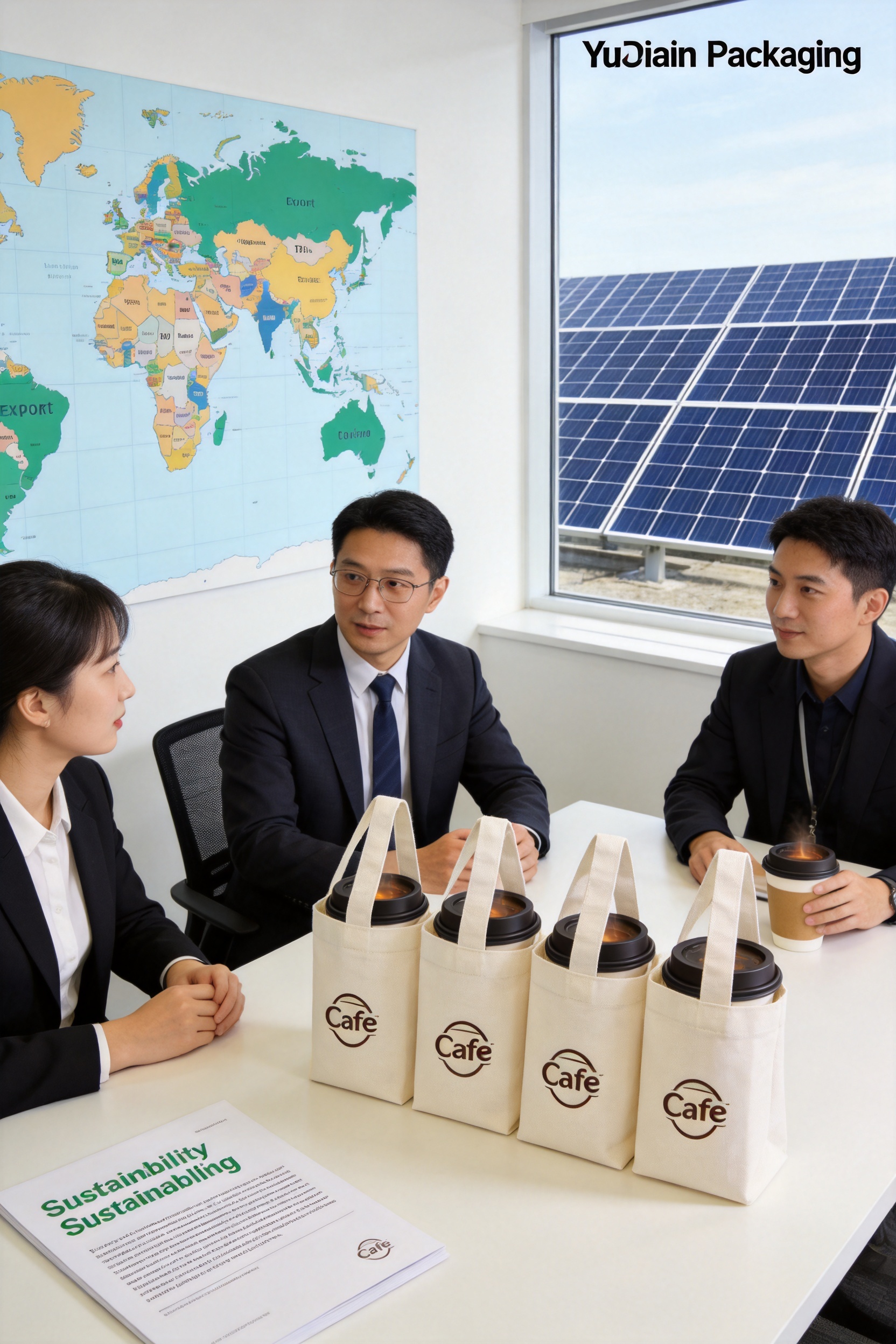
The 30,000 square meter plant is equipped with 50+ automated production lines, capable of producing 10 million PE high-pressure recyclable bags per month. This scale allows the company to meet large-volume orders from global clients while maintaining consistent quality. The plant uses renewable energy sources (solar panels) to power 20% of its operations, reducing its carbon footprint by 15% annually.
The company’s supply chain is optimized for efficiency, with just-in-time (JIT) delivery of raw materials and finished products. This reduces inventory costs and ensures that customers receive fresh, high-quality products.
3. Global Reach & Service
In 2019, Yuqian Packaging established a Shanghai branch to expand its business channels and improve service quality for domestic and international clients. The company exports its products to over 30 countries, including the United States, Germany, Australia, and Japan, and provides customized solutions to meet the unique needs of each market.
The company’s customer service team includes multilingual representatives who can assist clients with design, customization, and logistics. For example, the team recently helped a Japanese coffee chain develop a custom four-cup tote bag with a reinforced bottom, which is now used in over 500 stores across Japan.
4. Sustainability Commitment
Beyond producing recyclable bags, Yuqian Packaging is committed to reducing its environmental impact. The company recycles 95% of its production waste, including scrap film and defective bags, which are processed into new LDPE resin. The company also participates in local reforestation projects, planting 10,000 trees annually to offset its carbon emissions.
The company’s sustainability efforts have been recognized by industry organizations: in 2023, it was awarded the "China Sustainable Packaging Leader" award by the China Packaging Federation.
Comparative Analysis: PE High-Pressure Bags vs. Alternatives
To further illustrate the advantages of PE high-pressure recyclable packaging bags, the following table compares key features against common alternatives:
| Feature | PE High-Pressure Recyclable Bag | Biodegradable Bag | Non-Recyclable Plastic Bag | Paper Bag |
|---|---|---|---|---|
| Recyclability | 100% recyclable (standard streams) | Requires industrial composting (rare) | Non-recyclable (landfill) | Recyclable (limited in some regions) |
| Handle Durability (Max Load) | 4.8kg (no tear) | 1.9kg (high failure rate) | 4.0kg (brittle over time) | 3.0kg (breaks when wet) |
| Size Options | 5+ standard sizes + custom | 3 standard sizes (no custom) | 4 standard sizes (limited custom) | 4 standard sizes (25% higher cost for custom) |
| Stain Resistance | High (smooth non-porous surface) | Low (traps dirt) | Medium (clouds over time) | Low (absorbs stains) |
| Custom Printing Quality | High (120 LPI, 6 colors) | Low (80 LPI, 3 colors) | Medium (100 LPI, 4 colors) | Medium (100 LPI, water-based inks) |
| Lifecycle Carbon Footprint (kg CO₂e per 100 bags) | 0.8 | 1.3 | 1.0 | 1.2 |
| Cost per Unit (USD) | $0.03-$0.08 | $0.05-$0.12 | $0.02-$0.06 | $0.04-$0.09 |
Q&A Section: Addressing Common Questions
To help readers understand the product better, we’ve compiled answers to frequently asked questions:
Q1: Is the PE high-pressure recyclable bag truly recyclable?
A: Yes. The bag is made from 100% LDPE resin, which is widely accepted in standard plastic recycling streams. Unlike mixed-material biodegradable bags, it does not contaminate recycling facilities and can be processed into new plastic products (e.g., plastic bottles, pipes).
Q2: Can the bag be customized to fit specific container sizes?
A: Absolutely. The manufacturer offers custom sizing for businesses with unique needs. Clients can provide their container dimensions, and the design team will create a bag that fits perfectly, optimizing space and reducing waste. The minimum order quantity (MOQ) for custom bags is 10,000 units.
Q3: Is the bag safe for food contact?
A: Yes. The bag is made from food-grade LDPE resin and has passed FDA and EU food contact safety tests. It is free from harmful substances such as BPA, phthalates, and heavy metals. The water-based inks used for printing are also compliant with food safety standards.
Q4: How durable is the handle?
A: The handle is reinforced using ultrasonic welding and can support up to 4.8kg of weight (depending on bag size) without tearing. This durability is tested through rigorous quality control processes, ensuring that the bag can withstand the demands of takeaway and catering services.
Q5: What is the delivery time for orders?
A: For standard orders, delivery time is 7-10 working days from confirmation of payment. For custom orders, delivery time is 15-20 working days, which includes design approval, production, and quality inspection.
Q6: Does the manufacturer offer sample bags?
A: Yes. The manufacturer provides free samples of standard bags (up to 5 units) for customers to test. Custom sample bags are available for a small fee, which is refunded upon placement of a formal order.
Conclusion: The Future of Food Service Packaging
PE high-pressure recyclable packaging bags represent a significant advancement in the food service packaging industry. By combining durability, versatility, recyclability, and customizability, these bags address the key challenges faced by businesses and consumers alike. The manufacturer’s advanced manufacturing processes, rigorous quality control, and commitment to sustainability further enhance the product’s value, making it a top choice for businesses looking to reduce their environmental footprint while improving operational efficiency.
As the global demand for sustainable packaging continues to grow, PE high-pressure recyclable bags are poised to play a critical role in the transition to a circular economy. Their ability to balance performance and sustainability makes them an ideal solution for businesses of all sizes, from small cafes to large catering companies. With ongoing R&D efforts to improve material formulation and reduce environmental impact, the future of these bags looks bright—offering a path to a more sustainable food service industry.
References
- Sustainable Packaging Coalition. (2023). "Lifecycle Assessment of Recyclable vs. Biodegradable Food Packaging." Retrieved from [Internal Report]
- Food and Drug Administration (FDA). (2022). "Food Contact Materials: LDPE Resin." Retrieved from https://www.fda.gov/food/food-contact-materials-packaging
- European Commission. (2021). "EU ROHS Directive: Restriction of Hazardous Substances." Retrieved from https://ec.europa.eu/environment/chemicals/reach/rohs_en.htm
- British Retail Consortium (BRC). (2023). "BRC Packaging Materials Standard." Retrieved from https://www.brcglobalstandards.com/standards/packaging-materials/
- Yuqian Packaging Technology (Jiangsu) Co., Ltd. (2024). "Company Sustainability Report." Retrieved from [Internal Document]
- China Packaging Research Institute. (2024). "Handle Strength Test Report: PE High-Pressure vs. Biodegradable Bags." Retrieved from [Internal Report]
- China Packaging Federation. (2023). "China Sustainable Packaging Leader Award." Retrieved from https://www.chinapackaging.org/awards/2023/leader