English
 Español
 عربى
Content
- 1 1. Why Cup Lid Performance Matters in Modern Beverage Packaging
- 2 2. Product Overview
- 3 3. One-Piece Leak-Proof Design
- 4 4. Thickened Construction for Durability
- 5 5. Smooth Surface and Hygiene-Oriented Design
- 6 6. Multiple Calibers for Packaging Flexibility
- 7 7. Color Options and Brand Presentation
- 8 8. Stackable Structure and Storage Efficiency
- 9 9. Materials, Recyclability, and Environmental Considerations
- 10 10. Advanced Injection Molding and Manufacturing Process
- 11 11. Quality Management and Certifications
- 12 12. Manufacturing Strengths of Yuqian Packaging Technology
- 13 13. Advantages Over Basic Competing Cup Lids
- 14 14. Applications Across Beverage and Food-Service Markets
- 15 15. Recommended Customer Evaluation Process
- 16 16. Installation, Use, and Storage Considerations
- 17 17. Commercial Value for Beverage Brands
- 18 18. Future Development of Disposable Cup Lids
- 19 19. Questions and Answers
- 19.1 Q1: What is a patented one-piece leak-proof plastic cup lid?
- 19.2 Q2: Which calibers are available?
- 19.3 Q3: How much does the lid weigh?
- 19.4 Q4: What colors can customers choose?
- 19.5 Q5: Is the lid suitable for delivery beverages?
- 19.6 Q6: Is the plastic material recyclable?
- 19.7 Q7: Can the lid be customized?
- 19.8 Q8: What manufacturing technology is used?
- 19.9 Q9: What quality certifications or tests are associated with the manufacturer?
- 19.10 Q10: Can customers receive samples before mass production?
- 19.11 Q11: How does the lid help save storage space?
- 19.12 Q12: What information should be provided for a quotation?
- 19.13 Q13: Is the lid odorless and suitable for food packaging?
- 19.14 Q14: What makes this product different from a basic generic lid?
- 19.15 Q15: Where is the manufacturer located?
- 20 20. Conclusion
- 21 References
- 22 Product: Patented one-piece leak-proof plastic cup lid
In the fast-moving beverage and takeaway food industries, the quality of a cup lid directly influences customer satisfaction, product safety, transport efficiency, and brand reputation. A lid that fits poorly can leak during delivery, create waste, damage packaging, and make the drinking experience inconvenient. By contrast, a well-designed lid provides a secure seal, supports hygienic consumption, improves handling, and helps beverage businesses deliver a more reliable product to their customers.
The patented one-piece leak-proof plastic cup lid is designed to address these practical challenges. It combines a secure one-piece structure, thickened construction, smooth surfaces, flexible color options, multiple calibers, and compatibility with modern beverage packaging requirements. The product is suitable for cold drinks, takeaway beverages, cafés, restaurants, food-service operators, catering businesses, beverage chains, and packaging distributors seeking dependable disposable food packaging components.
Manufactured by Yuqian Packaging Technology (Jiangsu) Co., Ltd., the lid reflects the company’s experience in research, development, injection molding, quality control, and customized packaging production. The company operates a large production facility in Taizhou, Jiangsu Province, and provides OEM services for customers requiring different sizes, colors, materials, and packaging solutions.
1. Why Cup Lid Performance Matters in Modern Beverage Packaging
The disposable cup lid is not simply an accessory. It is a functional packaging component that must work together with the cup, beverage, transportation method, filling process, and intended drinking experience. A suitable lid must balance sealing performance, structural strength, usability, appearance, production efficiency, and safety.
For beverage retailers, leakage is one of the most common packaging problems. Even a small amount of liquid escaping from a lid can stain bags, vehicles, tables, counters, or clothing. In delivery applications, leakage can also affect neighboring orders and lead to customer complaints. For high-volume beverage businesses, repeated leakage creates direct costs through product replacement, refunds, additional cleaning, and damaged brand trust.
A lid must also remain stable when the cup is carried, stacked, placed into a delivery bag, or moved through a distribution system. Thin or poorly formed lids can bend, crack, or detach from the rim. A strong and accurately molded structure helps the lid maintain its shape and fit throughout handling.
In addition to functional performance, customers increasingly expect packaging to be clean, convenient, and visually appealing. The surface of a lid should be easy to clean during production and should not include unnecessary areas where residue can accumulate. The lid should also be simple to stack and store, helping businesses reduce warehouse space and improve operational efficiency.
The patented one-piece leak-proof plastic cup lid has been developed with these requirements in mind. Its design focuses on the relationship between lid structure, cup-rim engagement, material thickness, smooth finishing, and practical use. This integrated approach differentiates it from basic lids that focus only on low-cost production.
2. Product Overview
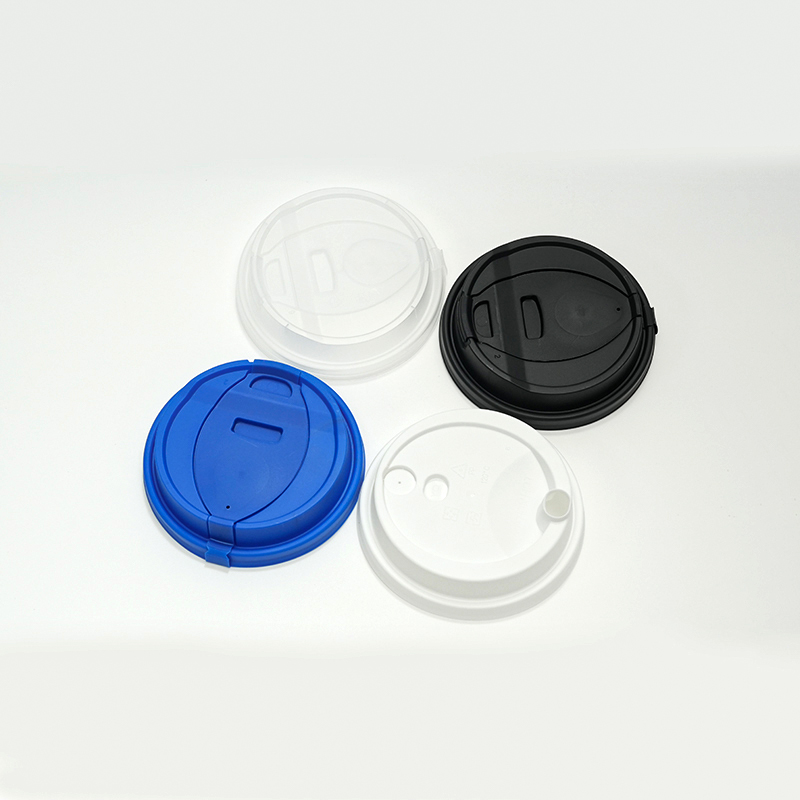
The product is available under two closely related descriptions: the patented leak-proof lid and the patented one-piece leak-proof cover. Both are designed to provide secure closure for compatible beverage cups and are available in common 80 mm and 90 mm calibers.
| Product Type | Available Caliber | Approximate Gram Weight | Available Colors |
|---|---|---|---|
| Patented Leak-Proof Lid | 80 mm / 90 mm | 6 g | Transparent, white, black, red, gold |
| Patented One-Piece Leak-Proof Cover | 80 mm / 90 mm | 6 g | Transparent, white, black, red, gold |
The standard configuration uses a lightweight design with an approximate weight of six grams. This helps reduce material consumption while maintaining the strength needed for everyday takeaway use. The available colors support both practical and branding requirements. Transparent lids allow the beverage and cup contents to remain visible, while white, black, red, and gold options can be selected to coordinate with a company’s packaging identity.
The lid is designed for disposable beverage packaging applications, but its performance benefits also support broader food-service operations. It can be used with drinks prepared for takeaway, delivery, retail counters, catering services, and food-service distribution. Before mass production, customers should confirm cup compatibility, rim dimensions, beverage temperature, filling conditions, and intended usage with the manufacturer.
Patented one-piece leak-proof plastic cup lid
3. One-Piece Leak-Proof Design
The principal feature of this product is its patented one-piece leak-proof construction. A one-piece structure can reduce the number of separate components involved in the lid assembly and helps create a more integrated closure system. When correctly matched with the cup rim, the lid is designed to maintain a secure connection and reduce the risk of liquid escaping during ordinary handling.
Traditional lids may contain several functional areas that are not properly integrated, creating weak points around the drinking opening, rim, or connection zones. A poorly coordinated structure may flex unevenly or become detached when the cup is squeezed or tilted. The one-piece design aims to distribute structural support more consistently across the lid, improving stability and helping the product maintain its form.
Leak resistance depends on several factors, including the lid’s geometry, production accuracy, material selection, cup-rim dimensions, filling level, beverage temperature, and handling conditions. The patented design provides a strong structural foundation, while precise injection molding helps ensure that each production batch remains consistent.
For beverage brands, the value of leak resistance extends beyond convenience. A dependable lid helps protect the appearance of the delivered beverage, reduces packaging waste, and supports a more professional customer experience. It can also make staff operations easier because employees can close cups more quickly and with greater confidence.
Secure Fit and Practical Handling
A lid should fit firmly without requiring excessive force. If the fit is too loose, the lid may come away from the cup during transport. If the fit is too tight or inconsistent, employees may struggle to close the cup efficiently. A precisely manufactured rim interface helps provide a better balance between security and usability.
The patented one-piece leak-proof lid is produced with attention to mold design and injection molding accuracy. These processes are important because even small variations in the sealing area can influence the final fit. Consistent dimensions help businesses standardize their filling and closing procedures across different stores, production lines, and distribution locations.
Reduced Leakage Risk During Transportation
Takeaway beverages are exposed to movement, vibration, tilting, and changes in orientation. Delivery riders and logistics staff may handle packages quickly, and cups may be placed in bags with other food products. A secure lid helps reduce the chance that normal transportation movement will cause the beverage to leak.
The product is not limited to one delivery format. It can support beverages transported in individual bags, multi-cup carriers, cartons, or food-service containers. The final performance will depend on the specific cup, filling volume, carrier, and transport conditions, so practical testing is recommended for each application.
4. Thickened Construction for Durability
The cup lid uses a thickened design to improve durability and resistance to accidental impact. A thicker structure can help the lid withstand everyday handling, including stacking, loading, unloading, and placement into delivery bags. It also helps reduce the likelihood of deformation when the lid is pressed or handled during busy service periods.
Durability is especially important in high-volume beverage operations. During peak hours, cups may be closed quickly and transferred between several workstations. Packaging that bends easily can interrupt production and create unnecessary waste. A more robust lid supports smoother workflows and lowers the risk of defective closures.
The thickened construction is balanced with a lightweight approximate gram weight of six grams. This balance is important because a lid should be strong enough for its application without adding excessive material, shipping weight, or storage burden. Efficient material use can benefit both operating costs and environmental objectives.
Resistance to Falling and Impact
Accidental drops can occur during filling, packing, or delivery. While no disposable lid can guarantee that a cup will remain undamaged under every impact condition, a durable design can improve the likelihood of maintaining structural integrity during ordinary handling. The product’s thickened construction is intended to enhance resistance to falling and general mechanical stress.
For commercial users, this means fewer interruptions caused by cracked, warped, or detached lids. It also supports a more consistent presentation when beverages reach the end customer. The result is a packaging component that performs as part of a complete service system rather than as a low-cost afterthought.
5. Smooth Surface and Hygiene-Oriented Design
The lid has a smooth surface that supports convenient cleaning and hygienic handling during manufacturing, packaging, and storage. Smooth surfaces are easier to inspect visually and can reduce the accumulation of residue compared with irregular or unnecessarily textured areas.
Hygiene is a central requirement for food and beverage packaging. The lid must be produced, stored, packed, and transported under appropriate conditions. The product description identifies the material as non-toxic, odorless, environmentally friendly, and suitable for food packaging applications. Customers should always confirm the specific material grade, food-contact requirements, and applicable regulatory documentation for their target market before placing an order.
A smooth surface also contributes to visual quality. Transparent lids can maintain a clean appearance and help customers see the beverage, while colored lids can create a consistent presentation across a product range. For retail and takeaway brands, a neat lid surface supports the perception of quality and care.
Support for Efficient Cleaning and Inspection
In a professional manufacturing environment, smooth product surfaces can make visual inspection more practical. Operators can check for obvious defects such as scratches, contamination, incomplete molding, deformation, or color inconsistency. Combined with quality control procedures, this supports the production of more uniform packaging components.
For distributors and beverage operators, a smooth lid is also easier to handle during warehouse inspection. Its surface allows staff to identify visible damage before products are sent to stores or customers. This can help improve inventory management and reduce the chance of defective packaging reaching the point of use.
6. Multiple Calibers for Packaging Flexibility
The patented leak-proof lid is available in 80 mm and 90 mm calibers. Offering more than one standard size helps the manufacturer serve different cup formats and beverage applications. Selecting the appropriate caliber is essential because a lid’s sealing performance depends on accurate compatibility with the cup rim.
The 80 mm option may be suitable for smaller or medium-sized beverage cups, depending on the cup design. The 90 mm option can support larger cup formats and applications that require a broader opening. The actual fit should be confirmed through samples and dimensional testing because nominal diameter alone does not describe every aspect of cup-lid compatibility.
Multiple caliber options are useful for beverage businesses that sell different drink sizes. Instead of sourcing every lid from a separate supplier, a customer may be able to coordinate several packaging specifications through one experienced manufacturer. This can simplify procurement, improve communication, and support more consistent quality management.
Customization Beyond Standard Sizes
Yuqian Packaging Technology provides OEM services and can discuss customized requirements involving size, shape, color, material selection, and packaging configuration. Customization is valuable when a customer needs a lid that matches a proprietary cup, supports a specialized beverage format, or reflects a particular brand identity.
Custom development normally begins with technical communication and sample evaluation. The customer provides cup dimensions, drawings, product use conditions, desired appearance, and expected order quantities. The manufacturer can then assess the requirements, develop or adjust tooling, produce samples, and support testing before mass production.
Customization should not be limited to appearance. The most successful packaging projects consider sealing performance, stacking, filling-line compatibility, storage conditions, transport, and end-user convenience. By approaching the lid as part of a complete packaging system, businesses can achieve better results than by choosing a component based only on price or color.
7. Color Options and Brand Presentation
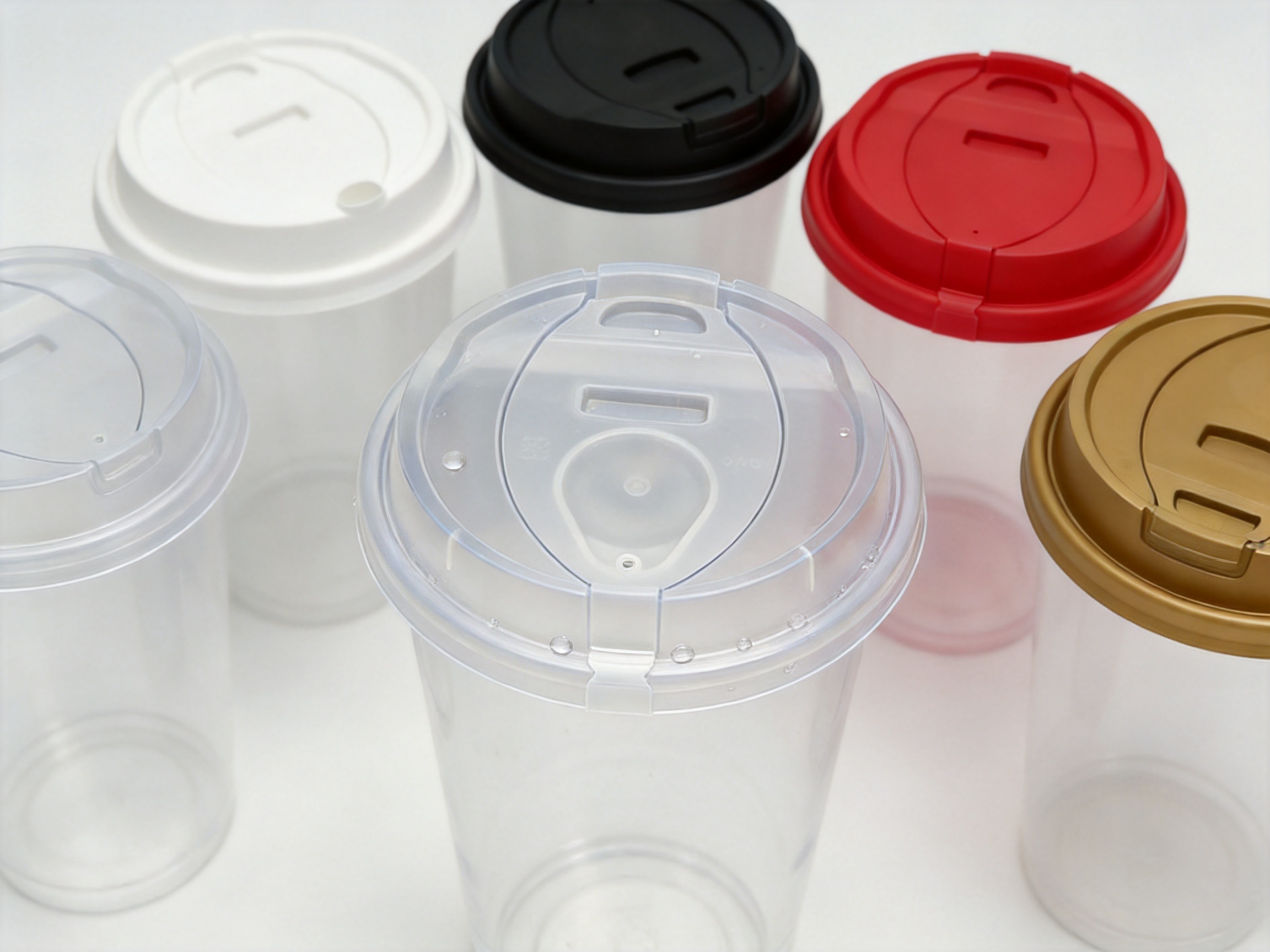
The product is available in transparent, white, black, red, and gold. These options allow beverage companies to coordinate lids with cups, labels, sleeves, carrier bags, and other packaging materials.
Transparent lids are widely valued because they preserve visibility of the beverage and allow customers to see the drink’s color, ice, toppings, or foam. They can also create a clean and neutral appearance suitable for many beverage categories.
White lids offer a bright and simple visual style. They can complement paper cups, printed designs, and minimalist packaging systems. Black lids can create a premium or modern appearance, while red and gold lids may be useful for seasonal campaigns, event packaging, or stronger color-based brand identities.
Color consistency is an important part of mass production. The manufacturer’s production and quality control processes help support consistent appearance across orders. However, color can be influenced by material, additives, lighting, and production conditions. Customers seeking exact color matching should provide an approved reference sample or color specification before production.
Appearance as a Competitive Advantage
Many standard disposable lids are visually generic. They may perform a basic function but provide limited opportunity for differentiation. A choice of colors and customized production enables a beverage brand to create a more recognizable packaging system.
When the lid, cup, sleeve, and carrier share a coherent visual identity, the entire product can appear more professional. This is particularly important in cafés, specialty beverage stores, catering services, and delivery businesses where packaging is part of the customer’s first impression.
8. Stackable Structure and Storage Efficiency
The lid is designed to be stackable, helping save space during storage and distribution. Stackability is a practical advantage that affects warehouse organization, transportation efficiency, workplace safety, and staff productivity.
Disposable packaging is often stored in large quantities. If lids cannot be stacked effectively, they may occupy unnecessary shelf space or require oversized cartons. A stackable design helps businesses keep products organized and may allow more units to be stored within the same area.
Stacking can also support faster service operations. Staff can place a manageable stack near the beverage preparation area and take lids one at a time as orders are completed. A stable stack reduces clutter and helps create a more orderly workspace, which is useful during busy service periods.
For distributors, efficient stacking can improve carton utilization and simplify pallet planning. The exact logistics benefit depends on packaging configuration, carton dimensions, and order quantity, but stackability provides an important foundation for efficient handling.
9. Materials, Recyclability, and Environmental Considerations
The product information emphasizes recyclable and reusable material concepts. The cup lid is designed with attention to environmental protection, and the product materials can be recycled and reused where suitable recycling systems are available.
Environmental performance should be evaluated across the full life cycle of packaging. Important factors include raw material selection, material consumption, manufacturing energy, transportation, product use, waste collection, sorting, and recycling infrastructure. A recyclable plastic lid can contribute to resource efficiency, but its actual recovery depends on local waste-management systems and the availability of appropriate recycling facilities.
The lightweight approximate six-gram design may help reduce material usage compared with heavier alternatives. Lower weight can also reduce transportation loads and packaging volume. At the same time, the lid must retain sufficient strength and sealing performance for its intended application. The goal is not simply to use less material, but to use material efficiently while maintaining reliable functionality.
Businesses seeking to improve their environmental profile should also consider responsible purchasing, correct disposal instructions, and communication with customers. Packaging design and waste-management education can work together to improve recovery rates.
Balancing Sustainability and Performance
A lid that leaks or breaks can cause additional waste because the beverage, cup, carrier, and surrounding packaging may all need to be replaced. Reliable performance therefore supports sustainability by reducing avoidable product loss. Durability, material efficiency, and recyclability should be considered together rather than treated as separate goals.
Yuqian Packaging Technology states that it continues to explore new materials and processes in response to market demand for more environmentally responsible packaging. This research-oriented approach can help customers evaluate future packaging solutions as regulations, consumer expectations, and recycling systems continue to develop.
10. Advanced Injection Molding and Manufacturing Process
The manufacture of a dependable plastic cup lid requires more than simply placing material into a mold. The quality of the final product is influenced by product design, mold precision, material preparation, injection parameters, cooling, demolding, inspection, packaging, and storage.
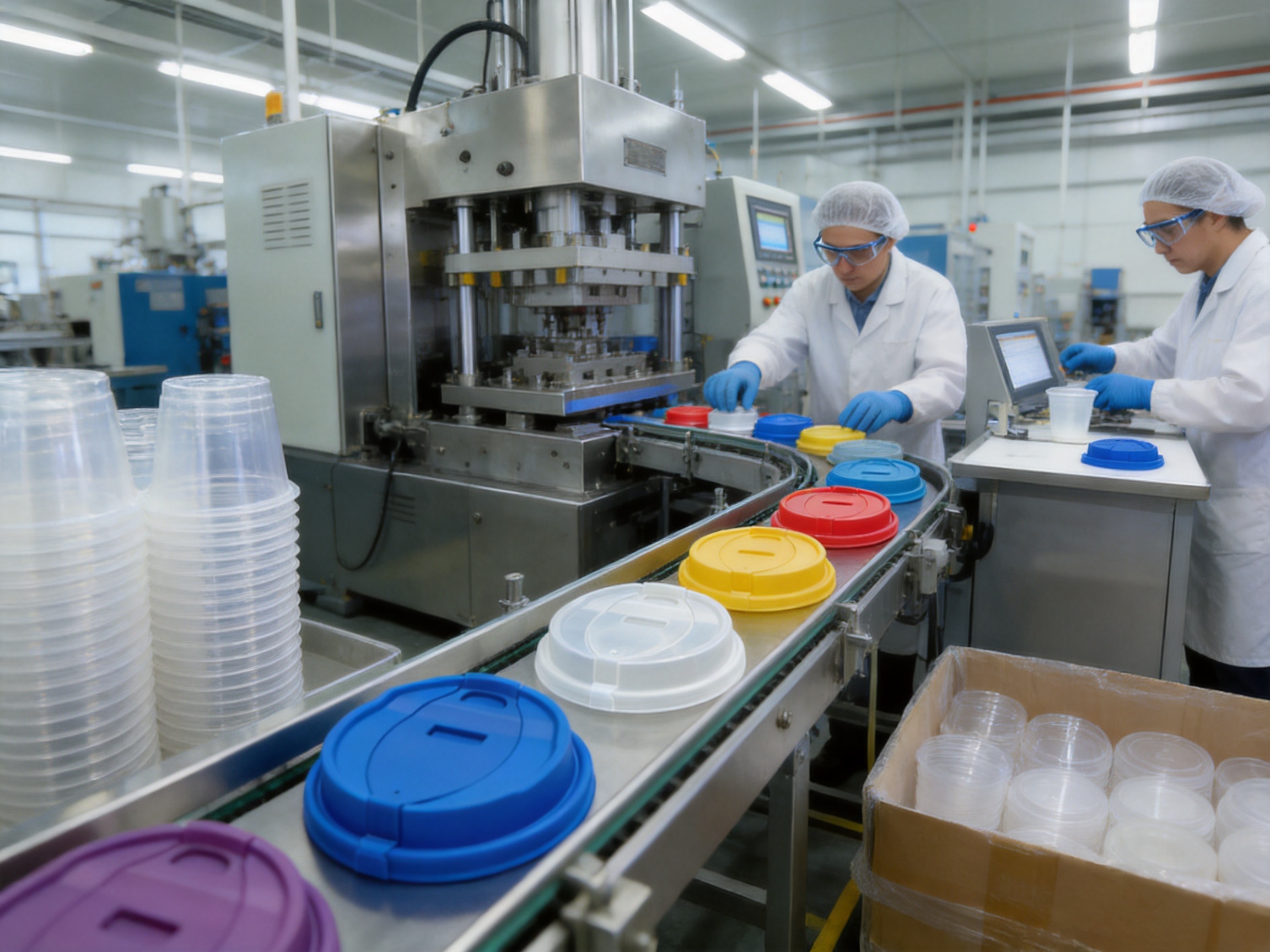
Yuqian Packaging Technology uses injection molding technology to produce the patented one-piece leak-proof lid. Injection molding is well suited to high-volume production because it can create repeated shapes with consistent dimensions and efficient cycle times. When supported by accurate mold engineering and process controls, it can produce the fine details required for sealing, stacking, drinking openings, and structural reinforcement.
Product and Mold Design
Manufacturing begins with the design of the lid geometry. Engineers must consider the cup-rim interface, sealing area, wall thickness, drainage or drinking features, demolding requirements, stacking points, and material flow. A well-designed mold helps ensure that the plastic fills the cavity evenly and that the finished lid maintains the intended form.
For a leak-proof product, mold precision is especially important. Variations in the rim or sealing section can affect how the lid interacts with the cup. The company’s experience in patented lid development supports the creation of tooling intended for accurate and repeatable production.
Material Preparation and Injection
Suitable plastic material must be selected according to the intended application, required strength, appearance, environmental objectives, and food-contact requirements. Material preparation may include controlled storage, drying where necessary, color addition, and batch identification.
During injection molding, material is heated and injected into the mold under controlled pressure. The process must be adjusted to achieve proper filling, minimize visible defects, maintain dimensional stability, and support efficient production. Important parameters may include temperature, pressure, injection speed, holding time, cooling time, and mold temperature.
Cooling and Demolding
After the mold cavity is filled, the product must cool sufficiently to maintain its shape. Cooling conditions can influence shrinkage, warping, surface quality, and final dimensions. Proper demolding helps prevent scratches, deformation, or damage to the rim and drinking features.
Because the product is designed for stacking and secure fitting, dimensional stability is essential. Controlled cooling and careful demolding support the consistency required for downstream inspection and customer use.
Inspection and Packing
Finished lids should be inspected for appearance, dimensions, weight, color, structural integrity, and fit-related characteristics. Depending on the customer’s requirements, inspection may include sampling, visual checks, dimensional testing, sealing tests, drop or handling evaluations, and documentation review.
After inspection, the lids are packed in a way that protects them from contamination, deformation, moisture, and unnecessary handling. Appropriate packaging also supports efficient counting, warehousing, transportation, and final distribution.
11. Quality Management and Certifications
Yuqian Packaging Technology describes a comprehensive quality management system covering raw material selection, production and processing, finished-product inspection, and customer requirements. Such a system helps connect individual production steps and supports traceability and consistency.
The company reports that its packaging operations have passed or obtained several certifications and tests, including the QS national industrial product production license, ISO 9001 quality management system certification, BRC certification, German authoritative safety DIN certification, and EU RoHS+ testing. Certification status and scope should be confirmed directly with the manufacturer for the specific product, material, production site, and destination market.
ISO 9001 is associated with quality management principles such as process control, customer focus, documented procedures, corrective action, and continual improvement. BRC certification is relevant to food-related manufacturing and supply-chain expectations. RoHS-related testing addresses restrictions on certain hazardous substances in applicable products and markets. DIN-related requirements may concern recognized German standards or safety expectations, depending on the relevant certification scope.
For importers and packaging distributors, documentation is an important part of supplier evaluation. In addition to certificates, customers may request material declarations, food-contact documents, test reports, product specifications, production samples, packaging details, and inspection records.
12. Manufacturing Strengths of Yuqian Packaging Technology
Yuqian Packaging Technology (Jiangsu) Co., Ltd. was established in 2010 and is located in Taizhou City, Jiangsu Province, China. The company reports a plant area of approximately 30,000 square meters and focuses on the research, development, production, and sales of new food packaging materials and products.
The company’s strengths include product development experience, injection molding capability, quality management, flexible production lines, and OEM service. These capabilities are relevant to customers who need more than a standard catalog product.
Research and Development
The company continues to invest in research and development for new materials and processes. This is particularly important in disposable food packaging, where customers increasingly request lower material consumption, improved sealing, enhanced appearance, and more responsible end-of-life options.
Its patented one-piece leak-proof lid demonstrates an emphasis on product-specific innovation. Rather than relying solely on conventional lid structures, the company has developed a design focused on leak resistance, durability, stackability, and user convenience.
Flexible OEM Production
OEM customers may require different dimensions, shapes, colors, material specifications, printing or packaging arrangements, and order quantities. A flexible production system enables the manufacturer to respond to these requirements more efficiently than a supplier limited to a single standardized model.
The company can support projects from sample development to mass production. This process allows customers to evaluate physical samples, check fit with their cups, test filling and delivery conditions, and confirm appearance before committing to larger quantities.
Supply-Chain and Service Capability
Effective packaging supply involves more than manufacturing. Customers also need timely communication, production scheduling, inspection, packing, and shipment coordination. The company’s experience in domestic and international customer service supports a more organized supply process for beverage and food-packaging buyers.
The company established a Shanghai branch in January 2019 to improve service quality and expand business channels. A broader service network can help support communication with customers, logistics partners, distributors, and international buyers.
13. Advantages Over Basic Competing Cup Lids
The patented one-piece leak-proof lid offers several potential advantages over ordinary low-cost lids. The most important difference is the integrated leak-proof design, which focuses on the relationship between the lid and cup rather than on a simple cover function.
| Evaluation Area | Basic Generic Lid | Patented One-Piece Leak-Proof Lid |
|---|---|---|
| Structural Design | May use a conventional structure with limited integration | One-piece design developed for improved sealing and stability |
| Leak Resistance | Performance may vary with fit and production accuracy | Designed to provide a more secure leak-proof connection when properly matched |
| Durability | May be more vulnerable to bending or impact | Thickened construction supports improved durability |
| Size Options | May be limited to one standard size | Available in 80 mm and 90 mm calibers, with OEM customization support |
| Appearance | Often limited in color selection | Transparent, white, black, red, and gold options |
| Storage | Stackability depends on the design | Designed for stacking and space-saving storage |
| Supplier Support | May focus mainly on product supply | Includes research, sample development, OEM production, and quality support |
These comparisons should be evaluated through product samples and application testing. No lid can perform independently of the cup and operating conditions. Nevertheless, the combination of patented structure, thickened material design, multiple sizes, color options, and manufacturing support gives the product a clear position for customers seeking a more complete packaging solution.
14. Applications Across Beverage and Food-Service Markets
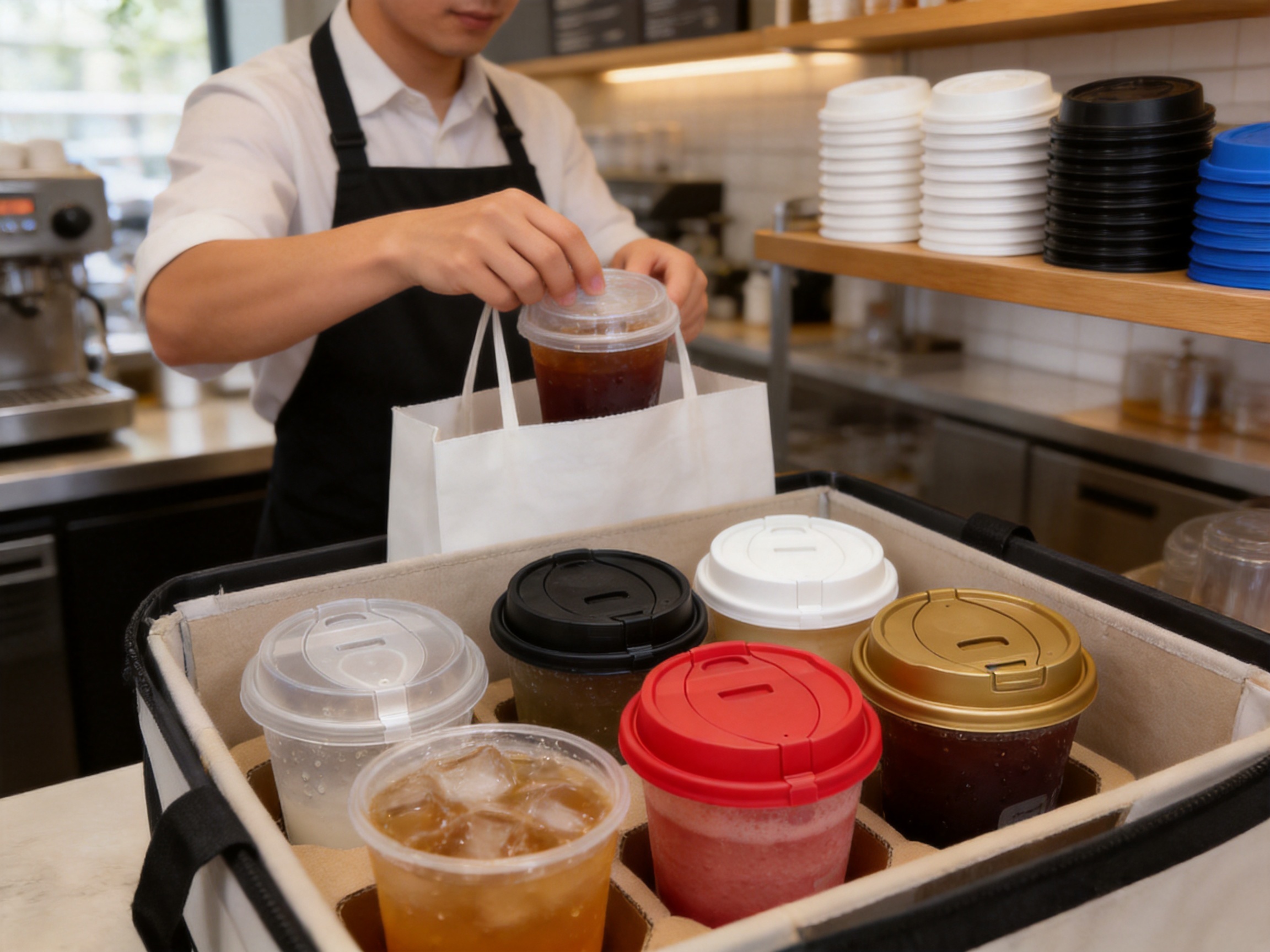
The patented leak-proof plastic cup lid can support numerous commercial applications. Cafés may use it for takeaway coffee, tea, juice, smoothies, milk-based drinks, or specialty beverages. Quick-service restaurants can use it for drinks included with takeaway meals. Catering businesses may benefit from secure lids when preparing beverages for events, meetings, and outdoor service.
Delivery-focused beverage brands have a particularly strong reason to prioritize sealing performance. A drink may travel several kilometers before reaching the customer and may be exposed to vibration, tilting, or sudden movement. A dependable lid helps protect the beverage during this journey.
Food-service distributors can also offer the lid to restaurants, cafés, canteens, hotels, convenience stores, and institutional buyers. Its multiple caliber options and color range make it suitable for different procurement programs.
Brand owners may select transparent lids for product visibility or colored lids for visual differentiation. Businesses with several beverage categories can coordinate lid colors with product types, seasonal promotions, or service channels.
15. Recommended Customer Evaluation Process
Before placing a large order, customers should conduct a structured evaluation. The first step is to provide the manufacturer with the cup’s rim diameter, wall thickness, shape, material, and intended use. If possible, customers should send physical cup samples or technical drawings.
The second step is to test the lid under actual filling conditions. The evaluation should include normal filling levels, ice or toppings where applicable, sealing by production staff, short-term storage, stacking, and transport simulation.
The third step is to inspect the lid after handling. Customers should check for leakage, deformation, separation from the cup, cracking, scratches, color inconsistency, and difficulty during application or removal.
The fourth step is to review documentation. This may include product specifications, material information, food-contact declarations, inspection reports, certification documents, and packaging details. Importers should also confirm regulatory requirements in the destination country.
Finally, customers should evaluate commercial factors such as minimum order quantity, tooling cost, lead time, packaging configuration, shipping method, payment terms, and after-sales communication. A successful supplier relationship depends on both product performance and dependable service.
16. Installation, Use, and Storage Considerations
For the best results, the cup rim should be clean, undamaged, and free from excessive liquid or food residue before the lid is applied. Staff should press the lid evenly around the rim rather than applying force to only one area. A properly closed lid should be checked before the beverage is placed into a carrier or delivery bag.
Cups and lids should be stored in a clean, dry environment away from excessive heat, direct sunlight, chemicals, dust, and crushing pressure. Although the lid is designed to be durable, prolonged exposure to unsuitable storage conditions can affect plastic packaging materials.
Stacked lids should not be compressed beyond the packaging supplier’s recommended arrangement. Excessive pressure may deform the lower units. Stock rotation should follow normal inventory-management principles, and packaging should remain protected until it is ready for use.
17. Commercial Value for Beverage Brands
A reliable lid can contribute to lower operating losses and a better customer experience. When leakage incidents are reduced, businesses may spend less on product replacement, cleaning, refunds, and complaint handling. Staff can also work more efficiently when the lid is easy to apply and fits consistently.
Packaging quality has a direct relationship with brand perception. Customers may associate a leaking or poorly fitted lid with weak product quality, even if the beverage itself is excellent. A clean, secure, and well-designed lid supports a more professional presentation.
The product’s color options provide an additional branding tool. A business can create a recognizable combination of cup, lid, sleeve, and carrier. This visual consistency can strengthen brand recall, especially when beverages are photographed, shared on social media, or delivered to offices and events.
For purchasing managers, supplier consolidation can also create value. Working with one manufacturer that can provide different calibers, colors, and customized designs may simplify procurement and reduce the complexity of managing several packaging suppliers.
18. Future Development of Disposable Cup Lids
The disposable packaging sector is changing as customers request better performance, reduced material consumption, improved recyclability, and more attractive designs. Future cup lids may use new material formulations, optimized wall thickness, advanced molding structures, improved sealing geometry, and more efficient packaging systems.
Manufacturers that combine research and development with production experience are well positioned to respond to these changes. Product innovation must be supported by reliable tooling, controlled manufacturing, documented quality systems, and the ability to scale from prototypes to mass production.
The patented one-piece leak-proof plastic cup lid represents this direction by combining functional design with production practicality. Its development focuses on sealing, durability, stackability, color choice, and customization rather than on a single feature alone.
19. Questions and Answers
Q1: What is a patented one-piece leak-proof plastic cup lid?
It is a disposable beverage lid developed with an integrated one-piece structure intended to provide a secure fit and improved leak resistance when used with a compatible cup. The product is designed for takeaway, delivery, catering, and food-service applications.
Q2: Which calibers are available?
The standard options are 80 mm and 90 mm. Customers should confirm the exact fit using cup samples or technical drawings before ordering.
Q3: How much does the lid weigh?
The listed approximate gram weight is six grams. Actual weight may vary depending on material, color, customization, and production specifications.
Q4: What colors can customers choose?
Available colors include transparent, white, black, red, and gold. Customized colors may be discussed according to order requirements and production feasibility.
Q5: Is the lid suitable for delivery beverages?
Yes. Its leak-proof design and thickened construction are intended to support takeaway and delivery applications. However, customers should test the complete cup-and-lid system under their own filling, stacking, and transportation conditions.
Q6: Is the plastic material recyclable?
The product information states that the materials can be recycled and reused where appropriate. Actual recycling depends on the material specification and local collection and processing infrastructure. Customers should confirm the exact resin and disposal requirements for their market.
Q7: Can the lid be customized?
Yes. OEM customization may include size, shape, color, material selection, and other packaging requirements. Custom projects generally require technical communication, sample approval, and tooling or process evaluation.
Q8: What manufacturing technology is used?
The lid is produced using injection molding technology. The manufacturing process includes mold design, material preparation, injection, cooling, demolding, inspection, and protective packaging.
Q9: What quality certifications or tests are associated with the manufacturer?
The company reports QS national industrial product production licensing, ISO 9001 quality management system certification, BRC certification, German authoritative safety DIN certification, and EU RoHS+ testing. Customers should request current documentation and confirm its scope for the specific product.
Q10: Can customers receive samples before mass production?
As an OEM manufacturer, the company can support sample development and evaluation. Sample testing is recommended to confirm fit, sealing, appearance, stacking, and compatibility with the customer’s cup and filling process.
Q11: How does the lid help save storage space?
The lid is designed to be stackable. Stacking can help businesses organize inventory, reduce storage volume, improve workstation efficiency, and support more practical carton and warehouse planning.
Q12: What information should be provided for a quotation?
Customers should provide the desired caliber, cup specifications, color, material requirements, estimated quantity, packaging method, destination market, customization details, and delivery schedule. Physical cup samples or drawings can improve quotation accuracy.
Q13: Is the lid odorless and suitable for food packaging?
The product description identifies the lid as non-toxic and odorless and presents it as a food-packaging product. Buyers should request the relevant material and food-contact documentation for their intended market and application.
Q14: What makes this product different from a basic generic lid?
Its main differentiators are the patented one-piece leak-proof structure, thickened construction, multiple caliber options, smooth surface, stackable design, color choices, recyclable-material concept, and support from an experienced OEM manufacturer.
Q15: Where is the manufacturer located?
Yuqian Packaging Technology (Jiangsu) Co., Ltd. is located at No. 8 Tongyang Road, Suchen Town, Taizhou City, Jiangsu Province, China.
20. Conclusion
The patented one-piece leak-proof plastic cup lid is designed to meet the practical demands of modern beverage packaging. Its integrated structure supports sealing performance, while the thickened design improves durability and resistance to ordinary handling. Multiple calibers, several color options, smooth surfaces, and stackability provide flexibility for beverage brands, restaurants, distributors, and catering businesses.
The product’s value is strengthened by the manufacturing capabilities of Yuqian Packaging Technology (Jiangsu) Co., Ltd. The company combines research and development, injection molding, mold design, quality management, OEM customization, and supply-chain support. Its reported certifications and testing programs provide additional points for customer evaluation, subject to confirmation of current documentation and product scope.
For customers seeking a disposable food packaging container component that combines practical performance with customization potential, this lid offers a strong solution. The best results will be achieved through sample testing, accurate cup matching, documented quality review, and close communication between the buyer and manufacturer.
References
1. Product specification information for the patented one-piece leak-proof plastic cup lid, including calibers, approximate weight, colors, design features, and application advantages.
2. Company information for Yuqian Packaging Technology (Jiangsu) Co., Ltd., including establishment date, manufacturing location, plant area, research and development activities, and OEM capabilities.
3. ISO 9001 quality management system principles and process-control practices.
4. General technical principles of plastic injection molding, including mold design, material preparation, injection, cooling, demolding, and inspection.
5. General food-packaging considerations relating to material safety, hygiene, product traceability, storage, and customer documentation.
6. General environmental packaging principles concerning material efficiency, recyclability, waste collection, and life-cycle evaluation.