English
 Español
 عربى
Content
- 1 Why Cup Lid Performance Matters in Modern Foodservice
- 2 Product Overview
- 3 Leak-Proof Structural Concept
- 4 Thickened Plastic for Durability and Stability
- 5 Food-Contact Safety and Material Selection
- 6 Recyclable Characteristics and Environmental Considerations
- 7 Two Lid Styles for Different Service Requirements
- 8 Advantages Over Basic Competitor Lids
- 9 Advanced Manufacturing Process
- 10 Quality Management and Production Strengths
- 11 Research and Development Capabilities
- 12 Customization and Brand Integration
- 13 Applications Across Beverage and Foodservice Markets
- 14 Operational Benefits for Beverage Brands
- 15 How to Select the Correct Lid
- 16 Recommended Evaluation and Testing Procedure
- 17 Supply Chain and Customer Service Support
- 18 Manufacturing Strengths Compared with Trading-Only Supply
- 19 Ordering Considerations for International Buyers
- 20 Quality, Compliance, and Responsible Claims
- 21 Why the Product Is Suitable for Long-Term Packaging Programs
- 22 Q&A
- 22.1 What is the patented leak-proof thickened plastic cup lid?
- 22.2 Which lid styles are available?
- 22.3 What calibers are available?
- 22.4 What colors can customers choose?
- 22.5 What are the approximate weights?
- 22.6 Is the lid suitable for food contact?
- 22.7 How does the thickened design benefit users?
- 22.8 Does the lid prevent leakage under all conditions?
- 22.9 Can the product be customized?
- 22.10 What certifications or testing are associated with the manufacturer?
- 22.11 Can the lid be used for delivery beverages?
- 22.12 What information should be supplied when requesting a quotation?
- 22.13 Does the company provide samples?
- 22.14 What other products can the company supply?
- 22.15 How should the lids be stored?
- 23 Conclusion
- 24 References
- 25 Supplier Contact Information
- 26 Product: Patented leak-proof thickening plastic cup lid
Disposable beverage packaging is no longer judged only by price and appearance. Foodservice operators, cafés, beverage chains, convenience stores, catering businesses, and delivery platforms also require dependable sealing, safe materials, attractive presentation, efficient production, and consistent supply. A cup lid is a small component, but it has a direct influence on customer satisfaction. If a lid leaks, deforms, cracks, or separates from the cup during transport, the result can be spilled beverages, damaged packaging, dissatisfied customers, and unnecessary operating costs.
The patented leak-proof thickened plastic cup lid has been developed to address these practical challenges. It combines a leak-resistant structural concept with a reinforced plastic design, food-contact material selection, recyclable characteristics, and two functional configurations: a lift-up lid and a flat lid. Available in 80 mm and 90 mm calibers and in black or white, the product can support a wide variety of disposable beverage applications while also allowing customization for individual brands, activities, and packaging programs.
Manufactured by Yuqian Packaging Technology (Jiangsu) Co., Ltd., the lid is designed for professional food packaging supply. The company integrates research and development, mold and process optimization, production, quality control, and customer service to create a packaging component that performs consistently in demanding commercial environments. Its manufacturing experience, certified management systems, and focus on new food packaging materials provide a foundation for stable OEM and customized production.
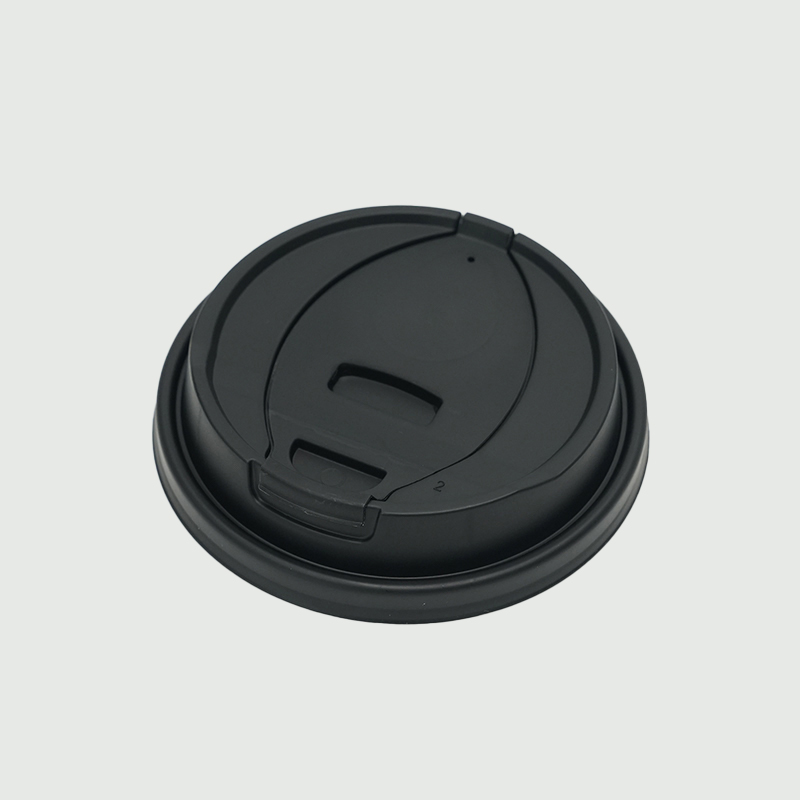
Patented leak-proof thickening plastic cup lid
Why Cup Lid Performance Matters in Modern Foodservice
Consumers increasingly purchase beverages for takeaway, delivery, commuting, travel, outdoor activities, and workplace consumption. These use cases place greater demands on disposable cup lids than traditional in-store service. A lid must remain securely attached when the cup is carried in one hand, placed inside a delivery bag, transported in a vehicle, or stored beside other food products. Even a small amount of leakage can affect the beverage, the cup sleeve, the carrier, the vehicle, and the customer’s clothing or personal belongings.
For beverage businesses, lid performance also affects brand perception. Customers often associate packaging quality with the quality of the drink itself. A lid that feels weak or fits poorly may make a beverage appear less professional. In contrast, a stable, well-finished lid helps communicate care, reliability, and operational consistency. A reinforced lid can also reduce the frequency of complaints and replacements caused by accidental cracks or deformation.
Standard disposable lids may be adequate for simple short-distance use, but they can show weaknesses when exposed to pressure, vibration, temperature variation, or rough handling. Thin plastic may flex excessively, the drinking opening may become misaligned, or the lid edge may lose contact with the cup rim. The patented leak-proof thickened plastic cup lid is intended to improve performance through a combination of structural design and material reinforcement rather than relying on a single feature.
Product Overview
The product is a disposable plastic lid designed for compatible beverage cups. Its primary functions are to cover the cup opening, help prevent liquid leakage, support convenient drinking, and maintain the integrity of the package during handling and transportation. The design is available in two principal formats:
The lift-up lid, also described as a flip lid, provides a movable drinking cover. This configuration is suitable for users who want a drinking opening that can be opened and closed during consumption. When properly matched with the cup, the lid can provide a practical balance between convenience, spill control, and portability.
The flat lid provides a low-profile cover with a smooth top surface. It is appropriate for beverage programs that prefer a simple appearance, efficient stacking, or a clean, streamlined presentation. The flat configuration can also be adapted to different service styles and branding requirements.
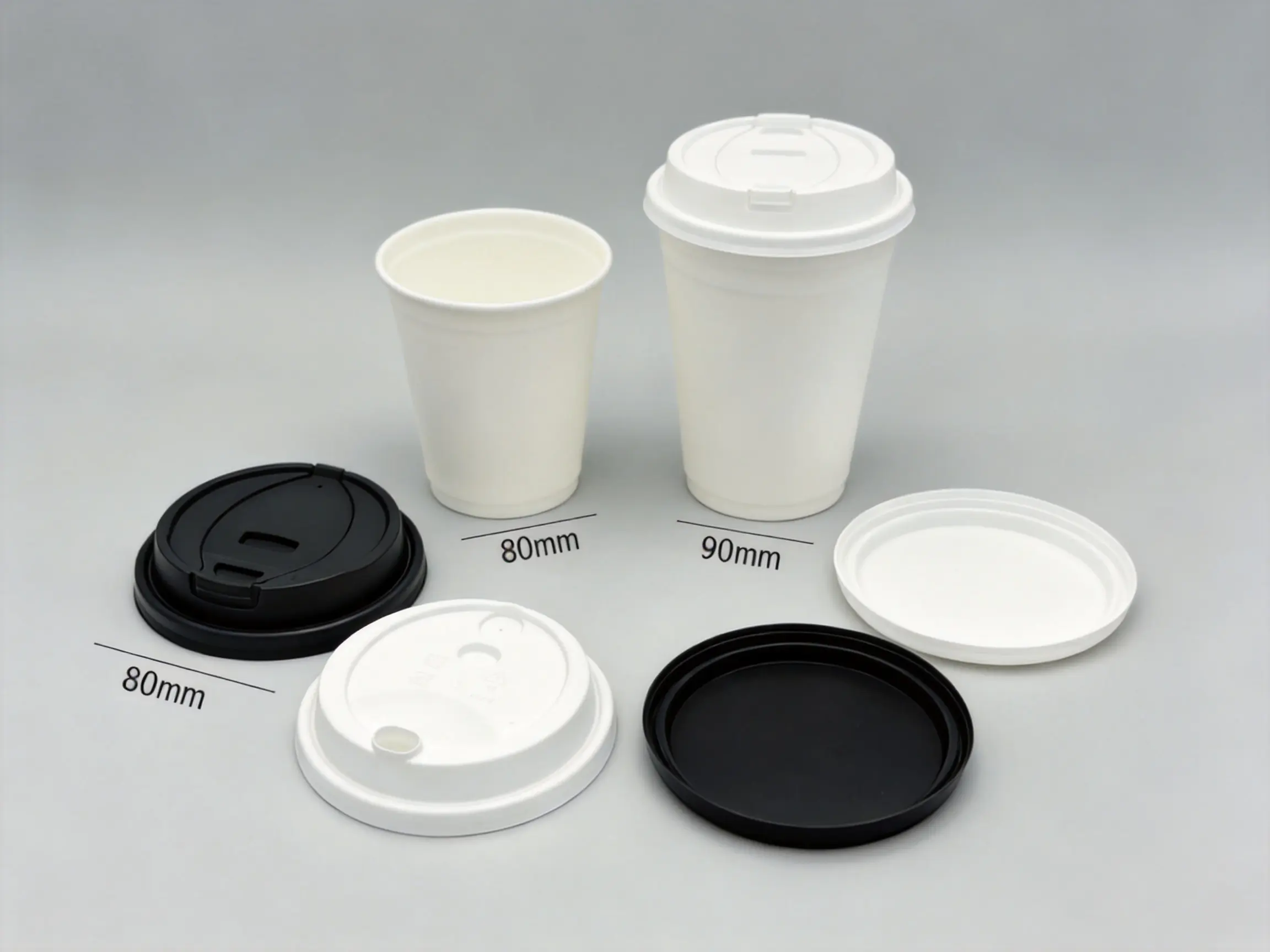
Both configurations are available in 80 mm and 90 mm calibers. The standard colors are white and black, allowing customers to select a neutral appearance for general foodservice or coordinate the lid with a specific beverage brand, cup color, event theme, or product line.
Key Product Specifications
| Lid Configuration | Available Caliber | Approximate Gram Weight | Standard Colors |
|---|---|---|---|
| Lift-up lid | 80 mm / 90 mm | 3.5 g | White / Black |
| Flat lid | 80 mm / 90 mm | 4 g | White / Black |
The listed specifications provide a practical starting point for purchasing and product matching. Final compatibility should be confirmed using the customer’s cup dimensions, rim profile, beverage temperature, filling method, sealing expectations, and intended application. Sampling and testing are recommended before large-scale commercial adoption.
Leak-Proof Structural Concept
The most important advantage of this product is its leak-resistant structural concept. A reliable cup lid needs to do more than cover the top of a cup. It must create stable contact around the cup rim, retain its shape during handling, and reduce the pathways through which liquid may escape. The patented design focuses on these functional relationships by combining a carefully developed lid structure with a thickened plastic body.
A well-designed lid distributes pressure around the cup rim instead of concentrating it in only a few points. This helps improve the consistency of the fit and reduces the possibility that a small gap will develop during transportation. The lid must also remain sufficiently rigid so that it does not flex excessively when the cup is lifted, placed into a carrier, or pressed against other packages.
The leak-proof concept is especially valuable for takeaway beverages with liquid movement. During delivery or commuting, the cup may experience vibration, sudden braking, turning, tilting, and repeated handling. A lid that performs well under stationary conditions may not perform equally well under these dynamic conditions. The reinforced structure is intended to provide greater stability and confidence throughout the handling cycle.
Leak prevention is also influenced by correct product matching. The 80 mm and 90 mm options allow buyers to select a lid that corresponds to the intended cup diameter. A proper match between lid and cup is essential because even a high-quality lid cannot compensate for an incompatible rim size or profile. Yuqian Packaging Technology can support customers with sample evaluation and technical communication to help identify a suitable combination.
Designed for Real-World Handling
Many beverage spills occur after filling, not during the initial closure process. A cup may be carried by hand, stacked in a delivery bag, placed in a vehicle cup holder, or transferred from one person to another. The lid must therefore be considered as part of a complete packaging system. Its material thickness, edge structure, opening design, and cup fit all contribute to the final performance.
The thickened construction helps the lid maintain a more stable form when compared with an unnecessarily thin lid. Increased structural support can reduce deformation caused by ordinary handling and can improve resistance to drops and impact. This does not mean that a disposable lid is indestructible, and proper packaging practices remain important, but the reinforced design provides an additional margin of reliability in everyday use.
Thickened Plastic for Durability and Stability
Material thickness has a direct relationship with the perceived and functional quality of a disposable lid. A lid that is too thin may feel flimsy, flex during drinking, or crack when pressed. It may also be more sensitive to manufacturing variation. The thickened design of this product is intended to enhance durability, drop resistance, and dimensional stability while preserving the lightweight nature required for disposable food packaging.
The approximate weight of the lift-up lid is 3.5 grams, while the flat lid is approximately 4 grams. These weights represent a balance between reinforcement and material efficiency. The goal is not simply to add material, but to use a suitable construction that improves performance where it matters most. For beverage manufacturers and foodservice operators, this balance can support reliable use without creating an unnecessarily heavy package.
Durability is valuable at several stages of the supply chain. During manufacturing, a stronger lid can be easier to handle and pack. During storage, it can help preserve shape when products are stacked. During distribution, it can better withstand normal vibration and compression. At the point of sale, it can provide customers with a more secure drinking experience.
Compared with low-cost lids that focus primarily on minimum material usage, a thickened lid can offer a stronger quality proposition. Competitor products may provide a similar appearance but differ significantly in structural stability, rim engagement, and resistance to deformation. Buyers evaluating products should therefore consider not only unit price but also leakage risk, complaint rates, replacement costs, and the effect of packaging failures on brand reputation.
Food-Contact Safety and Material Selection
Disposable beverage packaging must be produced from materials appropriate for food-contact applications. The product description specifies the use of food-grade raw materials and emphasizes that the lid is non-toxic and odorless. These characteristics are important because a lid comes into close contact with the beverage environment and may be exposed to heat, condensation, sugar, acids, or other ingredients depending on the drink.
Material selection is part of a broader quality process. Suitable raw materials must be sourced from controlled suppliers, identified correctly, stored properly, and processed under defined production conditions. Material consistency affects color, strength, dimensional accuracy, surface quality, and overall product stability. A professional manufacturer must therefore manage not only the finished lid but also the incoming material and the conditions under which it is converted into a finished product.
Odor control is another practical consideration. Unwanted plastic odor can negatively affect the user experience and may raise concerns among purchasers, even when the lid appears visually acceptable. Careful material screening, proper processing, and controlled storage can help support a cleaner and more neutral packaging experience.
Yuqian Packaging Technology states that its products are supported by quality and safety certifications or testing that includes the QS national industrial product production license, ISO 9001 quality management system certification, BRC certification, German DIN safety certification, and EU RoHS+ testing. Buyers should request current documentation relevant to the exact product, material, production batch, and destination market because regulatory requirements can vary by country and application.
Recyclable Characteristics and Environmental Considerations
Environmental responsibility has become an important part of packaging procurement. Foodservice businesses are under increasing pressure to understand material choices, reduce unnecessary waste, and communicate responsibly with consumers. The product is described as recyclable and designed to meet environmental standards, giving buyers an option to consider within a broader packaging sustainability strategy.
Recyclability depends on several factors, including the exact polymer, local collection systems, sorting infrastructure, contamination levels, and applicable regulations. A recyclable material is most valuable when it can be collected, sorted, processed, and converted into a usable secondary material. For this reason, purchasing decisions should consider both the material specification and the waste-management conditions in the target market.
The use of a durable lid can also contribute to resource efficiency by reducing failures during normal use. A leaking or cracked lid may require replacement of the entire beverage package, including the cup, drink, straw, sleeve, and delivery materials. Improving first-time performance can help avoid this type of preventable waste. In addition, accurate production and controlled material use can reduce defective output during manufacturing.
Yuqian Packaging Technology’s focus on new food packaging materials indicates an effort to respond to changing market expectations. Customers seeking lower-impact packaging can discuss available materials, recycling requirements, labeling needs, and product-life considerations with the manufacturer before confirming an order.
Two Lid Styles for Different Service Requirements
Lift-Up or Flip Lid
The lift-up lid is designed for beverage brands that want a movable cover and an accessible drinking opening. It can be suitable for coffee, tea, cold drinks, milk-based beverages, flavored drinks, and other takeaway products, provided the lid and cup are validated for the specific application.
A flip-style format may improve the user experience because the drinking area can be opened when needed and covered again during pauses. It can also give the package a more interactive appearance. For mobile consumption, the user may appreciate the ability to manage the opening while walking, driving as a passenger, or moving between locations.
The lift-up version has an approximate weight of 3.5 grams and is available in 80 mm and 90 mm calibers. Its white and black color options support both simple packaging programs and coordinated brand presentation.
Flat Lid
The flat lid provides a straightforward and low-profile alternative. Its simple shape can work well for businesses that prefer a clean visual identity or require a lid that integrates easily with common cup carriers. The flat surface may also be convenient for stacking and packing, depending on the overall cup and lid design.
With an approximate weight of 4 grams, the flat lid is slightly heavier than the lift-up version. This difference reflects the configuration and should be evaluated together with the customer’s cup design, stacking requirements, delivery conditions, and consumption method.
Offering both styles is an advantage for a packaging manufacturer because customers do not have to choose between completely different suppliers for different beverage lines. A business may use lift-up lids for premium takeaway drinks and flat lids for high-volume standard beverages while maintaining a consistent supply relationship.
Advantages Over Basic Competitor Lids
Competition in the disposable packaging market is extensive, and many cup lids may appear similar at first glance. The practical differences often become visible only during filling, transport, storage, or customer use. The patented leak-proof thickening plastic cup lid is positioned around several advantages that can distinguish it from ordinary thin or generic alternatives.
Improved Leak Resistance
The leak-resistant structural concept is the primary differentiator. Generic lids may rely on a basic snap-on edge without sufficient attention to pressure distribution, opening geometry, or resistance to deformation. The patented design is intended to create a more dependable barrier against liquid escape when the cup is handled correctly and matched with a compatible cup.
Greater Structural Strength
The thickened construction gives the lid greater physical support than a very thin alternative. This can help reduce cracking, bending, and loss of shape during routine use. A stronger lid may also feel more secure to the consumer, which is particularly important for premium drinks and delivery orders.
Food-Safety Focus
The use of selected food-grade raw materials and the company’s emphasis on safety certifications provide a stronger procurement basis than products with limited documentation. For large foodservice customers, traceability and quality-system support are important parts of supplier evaluation.
Choice of Configurations and Colors
Availability in lift-up and flat formats, together with black and white color options, gives customers greater flexibility. A generic competitor may offer only one style, one diameter, or a narrow color range. A broader standard selection can reduce the need for complicated sourcing and support more consistent packaging across different beverage categories.
Customization Capability
The product can be customized according to customer requirements. Customization may involve appearance, packaging, product specifications, or other elements that can be agreed upon through technical review. This capability is valuable for brands that need packaging to reflect a particular visual identity or fit a special cup design.
Professional OEM Support
As an OEM manufacturer, Yuqian Packaging Technology can participate in the process from sample development to production and after-sales service. This is different from purchasing anonymous products through a trading channel with limited technical support. Direct communication with a manufacturer can make it easier to discuss mold changes, material options, testing, delivery planning, and quality feedback.
Advanced Manufacturing Process
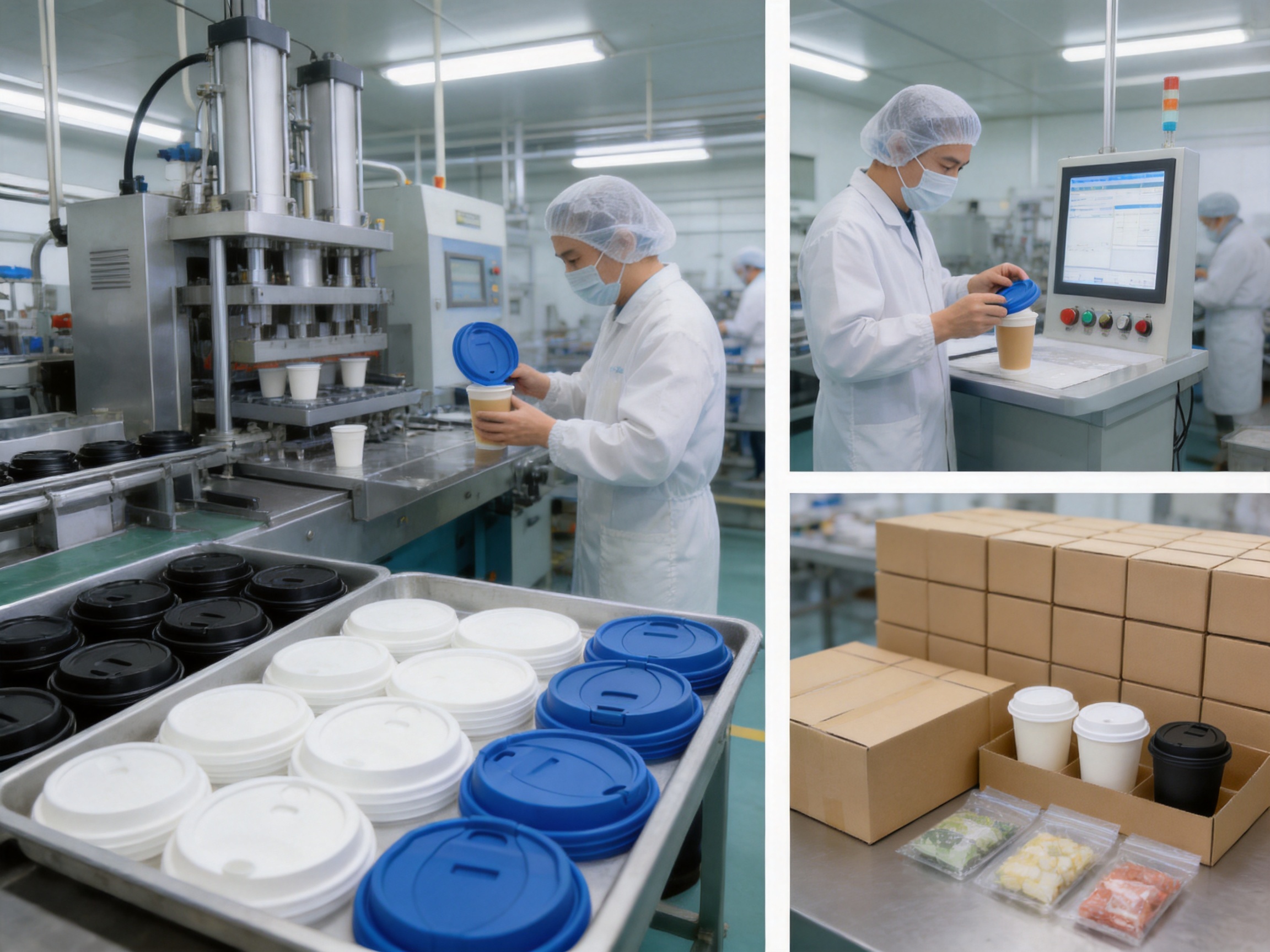
A reliable cup lid is the result of controlled manufacturing rather than design alone. The production process must convert raw plastic material into a product with accurate dimensions, stable geometry, clean surfaces, and consistent performance. Although specific machine models and process parameters may vary by order, a professional manufacturing workflow generally includes material preparation, mold setup, injection forming, cooling, trimming or finishing, inspection, packing, and shipment control.
Raw Material Preparation
Production begins with the selection and preparation of appropriate food-contact plastic material. Incoming materials should be checked against purchasing specifications and stored in conditions that protect them from contamination and moisture-related problems. Material identification is important because different polymers and grades can have different processing behavior and performance characteristics.
Controlled material preparation supports consistency from one production run to the next. It also helps the manufacturer investigate quality issues if they occur. Batch information, supplier documentation, and production records can provide a traceable connection between the finished lid and the material used to produce it.
Mold and Tooling Control
The lid’s leak-resistant performance depends heavily on the accuracy of its mold and tooling. The mold must reproduce the intended rim profile, drinking opening, hinge or flip structure, and reinforcement features. Small dimensional differences can influence how the lid fits the cup and how it behaves during use.
Tooling control includes mold inspection, cleaning, maintenance, alignment, and adjustment. A well-maintained mold supports stable production and can reduce defects such as flash, incomplete filling, uneven walls, distortion, or inconsistent edges. For customized products, mold development should be supported by drawings, samples, dimensional requirements, and customer approval procedures.
Injection Forming
Injection forming allows the plastic material to be heated, injected into a mold cavity, shaped under controlled conditions, and cooled into the required lid geometry. Production parameters such as temperature, pressure, injection speed, holding time, cooling time, and cycle control can affect the final product.
Correct process control helps produce a lid with a uniform appearance and stable mechanical properties. If the process is not controlled, the lid may show sink marks, warping, short shots, burn marks, excessive flash, or uneven thickness. These defects can affect both appearance and sealing performance. A high-quality manufacturer therefore monitors the process and uses inspection results to make adjustments when needed.
Cooling and Demolding
Cooling must be sufficient for the lid to retain its shape when removed from the mold. Premature demolding can cause deformation, while excessive cooling may reduce production efficiency. The balance between cycle time and product stability is an important part of manufacturing engineering.
Careful demolding is especially important for lift-up lids because hinges, tabs, and opening structures may be more sensitive than a simple flat surface. Proper mold design and controlled ejection help protect these features and reduce damage during production.
Inspection and Finishing
After forming, lids can be checked for visual and dimensional quality. Inspection may include color consistency, surface cleanliness, edge integrity, opening accuracy, deformation, flash, cracks, and fit against a reference cup or gauge. Finished products should be handled in a manner that minimizes dust, contamination, and unnecessary contact.
Inspection criteria should be agreed with the customer for customized orders. High-volume beverage brands may require sampling plans, appearance standards, functional testing, carton identification, and batch records. Establishing these details before production helps create clear expectations for both parties.
Packing and Shipment Preparation
Proper packing protects the lids after manufacturing. Packaging should help prevent crushing, contamination, moisture exposure, and mixing of different colors or calibers. Cartons and inner bags should be identified clearly so that warehouse teams can recognize the product, quantity, production batch, and configuration.
For export orders, shipping preparation should also consider container loading, pallet stability, destination regulations, customs documentation, and expected storage conditions. A strong product can still be damaged by poor logistics, so packaging and shipment control form an important part of the complete supply solution.
Quality Management and Production Strengths
Yuqian Packaging Technology (Jiangsu) Co., Ltd. was established in 2010 and is located in Taizhou City, Jiangsu Province, China. The company operates a plant area of approximately 30,000 square meters and integrates research and development, production, and sales of new food packaging materials and products.
This integrated structure provides several advantages. Research and development personnel can communicate directly with manufacturing teams. Production feedback can be used to refine product design. Sales and customer-service staff can relay market requirements into product planning. The result is a more coordinated approach than a supply chain in which design, manufacturing, and service are handled by unrelated organizations.
The company reports that it has passed the QS national industrial product production license, ISO 9001 quality management system certification, BRC certification, German authoritative safety DIN certification, and EU RoHS+ testing. These credentials indicate attention to formal quality, safety, and environmental management. As with all certifications, customers should verify certificate validity, scope, issuing body, and applicability to the exact product being purchased.
ISO 9001-oriented quality management can support documented procedures, responsibility assignment, corrective action, customer feedback management, and continual improvement. BRC-related certification can be relevant to food packaging safety and manufacturing controls. DIN-related testing and EU RoHS+ testing may provide additional assurance for customers whose markets or internal standards require such documentation.
Research and Development Capabilities
The company’s research and development team is described as being composed of industry experts who focus on technical innovation and quality improvement. For a product such as a leak-proof cup lid, research and development can involve much more than creating a new visual shape. It may include evaluating material behavior, improving fit, optimizing thickness, refining hinge performance, reducing leakage pathways, and making the product easier to manufacture consistently.
New material development is another important area. Food packaging manufacturers must respond to changing expectations regarding recyclability, material efficiency, food safety, and environmental impact. Research may therefore focus on compatible material options and processing methods that maintain functional performance while addressing new market requirements.
Product development should be supported by practical testing. A lid may be examined for fit, leakage, drop resistance, stackability, appearance, and performance under the conditions expected by the customer. Testing protocols should reflect actual use, including beverage temperature, filling level, transport distance, cup orientation, and handling method.
Customization and Brand Integration
Disposable packaging is part of a brand’s customer-facing identity. Even when the lid is a small element, its color, shape, surface quality, and compatibility with the cup can influence how the complete package is perceived. The availability of black and white options provides a useful starting point, while customization allows customers to explore requirements beyond standard configurations.
Customization may be appropriate for beverage chains, restaurant groups, event organizers, private-label distributors, food manufacturers, and promotional campaigns. Customers may request a particular caliber, color, lid style, packing method, or coordinated packaging solution. Technical feasibility should be evaluated before confirmation, particularly when a custom requirement could affect mold design, production cycle time, minimum order quantity, or delivery schedule.
A professional customization process generally begins with a clear product brief. The customer should provide cup dimensions, rim profile, beverage type, filling temperature, expected transport conditions, color expectations, annual demand, packing requirements, and applicable market regulations. The manufacturer can then propose samples or technical adjustments for testing.
Sample approval is an important stage. The customer should evaluate the lid on the actual cup, with the intended beverage or a suitable test liquid, under realistic conditions. This helps verify fit, opening convenience, sealing behavior, appearance, and compatibility with existing filling and packing equipment.
Applications Across Beverage and Foodservice Markets
The patented leak-proof thickened plastic cup lid can serve a broad range of takeaway beverage applications. The lift-up version may be suitable for coffee shops, tea stores, juice bars, smoothie outlets, and specialty beverage retailers. The flat version may be useful for standard cold drinks, catering operations, quick-service restaurants, convenience stores, and large-volume takeaway programs.
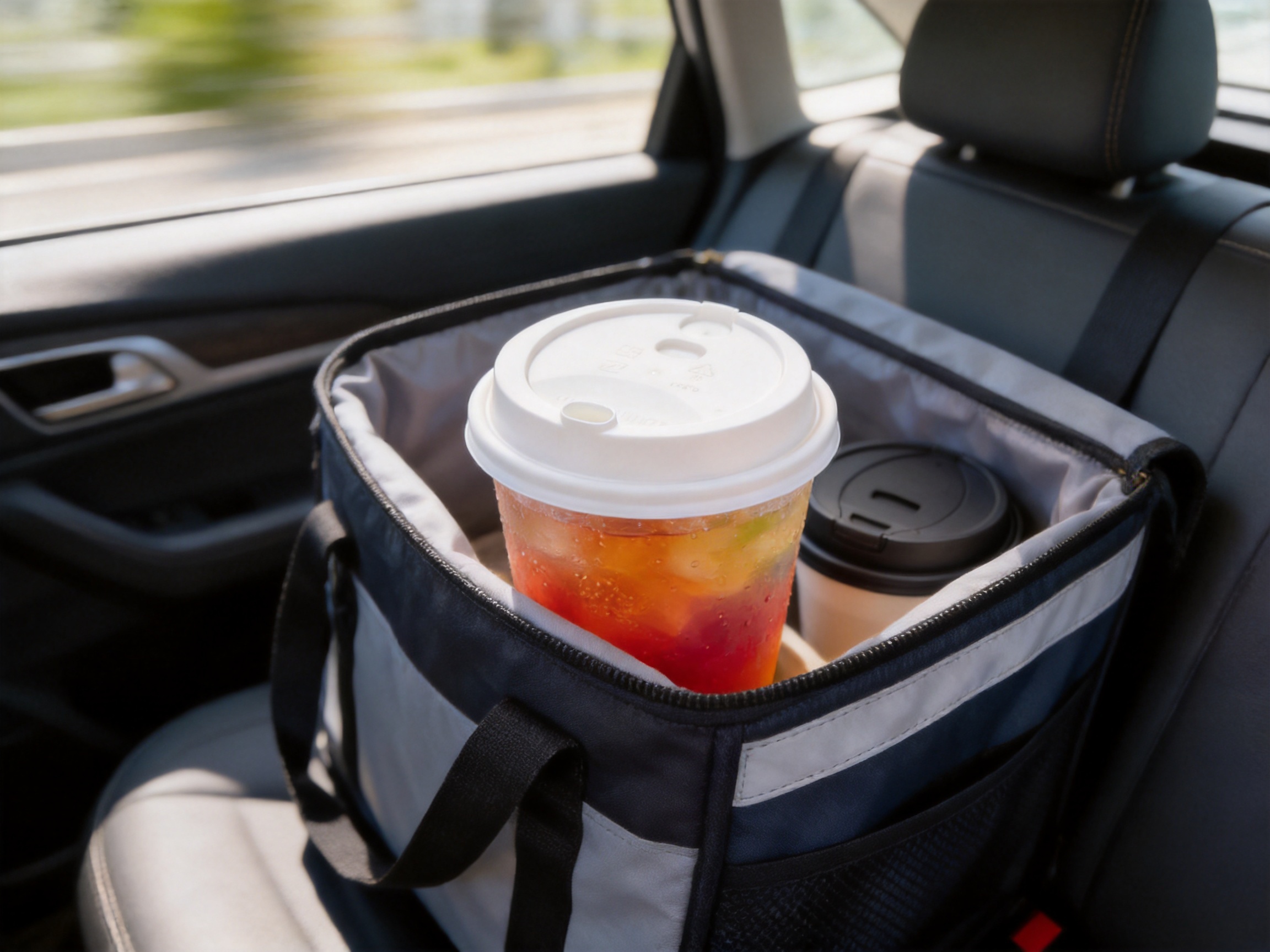
For delivery businesses, leak resistance and structural stability are especially valuable. Delivery orders may remain in transit for extended periods and may be exposed to movement, pressure from other packages, and temperature changes. A dependable lid helps the beverage arrive in better condition and reduces the risk of leakage inside delivery bags.
For event organizers, the black and white options can support different visual themes. A neutral black lid may coordinate with premium or modern branding, while a white lid can create a clean and simple appearance. The two standard diameters also allow organizers to support more than one cup size when serving different beverages.
For OEM and private-label customers, the manufacturer’s ability to customize products can help create a more consistent packaging system. A customer may combine a customized cup, lid, bowl, straw, or other disposable food packaging products under one supply program. This can simplify procurement and reduce the need to coordinate with multiple vendors.
Operational Benefits for Beverage Brands
Reduced Packaging Failures
Improved lid stability can help reduce the frequency of spills, rejected orders, replacements, and customer complaints. While no disposable component can eliminate every failure under improper use, a well-matched, leak-resistant lid can improve reliability during normal handling.
More Consistent Customer Experience
Consistent dimensions and controlled production help ensure that employees and customers receive the same basic experience from one order to the next. Consistency is particularly important for multi-location brands that need packaging performance to remain stable across different stores and distribution centers.
Better Product Presentation
A lid that retains its shape and has a clean finish contributes to a more professional package. The black and white color choices can be coordinated with cups, labels, sleeves, carriers, and other visual elements.
Flexible Procurement
With lift-up and flat versions available in two calibers, customers can build a more flexible purchasing plan. Standard product options may reduce development time, while customization can address specialized requirements.
Support for OEM Programs
OEM customers often need more than a product catalog. They may require technical discussions, samples, packaging specifications, quality records, delivery planning, and after-sales communication. A manufacturer with integrated development and production capabilities can provide more direct support throughout the project.
How to Select the Correct Lid
Selecting the correct lid begins with confirming the cup’s outer rim diameter. The 80 mm and 90 mm options should not be treated as interchangeable. The customer should measure the cup accurately and compare the result with the lid’s intended fit. Rim shape, flange design, wall thickness, and cup material can also influence compatibility.
The next consideration is the beverage application. Hot and cold beverages may create different requirements for rigidity, condensation, heat resistance, opening comfort, and transport. The customer should provide the expected temperature range and filling conditions so that the product can be evaluated appropriately.
Transport conditions are equally important. A beverage for short-distance in-store pickup may face different stresses from a drink shipped through a delivery platform. Customers should consider whether cups will be stacked, placed in carriers, loaded into vehicles, or handled in large quantities.
Finally, the customer should determine whether the lift-up or flat configuration is more appropriate. The lift-up design emphasizes a movable drinking cover, while the flat design provides a simple low-profile format. Both should be tested on the intended cup before final approval.
Recommended Evaluation and Testing Procedure
A structured evaluation can help customers make an informed purchasing decision. First, inspect the lid visually for uniform color, clean edges, smooth surfaces, and obvious defects. The lid should be free from cracks, excessive flash, contamination, and significant deformation.
Second, place the lid on the intended cup and check whether it engages evenly around the rim. The lid should not require excessive force, nor should it be so loose that ordinary handling causes separation. Examine the entire circumference rather than checking only one point.
Third, fill the cup with the intended beverage or a representative test liquid. Close the lid according to the normal operating procedure and observe whether leakage occurs while the cup remains upright. The test should then include controlled tilting and movement that reflects actual transportation.
Fourth, evaluate the lid after drop or impact simulation appropriate to the customer’s application. The purpose is to understand how the lid and cup behave as a complete package, not to suggest that disposable packaging should be subjected to unsafe or extreme misuse.
Fifth, test the opening and drinking experience. Users should be able to operate the lift-up mechanism or use the flat lid comfortably. The lid should remain sufficiently stable during consumption and should not have sharp edges or inconvenient flash around the opening.
Sixth, review storage and packing performance. Check whether the lids stack properly, whether cartons remain stable, and whether different calibers or colors can be identified easily in the warehouse. These details can affect labor efficiency and order accuracy.
Supply Chain and Customer Service Support
Yuqian Packaging Technology places customer satisfaction at the center of its service approach. The company describes a complete after-sales system covering pre-sales consultation, sample testing, production communication, and post-delivery support. This type of support is particularly important for packaging because product performance depends on the relationship between the lid, cup, beverage, filling process, and logistics environment.
Pre-sales consultation can help identify the correct lid type and caliber. Sample testing allows customers to confirm fit and performance before a large order. Production communication helps clarify specifications, packing requirements, inspection standards, and delivery expectations. After-sales support provides a channel for addressing feedback and improving future orders.
Regular communication can also help the manufacturer understand changing customer requirements. Beverage brands may introduce new cup sizes, seasonal products, new transport formats, or revised sustainability targets. A responsive supplier can use this information to recommend suitable product adjustments or new packaging solutions.
The company’s product range includes plastic cups, plastic cup lids, takeaway bowls, disposable straws, recycle bags, peripheral products, and injection film lining cup and bowl boxes. This broader product capability may benefit customers seeking a coordinated disposable food packaging program rather than a single isolated component.
Manufacturing Strengths Compared with Trading-Only Supply
Purchasing through a trading-only channel can be convenient, but it may limit direct access to production information. When a problem occurs, customers may have difficulty identifying whether the cause is material, mold, process, packing, transportation, or cup compatibility. Communication can also be slower when technical questions must pass through several intermediaries.
A manufacturer with its own research, production, and quality systems can generally provide more direct technical feedback. It can review samples, compare production batches, inspect tooling, and discuss corrective actions with the relevant departments. This does not automatically guarantee perfect performance, but it can improve accountability and problem-solving efficiency.
Direct manufacturing capability can also support more practical customization. A customer’s request may require changes to geometry, thickness, color, packing, or inspection. A factory that understands its equipment and processes can evaluate feasibility more accurately than a supplier that only resells standard products.
Ordering Considerations for International Buyers
International buyers should provide complete product information when requesting a quotation. Important details include lid style, caliber, color, estimated quantity, packaging requirements, destination country, target application, and whether customization is required. If the lid will be used with a cup from another supplier, the buyer should provide cup samples or accurate technical drawings.
Buyers should also clarify the required documentation. Depending on the destination market, this may include material declarations, food-contact statements, test reports, quality certificates, packaging specifications, batch information, and inspection records. Documentation requirements should be confirmed before production begins.
Minimum order quantity, sample charges, mold costs, production lead time, payment terms, shipping method, and delivery responsibilities should be discussed in writing. For customized products, the approval process should identify which sample or drawing is considered the final reference standard.
Storage conditions should also be considered. Finished lids should be kept in clean, dry conditions and protected from excessive heat, moisture, crushing, and contamination. Warehouses should use clear stock rotation and product identification procedures to maintain order accuracy.
Quality, Compliance, and Responsible Claims
Packaging purchasers should evaluate product claims carefully and request supporting documents. Terms such as food-grade, recyclable, leak-proof, environmentally friendly, and non-toxic should be connected to specific materials, tests, standards, and intended conditions of use. A responsible supplier should be able to explain the basis of its claims and identify any limitations.
The term “leak-proof” should be understood in relation to the cup system, closure method, liquid type, filling level, temperature, and handling conditions. The patented structure is designed to effectively prevent leakage in appropriate use, but the final result depends on proper cup matching and correct closure. Buyers should conduct their own validation using actual operating conditions.
Similarly, recyclability should be assessed in the context of local waste infrastructure. A material may be technically recyclable but not accepted in every municipal collection system. Businesses should follow local regulations and provide accurate disposal guidance where required.
Certifications and testing should be kept current. Customers can request copies of relevant certificates and reports and confirm that they cover the applicable facility, product category, material, and manufacturing scope. This approach helps businesses make decisions based on verifiable information rather than appearance or general marketing language.
Why the Product Is Suitable for Long-Term Packaging Programs
A long-term packaging program requires stable quality, repeatable specifications, dependable communication, and the ability to respond to changing demand. The patented leak-proof thickened plastic cup lid offers a combination of standard options and customization potential that can support both small product launches and larger commercial programs.
The two calibers help serve different cup sizes. The lift-up and flat configurations support different consumption preferences. Black and white colors provide a simple foundation for visual coordination. Thickened construction addresses durability and handling concerns. Food-grade material selection and quality-system support provide a basis for professional purchasing. OEM service allows the product to be adapted when standard options are not sufficient.
For a beverage brand, these features can support operational continuity. A dependable lid helps employees work more efficiently, reduces the need to manage avoidable packaging failures, and gives customers greater confidence in takeaway and delivery purchases.
Q&A
What is the patented leak-proof thickened plastic cup lid?
It is a disposable plastic beverage lid designed with a leak-resistant structure and reinforced plastic construction. It is intended to improve sealing stability, durability, and user convenience during takeaway, delivery, and other beverage applications.
Which lid styles are available?
The product is available as a lift-up or flip lid and as a flat lid. The lift-up version provides a movable drinking cover, while the flat version offers a simple, low-profile design.
What calibers are available?
The standard calibers are 80 mm and 90 mm. Customers should confirm the cup rim dimensions and conduct fit testing before selecting a final lid.
What colors can customers choose?
The standard colors are white and black. Customized colors or other appearance requirements may be discussed with the manufacturer, subject to technical feasibility, order quantity, and production conditions.
What are the approximate weights?
The lift-up lid weighs approximately 3.5 grams, and the flat lid weighs approximately 4 grams. Actual weight may vary within normal manufacturing tolerances and according to any approved customization.
Is the lid suitable for food contact?
The product is described as being made from food-grade raw materials and as non-toxic and odorless. Buyers should request current food-contact documentation and verify that it meets the requirements of the intended market and beverage application.
How does the thickened design benefit users?
The thickened construction is intended to improve durability, drop resistance, dimensional stability, and the overall secure feeling of the lid. It can help reduce deformation and cracking during normal handling when the lid is correctly matched to the cup.
Does the lid prevent leakage under all conditions?
No disposable lid can be guaranteed to prevent leakage under every condition. Performance depends on cup compatibility, correct closure, filling level, liquid temperature, transportation, and handling. The product’s patented structure is designed to provide effective leak resistance under appropriate conditions, and customers should perform application-specific testing.
Can the product be customized?
Yes. The manufacturer states that the product can be customized according to customer needs. Customization may require technical drawings, samples, mold evaluation, color confirmation, minimum order quantities, and additional development time.
What certifications or testing are associated with the manufacturer?
The company reports QS national industrial product production license, ISO 9001 quality management system certification, BRC certification, German DIN safety certification, and EU RoHS+ testing. Buyers should request current documents and verify their scope and validity for the exact product.
Can the lid be used for delivery beverages?
It is designed for takeaway and transport-oriented beverage packaging and may be suitable for delivery applications. The customer should test the complete cup and lid system under actual or simulated delivery conditions, including movement, tilting, stacking, and temperature exposure.
What information should be supplied when requesting a quotation?
Customers should provide the required lid style, caliber, color, estimated order quantity, cup specifications, beverage type, temperature range, customization requirements, packaging preferences, destination market, and documentation needs.
Does the company provide samples?
The company describes sample testing as part of its customer service process. Buyers should confirm sample availability, sample costs, shipping arrangements, and the testing procedure directly with the sales team.
What other products can the company supply?
The company’s product categories include plastic cups, plastic cup lids, takeaway bowls, disposable straws, recycle bags, peripheral products, and injection film lining cup and bowl boxes. This range may support customers looking for coordinated disposable food packaging.
How should the lids be stored?
Lids should be stored in clean, dry conditions and protected from heat, moisture, dust, crushing, and strong odors. Cartons should remain properly identified, and products should be handled according to the supplier’s packaging and storage recommendations.
Conclusion
The patented leak-proof thickened plastic cup lid is designed to solve several common problems in takeaway beverage packaging. Its leak-resistant structure supports safer transport, while its reinforced plastic construction improves durability and resistance to deformation. Food-grade material selection, recyclable characteristics, two lid configurations, two common calibers, and black or white color options make the product adaptable to a broad range of foodservice requirements.
Its competitive value comes from the combination of functional design and manufacturing support. Rather than offering only a basic cover, the product is developed around sealing performance, structural stability, user convenience, and customization. Yuqian Packaging Technology (Jiangsu) Co., Ltd. adds value through integrated research and development, production, quality management, OEM capability, and customer service.
For beverage brands and food packaging distributors, the best purchasing decision should consider more than unit cost. Fit, leakage performance, durability, certification support, production consistency, customization, logistics, and after-sales communication all influence the total value of a cup lid. By evaluating the patented leak-proof thickened plastic cup lid through actual samples and application testing, customers can determine whether it is the right solution for their beverage packaging program.
References
1. Product specification information supplied for the patented leak-proof thickened plastic cup lid, including lid configurations, calibers, approximate gram weights, and standard colors.
2. Manufacturer-provided company information regarding research and development, production capacity, facility location, product categories, and OEM services.
3. ISO 9001 quality management system principles concerning documented processes, customer focus, corrective action, and continual improvement.
4. General food-contact packaging safety principles concerning raw material selection, production hygiene, traceability, and application-specific testing.
5. General packaging sustainability principles concerning material selection, recyclability, waste collection systems, and responsible environmental communication.
6. General injection molding manufacturing principles concerning material preparation, mold control, process parameters, cooling, demolding, inspection, and packing.
Supplier Contact Information
Company: Yuqian Packaging Technology (Jiangsu) Co., Ltd.
Telephone: 0086 15252423007
Fax: +0523 8608 3698
Email: [email protected]
Address: No. 8 Tongyang Road, Suchen Town, Taizhou City, Jiangsu Province, China