English
 Español
 عربى
عربىContent
- 1 Why Low-Temperature Resistance Matters in Cold Beverage Packaging
- 2 Material Advantages of Food-Grade PET
- 3 Core Product Features
- 4 Representative Specifications
- 5 Advantages Over Common Competitor Products
- 6 Manufacturing Strength Behind the Cup
- 7 Quality Management and Certification Support
- 8 Customization for Branding and Market Differentiation
- 9 Applications Across Foodservice and Retail
- 10 Operational Benefits for Buyers
- 11 Environmental Considerations and Recyclability
- 12 How Advanced OEM Service Supports Customer Projects
- 13 Design Details That Improve User Experience
- 14 Market Trends Supporting Low-Temperature PET Cups
- 15 Choosing the Right Cup Specification
- 16 Why Manufacturer Capability Matters
- 17 Q&A: Common Questions About Low-Temperature Resistant PET Plastic Cups
- 17.1 What is the main advantage of a low-temperature resistant PET plastic cup?
- 17.2 Is the cup suitable for hot drinks?
- 17.3 What beverages are suitable for this cup?
- 17.4 Why is PET transparency important?
- 17.5 Can the cup be customized?
- 17.6 Is the cup recyclable?
- 17.7 What certifications support the product’s reliability?
- 17.8 Why are multiple mouth diameters available?
- 17.9 How does this cup help reduce operational problems?
- 17.10 What type of buyer benefits most from this product?
- 18 Conclusion
- 19 References
- 20 Product: Low-Temperature Resistant PET plastic cup
Cold beverage packaging has become a crucial part of the foodservice, retail, and takeaway industries. As consumers increasingly purchase iced coffee, fruit tea, smoothies, chilled juices, yogurt drinks, desserts, and ready-to-drink beverages, packaging must do more than simply hold liquid. It must maintain clarity, resist cracking in chilled environments, support safe food contact, fit securely with lids, display branding attractively, and remain practical for high-volume commercial use. The low-temperature resistant PET plastic cup is designed for precisely these demands, offering a balanced combination of transparency, toughness, hygiene, recyclability, and customization flexibility.
This product is made from food-grade PET material formulated for stable performance in a temperature range of approximately -20°C to 55°C. That range is especially important for cold beverage supply chains, refrigerated storage, winter outdoor use, and short-term low-temperature handling. In many real foodservice scenarios, ordinary disposable cups may become brittle, cloudy, or distorted when exposed to cold conditions. A low-temperature resistant PET cup helps solve those problems by maintaining toughness and shape stability, reducing the risk of cracking, deformation, leakage, and poor presentation.
For restaurants, beverage brands, coffee shops, dessert stores, supermarkets, event caterers, and distributors, packaging performance affects not only product safety but also customer experience and brand perception. A clear, smooth, round-mouthed PET cup presents beverages in a clean and attractive way. It allows layered drinks, fresh fruit pieces, ice cubes, creams, toppings, and colorful ingredients to be seen clearly. This visual effect can directly support impulse purchases and social-media-friendly product presentation. In competitive food and beverage markets, packaging has become part of the product itself.
The low-temperature resistant PET plastic cup described in this article is available in multiple calibers and capacities, including cup mouth diameters such as 90 mm, 93 mm, 98 mm, and 117 mm, with volumes ranging from approximately 400 ml to 1000 ml depending on specification. Its lightweight yet durable structure helps businesses reduce material burden while still delivering practical strength. The product can also be customized in terms of color, printed patterns, and in-mold labeling, making it suitable for both standard packaging programs and branded private-label solutions.
Yuqian Packaging Technology (Jiangsu) Co., Ltd. manufactures this product with a focus on quality control, production capacity, and flexible OEM service. The company operates in the field of food packaging materials and products, supporting customers with disposable food packaging solutions that combine function, safety, and design. With certifications including QS national industrial product production license, ISO9001 quality management system certification, BRC certification, German DIN safety certification, and EU ROHS+ testing, the manufacturer is positioned to serve customers requiring consistent and reliable packaging supply.
Low-Temperature Resistant PET plastic cup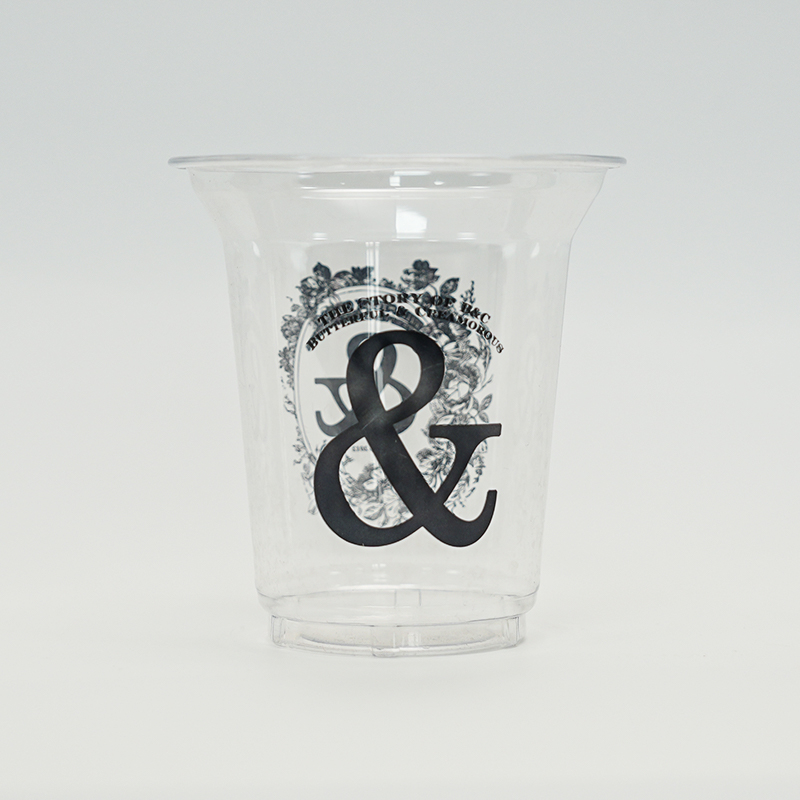
Why Low-Temperature Resistance Matters in Cold Beverage Packaging
Temperature resistance is not merely a technical detail; it is a practical requirement in modern beverage operations. Cold drinks may be stored in refrigerators, displayed in chilled cabinets, transported in cold-chain vehicles, packed with ice, or sold outdoors during winter. In all of these situations, the cup material must remain stable. If a cup becomes brittle, it may crack when squeezed by hand, stacked in cartons, sealed with a lid, or placed in a carrier. Even small cracks can cause leakage, product waste, customer complaints, and hygiene concerns.
The low-temperature resistant PET cup is formulated to retain toughness in environments as low as -20°C. This does not mean the product is intended for every extreme freezing application, but it does mean that the cup is well suited for many commercial cold beverage scenarios where ordinary plastic cups may underperform. The ability to maintain form and integrity at low temperature makes it especially useful for iced beverages, chilled desserts, cold-brew coffee, ready-to-drink fruit tea, snow ice products, smoothie bowls, and refrigerated takeaway drinks.
Compared with conventional disposable cups that may be optimized only for room-temperature handling, this product offers better stability when subjected to cold storage or low-temperature service. The cup body is designed to resist cracking and deformation, preserving the roundness of the mouth and the fit between cup and lid. This is important because lid compatibility often depends on precise rim dimensions. If the mouth loses shape, the lid may not seal properly, leading to spills during takeaway and delivery.
Low-temperature stability also supports better consumer experience. Customers often hold cold beverages firmly, place them in cup holders, carry them in bags, and insert straws through lids. A cup that feels tough and reliable provides confidence. Its smooth wall and high transparency make the drink look fresh and hygienic, while its resistance to deformation helps the product remain attractive from the shop counter to the customer’s destination. This combination of performance and appearance gives low-temperature resistant PET cups a clear advantage over weaker alternatives.
Material Advantages of Food-Grade PET
PET, or polyethylene terephthalate, is widely used in food and beverage packaging because it offers excellent clarity, good mechanical strength, relatively light weight, and recyclability. In the case of low-temperature resistant PET plastic cups, the material is selected and processed to deliver a smooth, highly transparent cup body that is safe for food contact and suitable for cold beverage presentation. The product is non-toxic and odorless under appropriate use conditions, allowing beverages to retain their intended taste and aroma.
For beverage businesses, odor neutrality is particularly important. Consumers are sensitive to unwanted plastic smells, especially in products such as iced tea, milk tea, coffee, lemonade, fruit juice, yogurt drinks, and cocktails. A food-grade PET cup helps avoid odor interference, supporting a more enjoyable drinking experience. The smooth inner wall also reduces residue accumulation and makes the cup visually clean, which is valuable for drinks containing fruit pulp, cream, syrups, ice, and other visible ingredients.
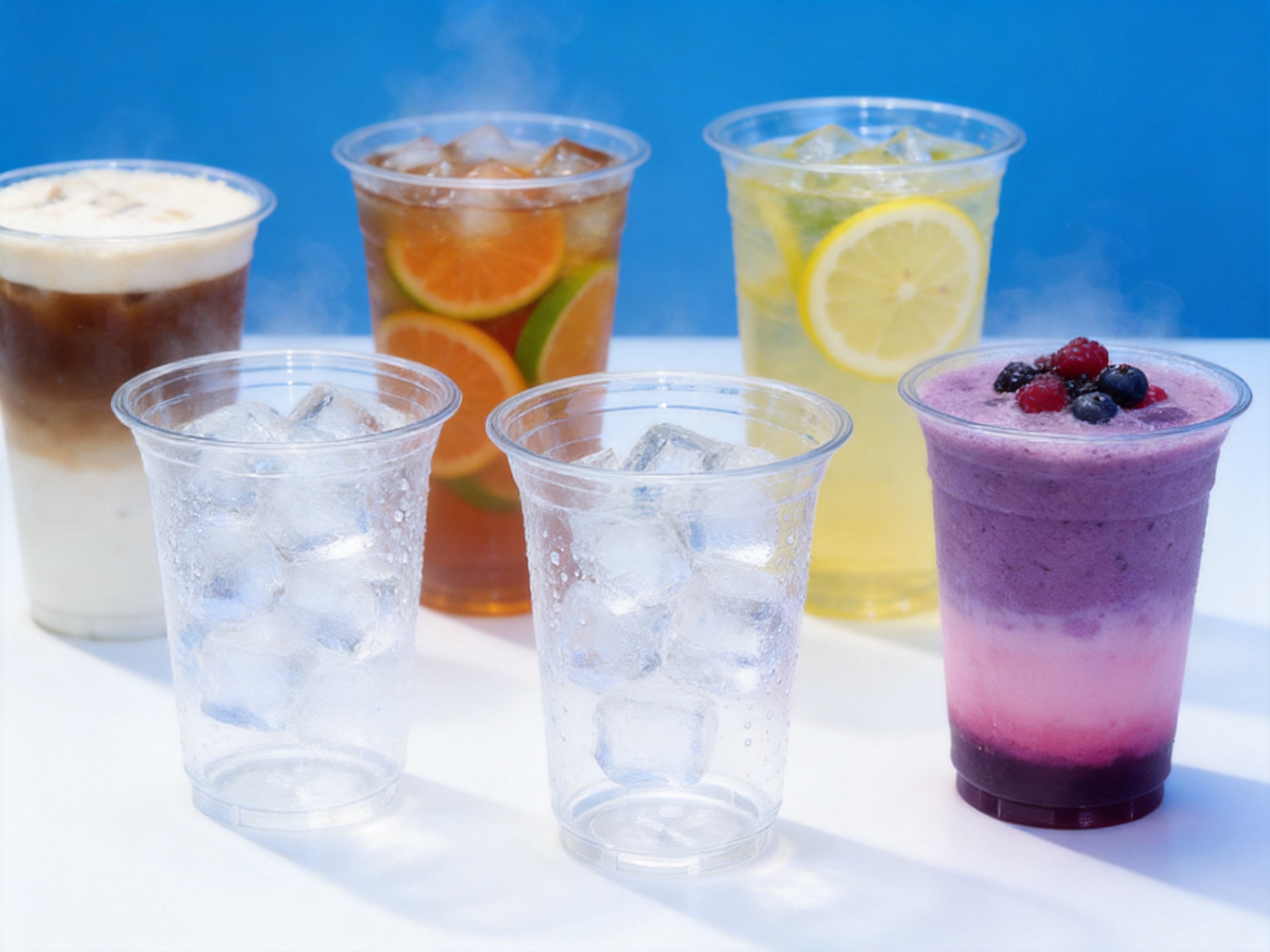
Transparency is one of PET’s most recognizable advantages. A clear PET cup allows customers to see the beverage directly, which helps communicate freshness and quality. In many beverage categories, the appearance of the drink is part of the selling point. Layered colors, fruit slices, boba pearls, foam caps, crushed ice, and dessert toppings all contribute to customer appeal. A highly transparent PET cup can help brands display these features better than opaque or cloudy packaging.
PET also offers a strong balance between rigidity and toughness. A cup must be firm enough to stand upright and maintain shape, yet flexible enough to tolerate handling, stacking, and transportation. The low-temperature resistant PET cup is designed to avoid easy deformation after long-term or high-volume use in commercial settings. This makes it suitable for shops and distributors that need products to perform consistently across many batches, cartons, and sales locations.
Another important material advantage is recyclability. PET is one of the more widely recyclable plastics in many packaging systems. After use, PET cups can enter recycling streams where local infrastructure allows, helping reduce environmental burden compared with materials that are more difficult to recycle. While responsible disposal and recycling depend on local systems and user behavior, the use of recyclable PET aligns with the growing global emphasis on more sustainable packaging choices.
Core Product Features
The low-temperature resistant PET plastic cup combines several practical features that directly address foodservice requirements. First, it is adaptable to a temperature range of approximately -20°C to 55°C, making it suitable for refrigerated products and cold beverages. Second, it has a round cup mouth designed for smooth drinking, secure lid matching, and attractive presentation. Third, it is available in a variety of calibers and styles, allowing businesses to select the right packaging format for different beverages and serving sizes.
The cup body is highly transparent and smooth, supporting a premium product appearance. Its clarity makes it ideal for drinks where visual presentation drives consumer interest. The smooth surface also supports labeling, printing, and brand display. For businesses that sell products through retail shelves, convenience stores, cafés, or takeaway counters, packaging clarity can be a direct marketing tool. The cup does not hide the product; it showcases it.
The product also offers good toughness and resistance to deformation. In daily operations, disposable cups must withstand stacking pressure, manual handling, lid application, straw insertion, transport vibration, and customer use. A cup that deforms too easily can cause unstable stacking, poor sealing, and spills. This PET cup is designed to maintain structural reliability, helping reduce losses and improve service efficiency.
Safety is another core feature. Made from food-grade PET, the cup is non-toxic and odorless under proper use conditions. It supports hygienic beverage packaging and helps businesses provide customers with packaging that feels safe and professional. For high-volume operators, food safety consistency is essential because packaging failure can affect many units at once. Using reliable certified production helps manage this risk.
Customization is also a major advantage. The product can be supplied in multiple sizes and may be customized with colors, patterns, and in-mold labeling depending on project requirements. For beverage chains, seasonal campaigns, event suppliers, and private-label distributors, customized packaging can strengthen brand recognition. A cup is often carried by the customer in public spaces, making it a mobile brand display. High-quality customization turns simple packaging into a communication channel.
Representative Specifications
The product range includes multiple specifications designed for different beverage volumes, mouth diameters, and usage styles. The following table summarizes representative options based on the provided product information. Actual production and customization details may be confirmed according to order requirements, lid matching, branding needs, and application scenarios.
| Specification | Volume | Mouth Diameter | Height | Bottom Diameter | Approximate Grammage |
| 12 oz | 400 ml | 90 mm | 108 mm | 56 mm | 11 g |
| 16 oz | 500 ml | 90 mm | 135 mm | 56 mm | 13.5 g |
| 20 oz | 600 ml | 90 mm | 158 mm | 54 mm | 14.3 g |
| 14 oz-A | 420 ml | 98 mm | 105 mm | 56 mm | 11 g |
| 16 oz-Y | 500 ml | 98 mm | 120 mm | 62 mm | 14.3 g |
| 24 oz | 700 ml | 98 mm | 155 mm | 60 mm | 16.5 g |
| 24 oz Wide-Mouth | 1000 ml | 117 mm | 107 mm | 90 mm | 21 g |
The variation in mouth diameter is significant because different beverages require different drinking and topping experiences. A 90 mm mouth is widely used for standard cold drinks, while a 98 mm mouth offers a larger opening suitable for ice, fruit, cream, and specialty beverages. A 117 mm wide-mouth format can support larger portions, desserts, salads, smoothie bowls, and products that require spoon access rather than only straw drinking.
Grammage also matters in packaging design. A lighter cup may reduce material use and shipping weight, while a heavier or wider format may provide greater stability for larger volumes. The available range allows customers to balance cost, strength, appearance, and beverage type. Rather than forcing one cup to serve every purpose, the product line gives businesses flexibility in building a complete packaging program.
Advantages Over Common Competitor Products
In the disposable cup market, products may look similar at first glance, but differences become clear in real use. Many competitor cups can hold liquid, but not all maintain reliable performance in low-temperature environments. The low-temperature resistant PET plastic cup stands out because it is designed specifically to retain toughness and shape stability from -20°C to 55°C. For customers selling refrigerated or iced products, this temperature adaptability is a meaningful advantage.
Another advantage is visual quality. Some low-cost cups may appear cloudy, uneven, or rough, which reduces the perceived quality of the beverage. A highly transparent PET cup provides a cleaner, brighter presentation. When customers see a fresh drink through a clear cup, they may associate the beverage with better taste and hygiene. This visual advantage is especially important for premium tea shops, coffee chains, dessert brands, and retail beverages that rely on shelf appeal.
Structural reliability is also a competitive advantage. Cups that deform easily can create operational problems: lids pop off, stacks jam, drinks spill, and employees waste time replacing damaged cups. A PET cup with good toughness helps improve service efficiency. It supports smoother lid application, more reliable takeaway handling, and better customer satisfaction. In high-volume operations, even small improvements in packaging reliability can reduce daily waste and complaints.
Customization capability further distinguishes this product from generic commodity cups. Competitors may offer standard clear cups only, while this product can support various calibers, colors, patterns, and in-mold labeling. This enables customers to develop packaging that matches their brand identity. For businesses competing in crowded foodservice markets, packaging customization can make products more memorable and help create a consistent visual system across stores and sales channels.
Certification-backed production is another point of difference. The manufacturer has passed multiple relevant certifications and testing programs, including QS, ISO9001, BRC, German DIN safety certification, and EU ROHS+ testing. These qualifications show attention to production management, quality systems, and safety requirements. For distributors, chain brands, and international buyers, working with a certified manufacturer helps simplify supplier evaluation and supports stable procurement.
Finally, the product benefits from strong production capacity and OEM service. Some suppliers may struggle with large-volume orders, inconsistent batches, or limited customization support. Yuqian Packaging Technology (Jiangsu) Co., Ltd. emphasizes mass production capability, timely delivery, and flexible solutions. This is essential for customers who need reliable supply for seasonal peaks, nationwide promotions, or continuous retail distribution.
Manufacturing Strength Behind the Cup
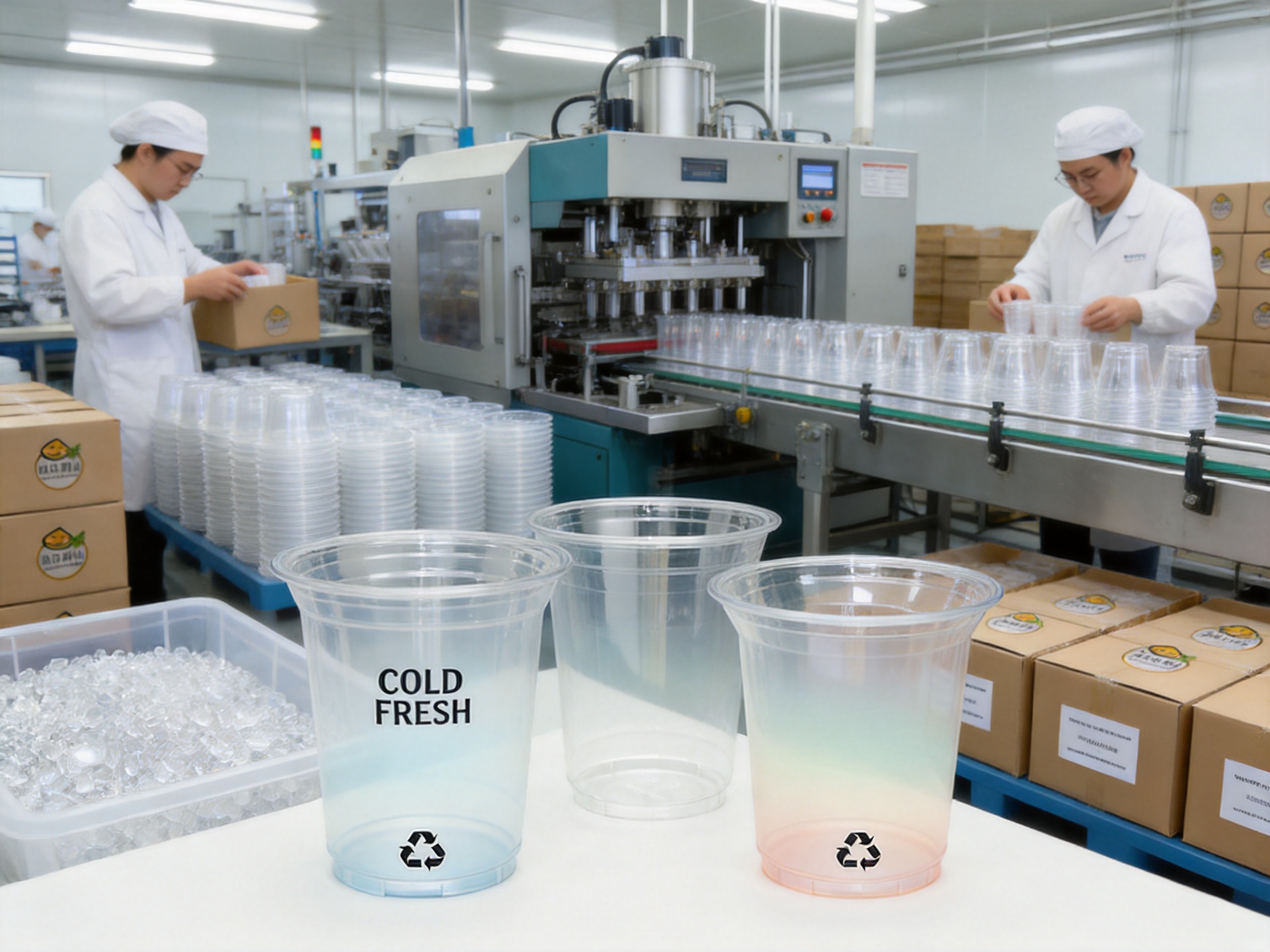
A high-quality PET cup depends not only on material selection but also on manufacturing discipline. From raw material preparation to forming, trimming, inspection, packing, and shipment, each step affects the final product. Advanced production equipment and well-managed production lines help ensure that cups have consistent dimensions, smooth rims, clear walls, and stable strength. Precision is especially important for lid compatibility because even small differences in rim diameter can affect sealing performance.
The manufacturing process begins with food-grade PET material selection. Materials must meet safety, clarity, and processing requirements. Proper material control helps avoid contamination, odor, discoloration, and unstable forming behavior. In food packaging production, raw material consistency is a foundation for all later quality outcomes. A manufacturer with established procurement and inspection procedures can better maintain batch-to-batch stability.
During forming, temperature control and mold precision play essential roles. PET must be processed under controlled conditions to achieve clarity and strength while avoiding defects such as uneven thickness, warping, bubbles, scratches, or weak spots. The low-temperature resistant formulation must be shaped in a way that preserves its functional properties. Advanced equipment helps maintain consistent heating, forming pressure, cooling, and dimensional accuracy.
The cup mouth requires particular attention. A round, smooth rim is important for comfort, safety, and lid fit. Rough or irregular rims can make the cup feel cheap, interfere with sealing, or create handling concerns. The product’s round cup mouth and smooth inner wall reflect careful manufacturing control. These details may seem small, but they have direct impact on customer satisfaction and operational efficiency.
After forming, inspection is necessary to identify visual or structural defects. Quality teams may examine transparency, rim shape, wall smoothness, dimension, stacking performance, and overall appearance. For customized orders, printing or in-mold labeling quality must also be checked. Proper inspection reduces the risk of defective cups reaching customers, protecting both the buyer’s brand and the manufacturer’s reputation.
Packaging and logistics also matter. Disposable cups are lightweight but can be damaged if stacked, packed, or transported improperly. A professional manufacturer designs packing methods to protect cup shape, avoid contamination, and support efficient warehousing. For high-volume buyers, carton consistency, labeling, and shipping reliability are important elements of the purchasing experience.
Quality Management and Certification Support
Food packaging customers increasingly demand evidence that suppliers can maintain controlled production. Certifications help demonstrate that a manufacturer has implemented systems for quality, safety, and compliance. The low-temperature resistant PET plastic cup is produced by a company that has obtained several recognized certifications and testing qualifications, including the QS national industrial product production license, ISO9001 quality management system certification, BRC certification, German DIN safety certification, and EU ROHS+ testing.
ISO9001 certification indicates a quality management framework focused on consistent processes, documentation, corrective actions, and continuous improvement. In practical terms, this supports more predictable product quality and better handling of customer requirements. For OEM customers, this is valuable because custom packaging projects require accurate communication, specification control, and repeatable production.
BRC certification is widely associated with food safety and packaging standards. For buyers in foodservice and retail supply chains, such certification can support supplier qualification and reduce procurement risk. It also reflects attention to hygiene, traceability, and controlled production environments. When packaging comes into direct contact with beverages, these factors are essential.
DIN safety certification and EU ROHS+ testing further support product credibility in markets where safety and material compliance are important. While different countries and customers may have their own requirements, a manufacturer with multiple certifications is generally better prepared to discuss compliance documentation and quality expectations. This is particularly helpful for international buyers seeking a reliable Chinese OEM partner.
Certifications alone do not guarantee every outcome, but they indicate that the manufacturer has invested in systems and external evaluations. Combined with advanced production equipment, experienced teams, and large-scale capacity, these certifications strengthen the overall value proposition of the low-temperature resistant PET cup.
Customization for Branding and Market Differentiation
In today’s food and beverage market, a cup is not just a container. It is a visible brand asset. Customers carry cups through shopping malls, offices, streets, campuses, events, and public transportation. Every cup can communicate a brand message. The low-temperature resistant PET plastic cup can be customized in color, pattern, and in-mold labeling, allowing businesses to create packaging that supports recognition and emotional connection.
Customized colors can help align cups with seasonal campaigns, product categories, or brand identity. For example, a beverage company may choose a clear cup for fruit tea, a lightly tinted cup for limited editions, or a specific color accent to match a logo. While transparency remains a major advantage of PET, selective customization can make the product feel more exclusive and coordinated.
Pattern customization can include logos, slogans, icons, product names, QR codes, promotional graphics, or event-specific designs. For chain stores, consistent printed packaging helps customers identify the brand immediately. For events, customized cups can carry sponsor names or campaign themes. For retail products, attractive packaging can improve shelf visibility and encourage repeat purchase.
In-mold labeling offers another path for premium decoration. This method can integrate visual elements during the manufacturing process, creating a more durable and refined appearance than some post-production label methods. Depending on order requirements and design feasibility, in-mold labeling can help brands achieve a professional look while maintaining efficient production.
Customization must be supported by technical capability. It requires communication between customer service, design, tooling, production, and quality teams. Artwork must be adapted to cup dimensions, printing limitations, stacking requirements, and food packaging standards. A strong OEM manufacturer can guide customers through these steps, helping them move from concept to mass production with fewer errors.
Applications Across Foodservice and Retail
The low-temperature resistant PET plastic cup is suitable for a wide range of cold beverage and food applications. Its clarity, toughness, and low-temperature stability make it useful for iced coffee, cold brew, milk tea, fruit tea, smoothies, juices, soft drinks, yogurt beverages, frappes, lemon tea, bubble tea, and chilled desserts. Wide-mouth versions may also be used for parfaits, fruit cups, salads, cereal desserts, and snack bowls depending on lid and serving requirements.
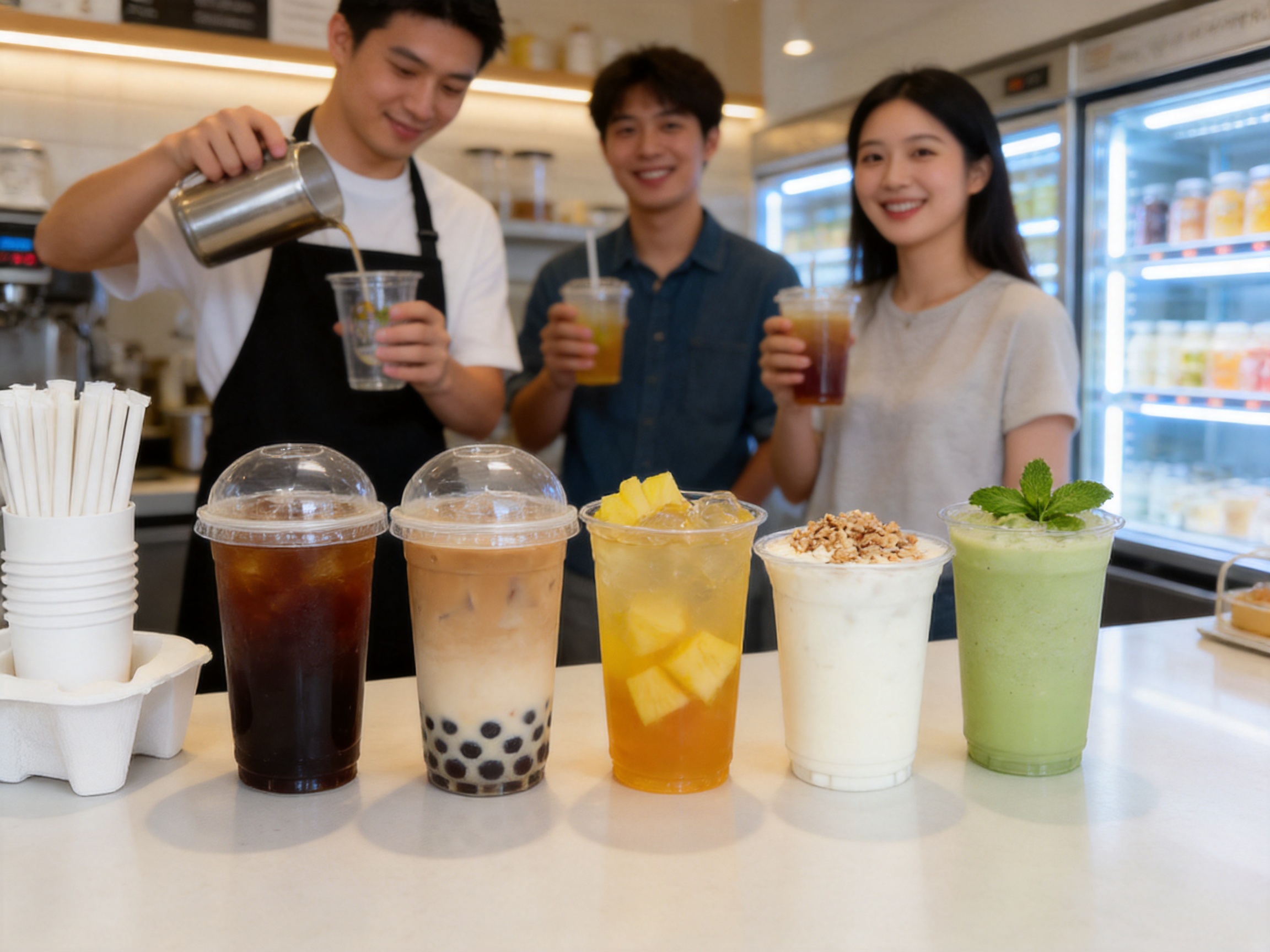
Coffee shops can use the cup for iced Americano, iced latte, cold brew, and seasonal drinks. Because many coffee beverages rely on visual layers and ice presentation, transparency adds value. A cup that resists low-temperature brittleness is useful when drinks are prepared with large ice cubes or stored briefly in chilled conditions.
Tea and juice shops benefit from the cup’s ability to display color, fruit, and toppings. Modern fruit tea and bubble tea often include visible ingredients such as citrus slices, berries, tapioca pearls, jelly, cheese foam, and herbs. A clear PET cup makes these ingredients part of the product presentation. The smooth rim and available calibers also help match different lid types and drinking styles.
Dessert stores may use larger or wider cups for chilled puddings, yogurt parfaits, shaved ice components, and layered sweets. The 117 mm wide-mouth option is especially relevant for products that require spoon access or a broader opening. Because PET provides a clean and glossy appearance, it can make desserts look more premium even in disposable packaging.
Supermarkets and convenience stores can use these cups for pre-packed chilled drinks or ready-to-eat cold foods, depending on sealing and filling conditions. The product’s shape stability supports display and handling, while customization can support private-label packaging. For retail environments, consistent size, stackability, and visual quality are essential for efficient operations.
Catering and event suppliers can also benefit. Events often require large quantities of disposable cups that must be delivered on time, used quickly, and perform reliably. Low-temperature resistance is helpful for outdoor events, ice beverage stations, festivals, and temporary retail setups. Customized cups can add event branding and improve the overall guest experience.
Operational Benefits for Buyers
For procurement teams, the value of a packaging product is measured not only by unit price but also by total operational performance. A low-cost cup that causes frequent cracking, poor sealing, or customer complaints can become expensive in practice. The low-temperature resistant PET cup is designed to reduce such hidden costs by offering stable quality, good toughness, and reliable shape retention.
Stacking performance is one operational benefit. Cups must be stacked in cartons, stored in warehouses, placed near service counters, and separated quickly by employees. If cups stick together too tightly or deform in stacks, service speed decreases. A consistent manufacturing process helps improve stacking and de-nesting performance, supporting smoother daily operations.
Lid compatibility is another major concern. Many beverage businesses use dome lids, flat lids, straw lids, or sealing systems. The cup rim must match the lid correctly to prevent leaks. A round and dimensionally stable cup mouth improves lid fitting reliability. This is particularly important for takeaway and delivery orders, where spilled drinks can damage food, bags, vehicles, and customer trust.
Transportation resistance also affects cost. Cups may travel from factory to distributor, distributor to shop, and shop to customer. During this journey, they may experience compression, vibration, and temperature changes. A tough PET cup that resists deformation helps reduce damage rates. Lower damage rates mean fewer rejected cartons, fewer emergency replacements, and more predictable inventory management.
Customization flexibility provides strategic benefits. Businesses can launch special product lines, seasonal designs, regional campaigns, or co-branded packaging without changing suppliers. This helps procurement and marketing teams work together more efficiently. Instead of treating packaging as a separate commodity purchase, companies can use it as part of product development and brand communication.
Large-scale production capability supports supply continuity. Beverage demand can rise sharply during summer, holidays, promotional periods, or new product launches. A manufacturer with strong capacity is better able to support large-volume orders and delivery schedules. Reliable delivery reduces the risk of packaging shortages, which can interrupt sales even when beverage ingredients are available.
Environmental Considerations and Recyclability
Sustainability is an increasingly important topic in disposable food packaging. Consumers, regulators, and brands are all paying closer attention to material choices, waste reduction, recycling, and responsible sourcing. The low-temperature resistant PET plastic cup addresses this concern through the use of recyclable PET material. PET recycling systems are established in many regions, and PET is commonly recognized as a material with reuse potential when collected and processed properly.
Recyclability does not eliminate the need for responsible use, but it provides a better pathway than materials with limited recovery options. Businesses can support recycling by educating consumers, using clear material identification, working with local waste systems, and designing packaging that avoids unnecessary complexity. For example, choosing compatible labels and minimizing contamination can help improve recyclability where infrastructure exists.
The cup’s lightweight design also contributes to resource efficiency. By using an appropriate grammage for each size, the product balances strength and material use. Overly heavy packaging increases shipping weight and material consumption, while overly light packaging may fail in use. The available specifications allow customers to choose a practical balance based on beverage type and handling requirements.
Compared with certain non-recyclable or mixed-material alternatives, a PET cup can be a more practical choice for businesses seeking transparent packaging with recycling potential. Its durability can also reduce waste caused by product failure. A cup that cracks or leaks before reaching the customer results in wasted beverage, wasted labor, and replacement packaging. Performance reliability is therefore part of sustainability as well as quality.
For companies building environmentally aware packaging programs, low-temperature resistant PET cups can be combined with responsible disposal messaging, recycling partnerships, and optimized packaging design. While no disposable packaging is impact-free, choosing recyclable materials and reliable manufacturing can help reduce unnecessary environmental burden.
How Advanced OEM Service Supports Customer Projects
OEM packaging projects require more than simple production. They require understanding customer goals, translating brand needs into technical specifications, and managing details throughout development. The low-temperature resistant PET cup can be supplied as a standard product or adapted to customer requirements, making OEM service a key part of its value.
The process often begins with requirement analysis. The customer may specify beverage type, filling temperature, storage environment, lid type, serving volume, branding style, order quantity, market destination, and packaging budget. Based on these details, the manufacturer can recommend suitable cup sizes, mouth diameters, grammage options, and customization methods.
Design support follows. If printed patterns or in-mold labeling are required, artwork must be adapted to the cup’s curved surface. Colors, logo placement, safety margins, and production feasibility must be checked carefully. A professional OEM team can help avoid common design problems such as distortion, poor alignment, unclear printing, or incompatibility with stacking.
Sample confirmation is an important step for many customers. Samples allow buyers to evaluate clarity, strength, lid fit, hand feel, appearance, and branding effect before mass production. This reduces risk and gives both parties a clear standard for production. For chain stores or distributors, sample approval may also involve internal marketing, quality, and procurement teams.
Mass production requires schedule control and quality monitoring. The manufacturer must manage raw materials, equipment availability, production parameters, inspection procedures, packing, and shipment. Strong production capacity helps ensure that large orders can be completed within agreed timelines. For seasonal beverage businesses, punctual delivery is especially important because missed timing can reduce sales opportunities.
After production, logistics coordination and customer service continue to matter. Packaging products must arrive in good condition and match documentation requirements. A reliable supplier can support repeat orders, product adjustments, and future packaging expansion. This long-term cooperation is valuable for brands that need consistent packaging quality across multiple product launches.
Design Details That Improve User Experience
Small design details can significantly influence how customers perceive a disposable cup. The round cup mouth provides a comfortable and familiar drinking experience. Even when used with lids and straws, the rim shape affects lid fit and overall appearance. A smooth, well-formed rim also reduces the chance of rough contact points, contributing to a more polished product feel.
The smooth inner wall supports clean beverage presentation. Ingredients can move naturally without being trapped by rough surfaces. For drinks with fruit pieces, jelly, foam, or pulp, this smoothness helps maintain an appetizing look. It also gives the impression of hygiene, which is essential in food and beverage packaging.
Transparency allows customers to inspect the product visually. They can see freshness, color, ice content, toppings, and portion size. This reduces uncertainty and enhances trust. For businesses, the cup becomes a display window that communicates product quality before the first sip.
Shape stability improves handling. A cup that keeps its structure when gripped is easier to carry and less likely to spill. This matters during busy takeaway service, delivery packing, and customer use. Good toughness also helps when lids are pressed onto the cup, reducing the risk that the cup collapses or the rim distorts.
Multiple sizes support better portion management. A brand can offer small, medium, large, and specialty servings using a consistent packaging family. This creates visual consistency while allowing price differentiation. Customers can choose the portion they want, and staff can work with standardized cup-lid combinations.
Market Trends Supporting Low-Temperature PET Cups
The growth of cold beverage culture is one of the strongest trends supporting this product. Iced coffee, cold brew, fruit tea, bubble tea, smoothies, and chilled functional beverages continue to expand in many markets. These products often depend on packaging that is clear, attractive, and strong. Low-temperature resistant PET cups meet these needs well.
Takeaway and delivery have also increased packaging demands. Drinks are no longer consumed only at the counter. They are transported through delivery platforms, carried in bags, placed in vehicle cup holders, and consumed later. Packaging must therefore perform beyond the immediate point of sale. A cup with strong low-temperature resistance and lid compatibility is better suited for this extended journey.
Brand differentiation is another trend. Many beverage businesses operate in competitive areas where products may seem similar. Packaging design helps create identity. A customized PET cup can communicate quality, style, and professionalism. It can also support limited-time promotions and social media sharing, which are important in modern consumer marketing.
Food safety awareness continues to rise. Customers and business buyers want packaging that is safe, odorless, clean, and produced by reliable manufacturers. Certifications and quality systems help reassure buyers that products are made under controlled conditions. This favors manufacturers with documented quality management rather than informal production operations.
Sustainability pressure is also shaping packaging choices. Recyclable materials, lightweight design, and reduced failure waste are increasingly valued. PET remains a practical material for transparent cold beverage packaging because it combines visual quality with recycling potential. Low-temperature resistant PET cups therefore align with both performance and environmental considerations.
Choosing the Right Cup Specification
Selecting the correct PET cup involves several practical considerations. The first is beverage volume. A standard iced drink may require 400 ml, 500 ml, or 600 ml, while larger specialty beverages may require 700 ml or more. Desserts or wide-mouth products may require a different shape even if the volume is similar. Matching cup size to the product helps control portion cost and customer satisfaction.
The second factor is mouth diameter. A 90 mm mouth may suit many standard drinks, while a 98 mm mouth provides more space for toppings, ice, and visual presentation. A 117 mm mouth may be better for spoonable products, wide desserts, or large-volume items. Lid availability should be checked together with mouth diameter to ensure a complete packaging system.
The third factor is product temperature and handling environment. If drinks will be refrigerated, displayed with ice, sold outdoors in cold weather, or transported through chilled logistics, low-temperature resistance becomes especially important. The -20°C to 55°C adaptability of this product supports many such applications.
The fourth factor is branding. If the cup will carry printed graphics or in-mold labeling, the selected size should provide enough surface area for clear design. Tall cups may offer more vertical branding space, while wide cups may provide a stronger shelf presence. Design goals should be discussed early to avoid selecting a cup shape that limits branding possibilities.
The fifth factor is operational compatibility. Businesses should consider cup dispensers, storage shelves, sealing machines, lid types, straws, carriers, delivery bags, and carton dimensions. A cup is part of a larger service system. The best choice is the one that fits smoothly into daily operations while meeting product and brand requirements.
Why Manufacturer Capability Matters
For foodservice businesses and distributors, choosing a cup supplier is a strategic decision. Packaging quality affects product safety, customer experience, brand image, and operating cost. A capable manufacturer provides not only the physical cup but also quality assurance, customization support, delivery reliability, and long-term partnership value.
Yuqian Packaging Technology (Jiangsu) Co., Ltd. was established in 2010 and operates from Taizhou City, Jiangsu Province, China. The company focuses on research and development, production, and sales of new food packaging materials and products. With a plant area of approximately 30,000 square meters and experience in disposable food packaging, the company supports customers seeking reliable packaging solutions for modern catering and retail needs.
The company’s strengths include advanced production equipment, multiple production lines, strong mass production capacity, and the ability to support customized solutions. For buyers, this means orders can be scaled according to demand, and packaging can be adapted to brand requirements. The company’s Shanghai branch further supports business channel expansion and service quality improvement.
A manufacturer with established quality certifications can help customers meet procurement requirements and reduce supplier risk. This is particularly important for brands with strict quality audits or international market expectations. The combination of certified systems, advanced equipment, and product development capability makes the manufacturer a strong partner for low-temperature resistant PET cup projects.
The company also offers a broader disposable food packaging product range, including plastic cups, plastic cup lids, takeaway bowls, disposable straws, recycle bags, peripheral products, and injection film lining cup and bowl box solutions. This wider portfolio can help customers source related packaging items from one supplier, improving coordination and consistency.
Q&A: Common Questions About Low-Temperature Resistant PET Plastic Cups
What is the main advantage of a low-temperature resistant PET plastic cup?
The main advantage is its ability to maintain toughness and shape stability in cold conditions, with an applicable temperature range of approximately -20°C to 55°C. This helps reduce cracking, deformation, and leakage during refrigerated storage, iced beverage service, or cold-weather use.
Is the cup suitable for hot drinks?
The cup is designed primarily for cold and low-temperature applications. Its stated temperature range reaches approximately 55°C, so it is not intended for high-temperature hot drinks such as boiling water, freshly brewed tea, or very hot coffee. For hot beverages, a cup designed specifically for higher temperatures should be selected.
What beverages are suitable for this cup?
It is suitable for iced coffee, cold brew, milk tea, fruit tea, smoothies, juices, soft drinks, yogurt drinks, chilled desserts, bubble tea, and similar cold beverage products. Wide-mouth versions may also be suitable for desserts, fruit cups, and spoonable chilled foods.
Why is PET transparency important?
High transparency allows customers to see the beverage clearly. This is valuable for drinks with attractive colors, layers, ice, fruit, foam, toppings, or dessert ingredients. Clear presentation can improve perceived freshness and support better sales appeal.
Can the cup be customized?
Yes. The cup can be customized according to project requirements, including options such as different calibers, colors, printed patterns, and in-mold labeling. Customization helps beverage brands strengthen recognition and create differentiated packaging.
Is the cup recyclable?
The cup is made from recyclable PET material. Recycling depends on local collection and processing systems, but PET is widely recognized as a recyclable plastic in many regions. Businesses can improve recycling outcomes by supporting proper disposal and avoiding unnecessary material complexity.
What certifications support the product’s reliability?
The manufacturer has obtained certifications and testing qualifications including QS national industrial product production license, ISO9001 quality management system certification, BRC certification, German DIN safety certification, and EU ROHS+ testing. These support quality management, safety awareness, and supplier credibility.
Why are multiple mouth diameters available?
Different mouth diameters support different beverage experiences. Standard diameters such as 90 mm are useful for common cold drinks, while 98 mm provides more space for toppings and ice. A 117 mm wide-mouth format can support larger drinks, desserts, and spoonable products.
How does this cup help reduce operational problems?
Its toughness, stable shape, smooth rim, and consistent dimensions help improve lid fit, reduce cracking, support stacking, and lower the risk of spills. These benefits can reduce waste, save staff time, and improve customer satisfaction.
What type of buyer benefits most from this product?
Beverage chains, coffee shops, tea shops, dessert stores, supermarkets, convenience stores, catering companies, distributors, and OEM packaging buyers can all benefit. It is especially useful for businesses selling cold, refrigerated, or visually attractive beverages.
Conclusion
The low-temperature resistant PET plastic cup is a practical and competitive solution for modern cold beverage packaging. It combines low-temperature toughness, high transparency, food-grade safety, recyclability, multiple specifications, and customization flexibility. These qualities make it more than a disposable container; it is a functional packaging tool that supports product quality, operational efficiency, and brand presentation.
Compared with ordinary disposable cups, this PET cup offers stronger performance in cold environments, better visual clarity, reliable shape stability, and broader branding options. Its ability to resist cracking and deformation from approximately -20°C to 55°C makes it particularly suitable for iced beverages, refrigerated products, winter service, and takeaway applications. Its smooth round mouth and clear body enhance user experience while supporting lid compatibility and attractive product display.
Behind the product is the manufacturing strength of Yuqian Packaging Technology (Jiangsu) Co., Ltd., a company with advanced production equipment, strong mass production capacity, OEM customization service, and multiple certifications. For buyers seeking dependable disposable food packaging containers, the combination of product performance and manufacturer capability offers significant value. Whether used for daily beverage service, retail packaging, event supply, or customized brand promotion, low-temperature resistant PET plastic cups provide a reliable foundation for high-quality cold drink packaging.
References
1. International Organization for Standardization. ISO 9001 Quality Management Systems: Requirements.
2. British Retail Consortium. Global Standard for Packaging Materials.
3. Plastics Industry Association. PET Packaging Material Characteristics and Recycling Guidance.
4. European Food Safety and Packaging Compliance Literature on Food-Contact Plastics.
5. DIN Standards Documentation on Safety and Quality Requirements for Packaging Materials.
6. Packaging Technology Texts on Thermoforming, PET Processing, and Disposable Foodservice Containers.