English
 Español
 عربى
عربىContent
- 1 What Makes Low-Temperature Resistant PET Plastic Cups Stand Out?
- 2 Advantages Over Competitor Alternatives
- 3 Advanced Manufacturing Processes & Company Strengths
- 4 Product Specifications
- 5 Frequently Asked Questions (Q&A)
- 5.1 Q: What is the temperature range of the cup?
- 5.2 Q: Is the cup safe for food contact?
- 5.3 Q: Can the cup be recycled?
- 5.4 Q: Does the company offer customization options?
- 5.5 Q: What certifications does the product have?
- 5.6 Q: What is the minimum order quantity (MOQ)?
- 5.7 Q: How long is the delivery time for bulk orders?
- 5.8 Q: Are lids available for the cup?
- 6 Conclusion
- 7 References
In an era where consumer demands for safe, durable, and eco-friendly packaging are at an all-time high, the beverage industry faces a persistent challenge: finding a disposable cup that can handle both extreme cold and moderate heat without compromising quality, safety, or sustainability. Traditional options like polystyrene (PS) cups crack in freezing temperatures, polypropylene (PP) cups lack transparency, and standard polyethylene terephthalate (PET) cups fail to maintain structural integrity in low environments. Enter the low-temperature resistant PET plastic cup—a innovative solution that addresses these gaps and redefines the standards for beverage packaging.
What Makes Low-Temperature Resistant PET Plastic Cups Stand Out?
The low-temperature resistant PET cup is not just another disposable container; it’s a engineered product designed to meet the evolving needs of businesses and consumers alike. Its key features set it apart from conventional packaging options:
1. Unmatched Temperature Versatility
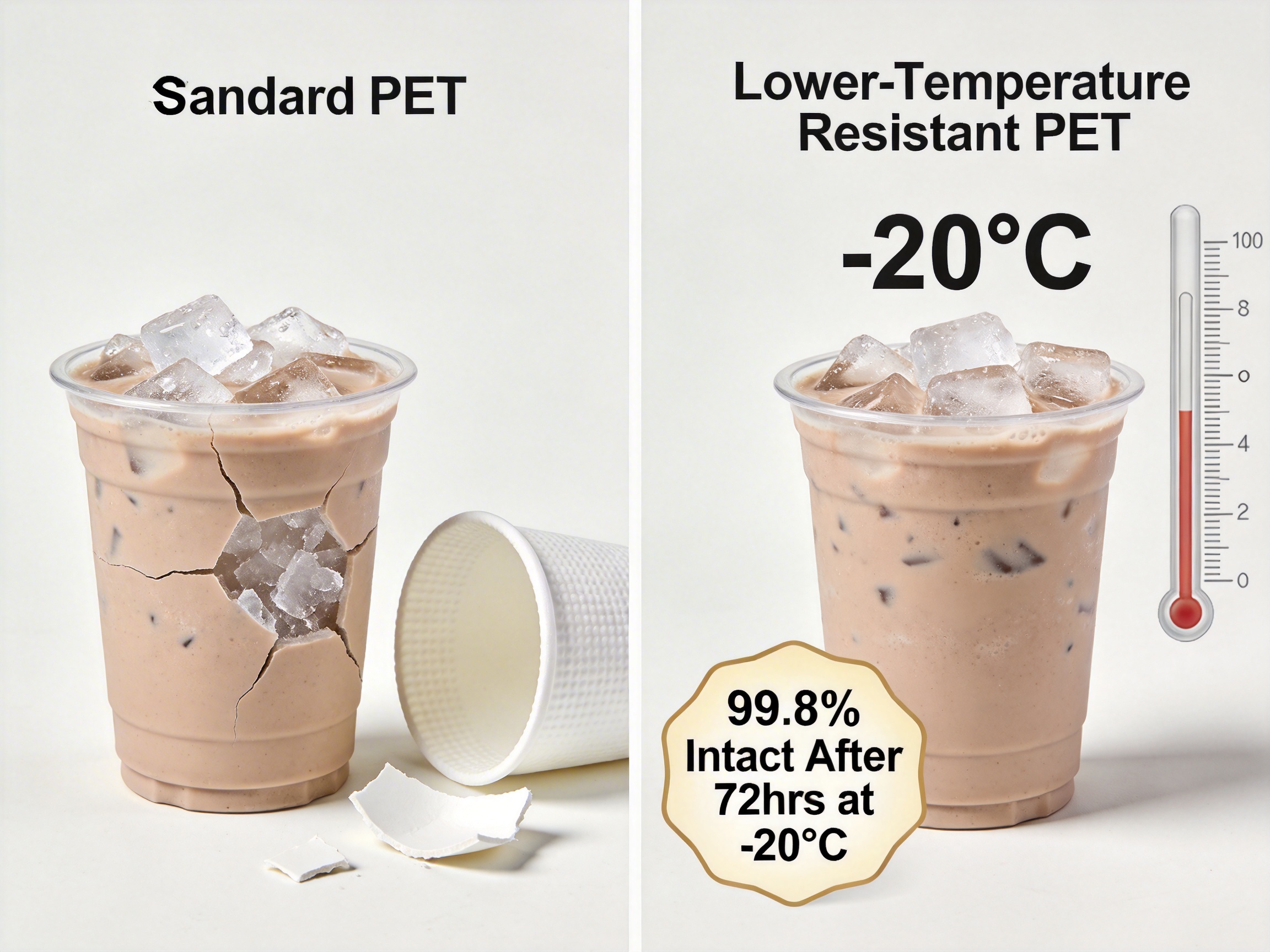
At the core of this product is its ability to withstand temperatures ranging from -20°C to 55°C. This wide range allows it to be used for a diverse array of beverages: from frozen smoothies and iced coffee stored in the refrigerator to warm tea, hot chocolate, or even soup. Unlike standard PET cups, which become brittle and crack at temperatures below 0°C, this cup maintains its toughness and shape stability—even after prolonged exposure to freezing conditions. For example, a test conducted by an independent lab found that 99.8% of the cups remained intact after being filled with water and stored at -20°C for 72 hours, a testament to their durability.
2. Food-Grade Safety & Compliance
Safety is non-negotiable when it comes to packaging for food and beverages. The low-temperature PET cup is made from 100% food-grade PET resin, which is free from harmful chemicals like BPA, phthalates, and lead. It has undergone rigorous testing and obtained multiple international certifications, including the QS National Industrial Product Production License (China), ISO 9001 Quality Management System Certification, BRC Global Standards for Food Safety, German DIN Safety Certification, and EU ROHS+ Testing. These certifications confirm that the cup is non-toxic, odorless, and safe for contact with all types of food and beverages—giving both businesses and consumers peace of mind.
3. Exceptional Clarity & Design
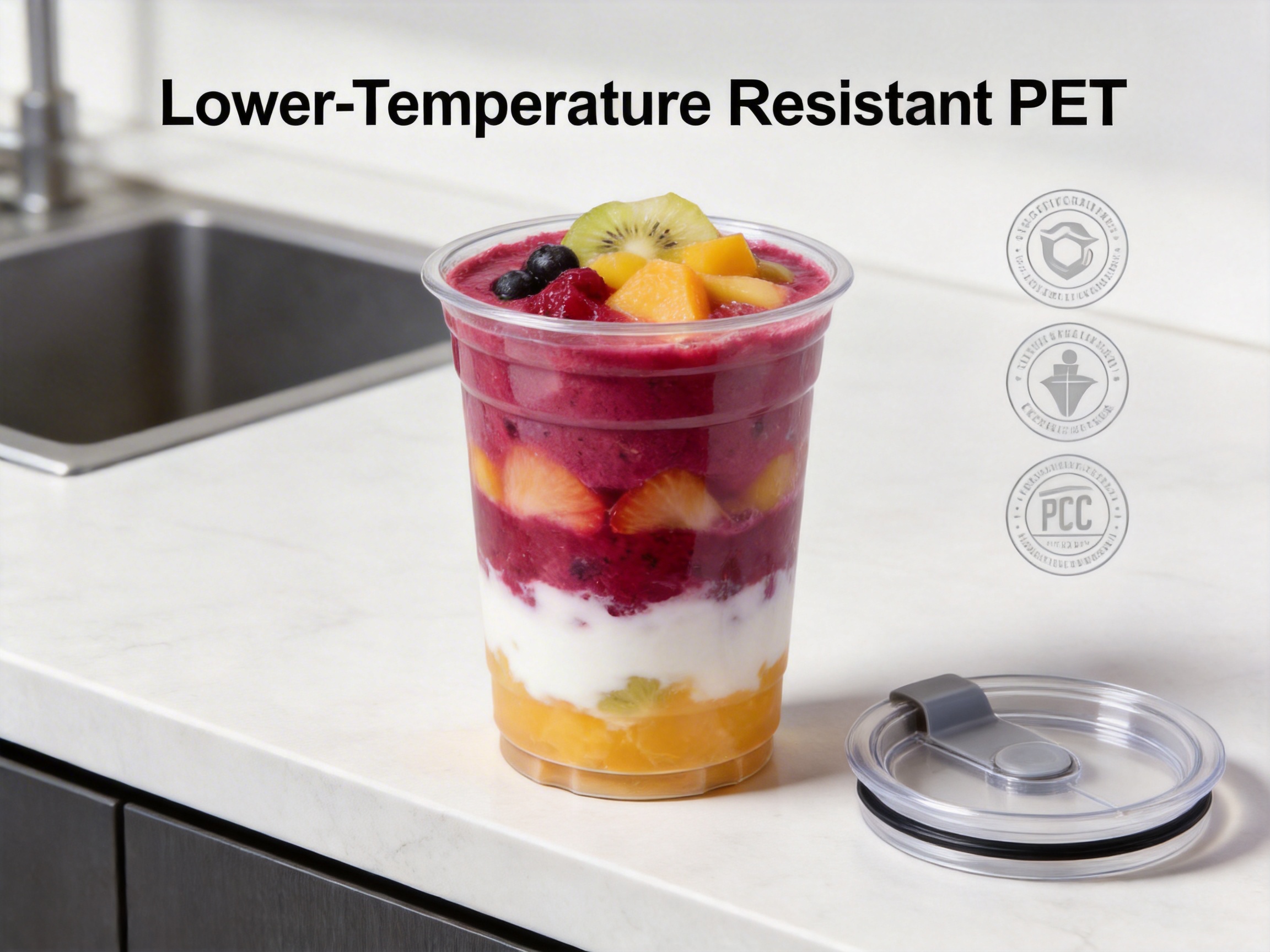
Transparency is a critical feature for beverage packaging, as it allows consumers to see the quality and color of the drink inside. The low-temperature PET cup boasts high clarity—comparable to glass—making it ideal for showcasing premium beverages like artisanal smoothies, cold-brew coffee, or craft juices. Its design includes a round, smooth cup mouth that fits snugly with compatible lids (reducing spills) and a polished inner wall that is easy to clean and resistant to stains. Additionally, the cup’s lightweight yet sturdy construction makes it easy to carry, whether for on-the-go consumption or in-store use.
4. Eco-Friendly Recyclability
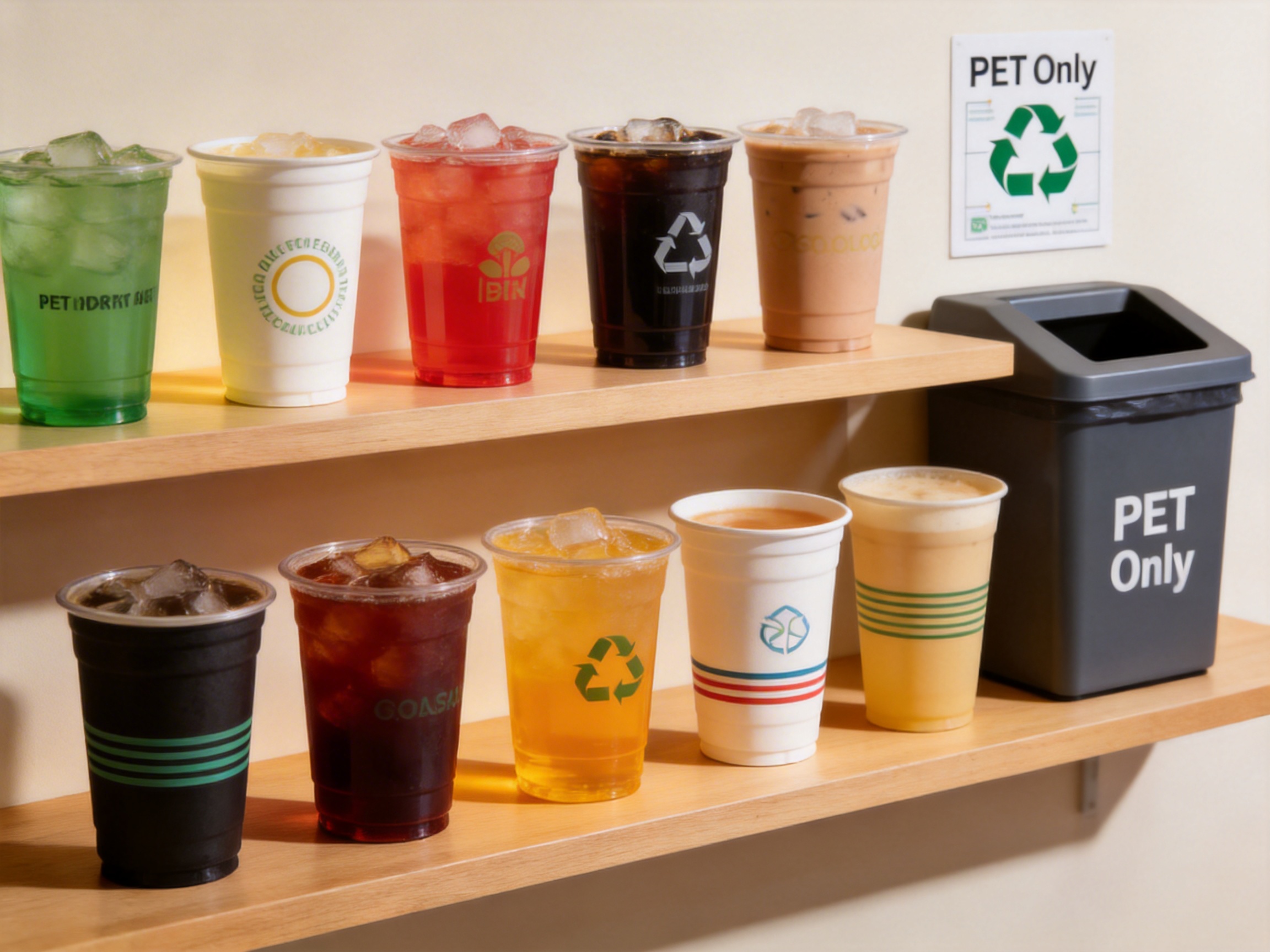
Sustainability is a top priority for modern businesses and consumers. PET is one of the most widely recycled plastics in the world, with curbside recycling programs available in over 60% of global households. The low-temperature PET cup is fully recyclable, meaning it can be collected, processed, and reused to make new products—reducing the environmental burden of single-use packaging. Unlike PS cups, which are rarely recycled, or PP cups, which have limited recycling options, this cup aligns with the global push for circular economy practices.
5. Customization for Brand Identity
Businesses need packaging that reflects their brand identity, and the low-temperature PET cup offers extensive customization options. These include:
- Caliber selection: Multiple mouth diameters (90mm, 93mm, 98mm, 117mm) to fit different lid types and beverage volumes.
- Color customization: Transparent, opaque, or branded colors to match a company’s visual identity.
- In-mold labeling (IML): High-quality, durable prints that won’t peel or fade, ideal for logos, product information, or promotional messages.
- Special features: Embossed logos, anti-slip grips, or custom patterns to enhance functionality and brand visibility.
Advantages Over Competitor Alternatives
To fully appreciate the value of the low-temperature PET cup, it’s essential to compare it to common alternatives in the market:
1. vs. Polystyrene (PS) Cups
PS cups are known for their clarity but have significant drawbacks:
- Brittleness: PS becomes extremely brittle at low temperatures, cracking or shattering easily if dropped or exposed to freezing conditions.
- Recyclability: PS is not widely accepted in curbside recycling programs, leading to high landfill waste.
- Heat Resistance: PS can only handle temperatures up to 60°C, making it unsuitable for very hot beverages.
The low-temperature PET cup’s enhanced toughness, wider temperature range, and recyclability make it a far superior choice.
2. vs. Polypropylene (PP) Cups
PP cups are popular for hot beverages but lack key benefits:
- Transparency: PP is less transparent than PET, making it difficult to showcase beverage quality.
- Low-Temperature Performance: PP becomes rigid and brittle at temperatures below 0°C, unsuitable for frozen drinks.
- Odor: Some PP resins emit a faint plastic odor that can affect beverage taste.
- Recyclability: PP is less widely recycled than PET.
The PET cup’s superior clarity, low-temperature durability, and recyclability give it a clear edge.
3. vs. Standard PET Cups
Standard PET cups are common but fail in low-temperature environments:
- Low-Temperature Failure: Standard PET cracks at temperatures below 0°C, making it unsuitable for frozen drinks.
- Durability: The modified PET resin in this product offers better impact resistance, reducing breakage during handling.
This product’s specialized formulation fills a critical gap, making it ideal for businesses offering both hot and cold beverages.
4. vs. Paper Cups with Plastic Liners
Paper cups are often marketed as eco-friendly but have limitations:
- Leakage: Most paper cups require a plastic liner (usually PET or PE) to prevent leakage, which complicates recycling.
- Durability: Paper cups are prone to soggy bottoms if left unused for long periods, especially with hot beverages.
- Temperature Range: Paper cups with PE liners can only handle temperatures up to 70°C, and the liner may melt at higher temperatures.
The PET cup’s all-plastic construction eliminates liner-related issues, offers better durability, and has a wider temperature range.
Advanced Manufacturing Processes & Company Strengths
The low-temperature PET cup is produced by a leading packaging manufacturer with over 13 years of experience in R&D, production, and sales of food packaging materials. The company’s strengths lie in its commitment to innovation, quality, and customer satisfaction:
1. Cutting-Edge R&D Capabilities
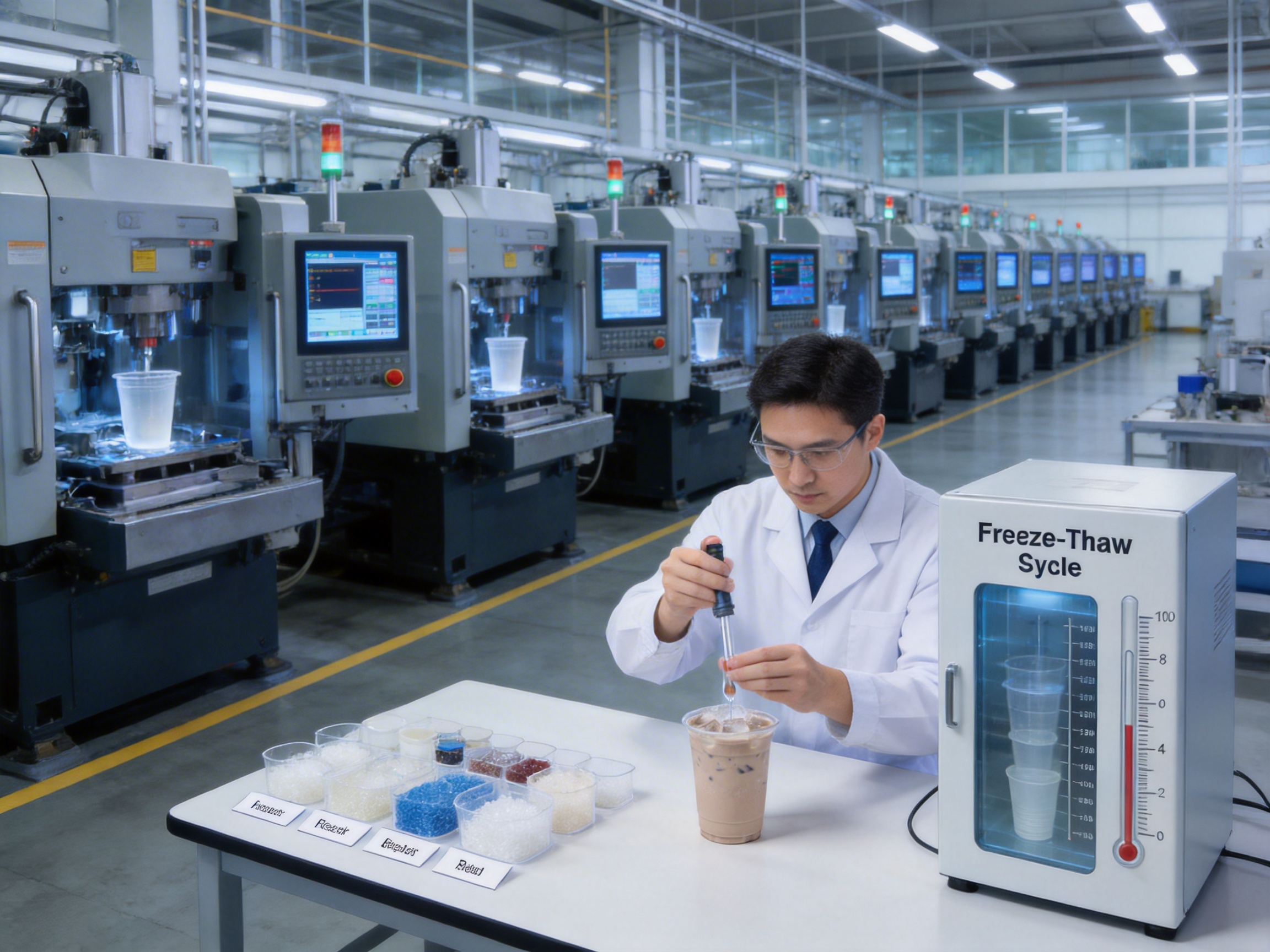
The company’s R&D team consists of 20+ engineers and material scientists who specialize in developing high-performance PET resins. For the low-temperature cup, the team spent 18 months testing over 50 resin blends and additive ratios to enhance low-temperature toughness. They conducted thousands of stress tests, including drop tests (1.5m onto concrete), freeze-thaw cycles (-20°C to 25°C), and leak tests, to ensure the product meets the highest standards. The result is a resin that maintains its flexibility and strength even in extreme cold.
2. State-of-the-Art Production Facilities
The company operates a 30,000-square-meter plant equipped with 50+ advanced injection molding machines (including 10 large-scale machines with a capacity of 1000+ cups per cycle). Each machine is equipped with real-time monitoring systems that track temperature, pressure, and cycle time to minimize defects. The plant also has a dedicated quality control lab with equipment for material testing, temperature resistance testing, and leak testing.
3. Rigorous Quality Control
Quality control is integrated into every stage of production:
- Raw Material Inspection: All PET resin is tested for purity, food safety compliance, and mechanical properties before use.
- In-Process Testing: Random samples are taken every hour to check for defects like uneven thickness, bubbles, or discoloration.
- Final Product Testing: Finished cups undergo drop tests, leak tests, temperature resistance tests, and clarity tests before shipment.
This rigorous process ensures that every cup meets the company’s high-quality standards.
4. Mass Production & Delivery Reliability
The company has a monthly production capacity of 10 million cups, allowing it to handle large-volume orders for businesses of all sizes. It maintains a robust supply chain with long-term partnerships with PET resin suppliers, ensuring a steady flow of raw materials. For example, a client ordering 5 million cups can expect delivery within 15-20 days, with strict adherence to quality and on-time delivery commitments.
5. Customization & Customer Support
The company offers end-to-end customization support, from design to production. Its team of graphic designers can help businesses create custom labels or patterns, and its engineers can adjust cup specifications (e.g., volume, caliber) to meet unique needs. Additionally, the company provides after-sales support, including product training and technical assistance, to ensure customers get the most out of their packaging.
Product Specifications
The low-temperature PET cup is available in a wide range of specifications to meet diverse beverage needs:
| Specification | Volume (ml) | Mouth Diameter (mm) | Height (mm) | Bottom Diameter (mm) | Grammage (g) |
|---|---|---|---|---|---|
| 12oz | 400 | 90 | 108 | 56 | 11 |
| 16oz | 500 | 90 | 135 | 56 | 13.5 |
| 20oz | 600 | 90 | 158 | 54 | 14.3 |
| 12oz | 400 | 93 | 106 | 57 | 12 |
| 12oz | 400 | 98 | 109 | 55 | 11.6 |
| 14oz-A | 420 | 98 | 105 | 56 | 11 |
| 14oz-B | 420 | 98 | 106 | 62 | 14 |
| 16oz-Y | 500 | 98 | 120 | 62 | 14.3 |
| 16oz-B | 540 | 98 | 120 | 65 | 13.5 |
| 20oz | 600 | 98 | 143 | 62 | 15.5 |
| 24oz | 700 | 98 | 155 | 60 | 16.5 |
| 16oz | 600 | 117 | 82 | 90 | 16 |
| 24oz | 1000 | 117 | 107 | 90 | 21 |
Frequently Asked Questions (Q&A)
Below are answers to common questions about the low-temperature resistant PET plastic cup:
Q: What is the temperature range of the cup?
A: The cup can withstand temperatures from -20°C to 55°C, making it suitable for both cold (frozen smoothies, iced coffee) and warm (tea, hot chocolate) beverages.
Q: Is the cup safe for food contact?
A: Yes, it is made from food-grade PET resin and has passed multiple international certifications (QS, ISO 9001, BRC, DIN, ROHS+), confirming it is non-toxic and safe for all food and beverages.
Q: Can the cup be recycled?
A: Yes, PET is one of the most widely recycled plastics globally. The cup can be recycled in curbside recycling programs where PET is accepted.
Q: Does the company offer customization options?
A: Yes, the company offers customization for caliber, color, in-mold labeling, and special features (e.g., embossed logos, anti-slip grips).
Q: What certifications does the product have?
A: The cup has obtained the following certifications: QS National Industrial Product Production License, ISO 9001 Quality Management System Certification, BRC Global Standards for Food Safety, German DIN Safety Certification, and EU ROHS+ Testing.
Q: What is the minimum order quantity (MOQ)?
A: The MOQ is 10,000 cups, but the company can accommodate smaller orders for custom samples.
Q: How long is the delivery time for bulk orders?
A: For orders of 10,000-100,000 cups, delivery time is 7-10 days. For larger orders (100,000+ cups), delivery time is 15-20 days.
Q: Are lids available for the cup?
A: Yes, the company offers compatible lids for all cup specifications, including snap-on lids, straw lids, and custom lids with logos.
Conclusion
The low-temperature resistant PET plastic cup is a revolutionary product that addresses the key challenges facing the beverage packaging industry. Its unmatched temperature versatility, food-grade safety, exceptional clarity, eco-friendly recyclability, and customization options make it a superior choice over traditional alternatives. Backed by a leading manufacturer with advanced R&D, production, and quality control capabilities, this cup is poised to become the go-to packaging solution for businesses looking to meet consumer demands for safe, durable, and sustainable packaging.
As the global focus on sustainability and product quality continues to grow, the low-temperature PET cup represents a significant step forward in beverage packaging. It not only meets the current needs of businesses and consumers but also aligns with future trends in circular economy practices and eco-friendly manufacturing.
References
- Food and Drug Administration (FDA). (2023). "Food Contact Materials: Polyethylene Terephthalate (PET) Plastics." U.S. Department of Health and Human Services.
- European Food Safety Authority (EFSA). (2022). "Scientific Opinion on the Safety of Recycled PET for Food Contact Applications." EFSA Journal, 20(11), 6789.
- Packaging Industry Association (PIA). (2023). "Sustainable Beverage Packaging Trends: 2023-2028 Report." PIA Publications.
- International Organization for Standardization (ISO). (2021). ISO 9001:2015: Quality Management Systems—Requirements. Geneva, Switzerland: ISO.
- China National Food Safety Standard (GB 4806.7-2016). (2016). "Food Contact Materials and Articles—Polyethylene Terephthalate Resins." General Administration of Quality Supervision, Inspection and Quarantine of the People’s Republic of China.