English
 Español
 عربى
عربىContent
- 1 Understanding PLA as a Packaging Material
- 2 Product Overview: Biodegradable PLA Packaging Bag
- 3 Why Biodegradable PLA Packaging Bags Are Superior to Conventional Plastic Bags
- 4 Advantages Compared with Competing Biodegradable Packaging Options
- 5 Key Product Types and Applications
- 6 Product Features at a Glance
- 7 Food Safety and Consumer Confidence
- 8 Environmental Advantages and Circular Economy Value
- 9 Advanced Manufacturing Strengths
- 10 OEM Customization for Food Packaging Buyers
- 11 Applications in the Disposable Food Packaging Container Market
- 12 How PLA Packaging Bags Support Brand Value
- 13 Quality Control from Raw Material to Finished Product
- 14 Manufacturing Certifications and Their Importance
- 15 Operational Benefits for Food Service Businesses
- 16 Cost Considerations and Long-Term Value
- 17 Role in Reducing Plastic Pollution
- 18 Design Considerations for Selecting the Right PLA Packaging Bag
- 19 Why Manufacturer Experience Matters
- 20 Market Trends Driving Demand for PLA Packaging Bags
- 21 Q&A: Common Questions About Biodegradable PLA Packaging Bags
- 21.1 What is a biodegradable PLA packaging bag?
- 21.2 Is PLA safe for food packaging?
- 21.3 Can the size of the bag be customized?
- 21.4 What types of PLA packaging bags are available?
- 21.5 How does PLA compare with traditional plastic?
- 21.6 Does PLA biodegrade everywhere?
- 21.7 Why should a food service business choose PLA packaging bags?
- 21.8 What makes this product competitive?
- 21.9 Are PLA bags suitable for beverage shops?
- 21.10 How can buyers start a customized order?
- 22 Practical Buying Guide
- 23 Company Strengths Behind the Product
- 24 Future Outlook for Biodegradable Packaging
- 25 Conclusion
- 26 References
- 27 Product: Biodegradable PLA packaging bag
Biodegradable PLA packaging bag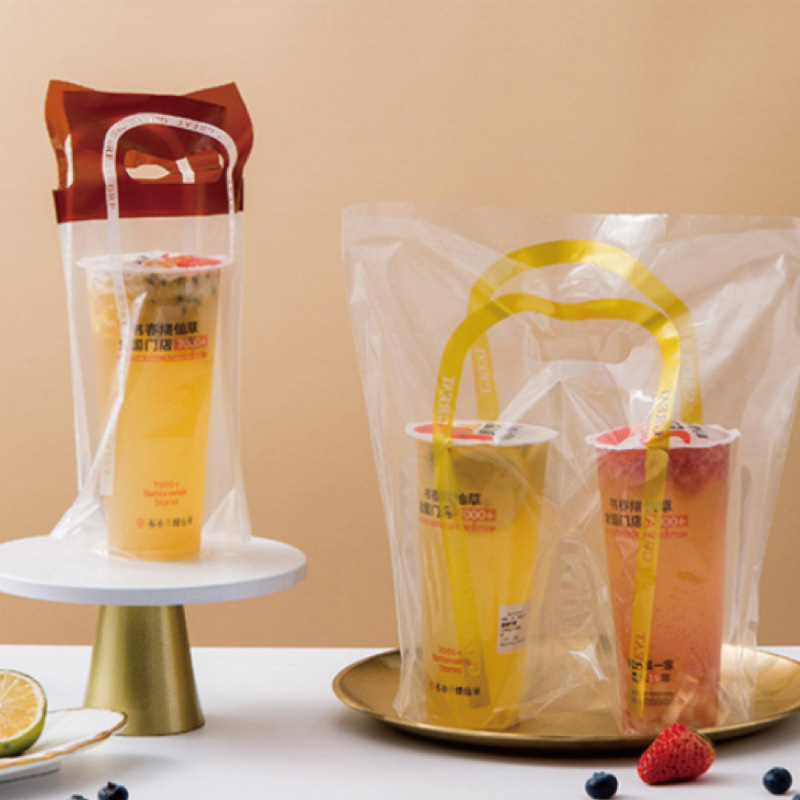
Biodegradable PLA packaging bags are becoming an important solution for food service businesses, beverage shops, takeaway operators, supermarkets, distributors, and packaging buyers who want reliable packaging while reducing dependence on conventional petroleum-based plastics. As environmental regulations tighten and consumers become more aware of plastic pollution, packaging is no longer judged only by price and appearance. It is evaluated by safety, material origin, end-of-life performance, customization flexibility, operational convenience, and the credibility of the manufacturer behind it.
The biodegradable PLA packaging bag is designed for practical food packaging scenarios, especially for cups, takeaway beverages, dessert cups, snack bowls, and other disposable food packaging containers. It is available in multiple structural types, including single-cup flat bags, double-cup flat bags, single-cup tote bags, double-cup tote bags, four-cup tote bags, and customized formats. The product uses PLA, or polylactic acid, a bio-based polymer commonly derived from renewable resources such as corn starch and sugarcane. Compared with traditional plastics made from fossil resources, PLA offers a more sustainable material pathway and supports the broader transition toward circular and low-carbon packaging.
For food service businesses, packaging must do more than hold a product. It must protect food hygiene, support efficient service, reflect environmental responsibility, and help create a professional customer experience. A biodegradable PLA packaging bag meets these needs by combining safety, clarity, lightweight structure, customized sizing, and biodegradability. The product is non-toxic and harmless, does not contain harmful chemical additives, and is especially suitable for food-contact applications when produced under strict quality control systems.
As a professional OEM manufacturer of degradable PLA packaging bags, Yuqian Packaging Technology (Jiangsu) Co., Ltd. provides customized product development, manufacturing, and supply services for food packaging customers. Established in 2010 and located in Taizhou City, Jiangsu Province, the company operates a production base covering approximately 30,000 square meters. It focuses on research, development, production, and sales of new food packaging materials and products. The company has obtained certifications and qualifications including QS national industrial product production license, ISO9001 quality management system certification, BRC certification, German DIN safety certification, and EU ROHS+ testing. These systems support stable product quality, food packaging safety, and export-oriented manufacturing reliability.
Understanding PLA as a Packaging Material
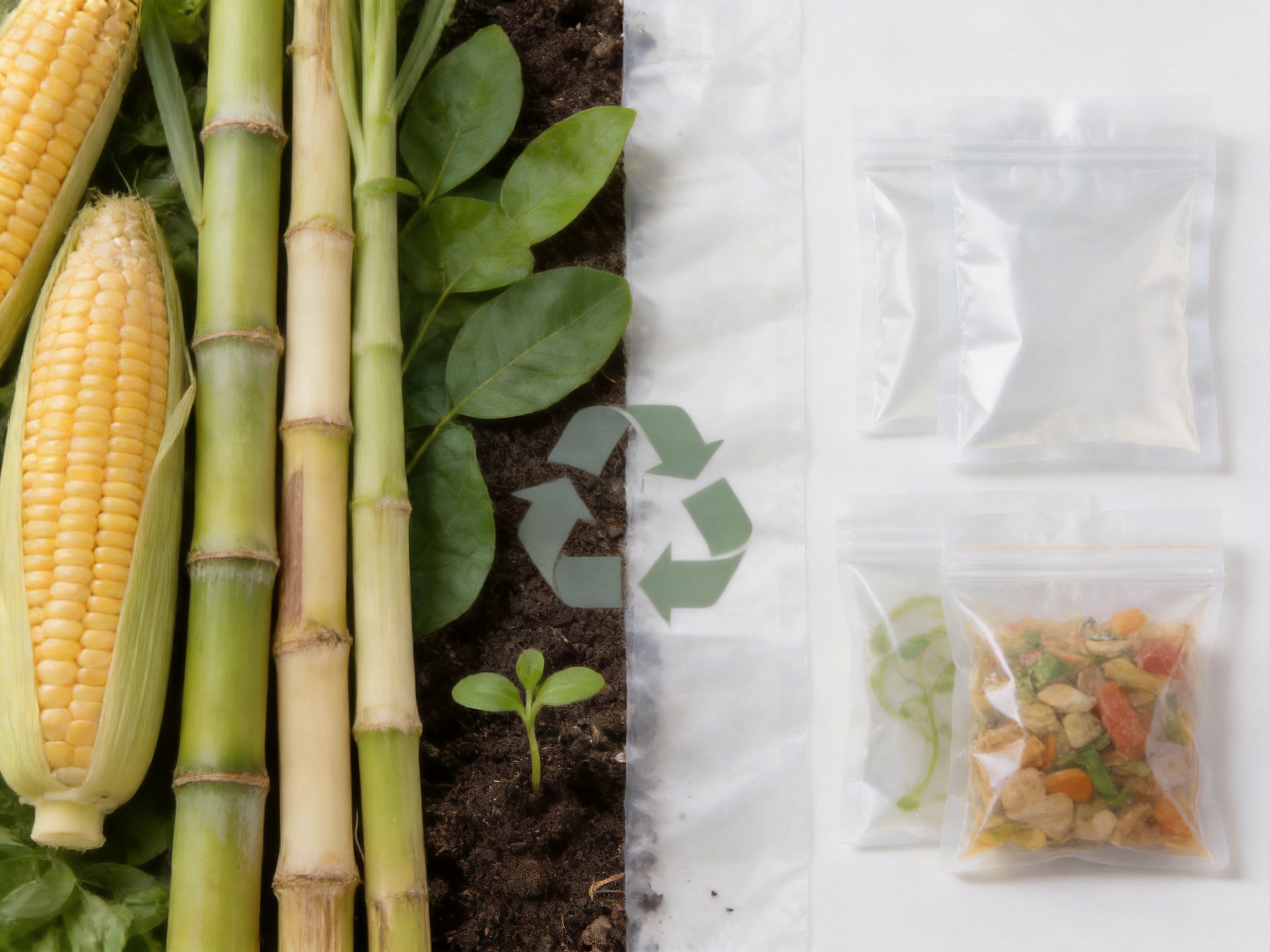
PLA stands for polylactic acid, a biodegradable thermoplastic polyester produced from renewable biomass resources. Instead of relying primarily on petroleum extraction, PLA begins with plant-based starch or sugar sources. These resources are fermented into lactic acid and then polymerized into PLA resin. The resulting material can be processed into films, bags, sheets, cups, and other packaging forms using industrial manufacturing technologies.
The value of PLA lies in its combination of renewable origin, useful mechanical performance, and biodegradability under appropriate conditions. Traditional petroleum-based plastic bags may remain in the environment for decades or even centuries if not properly collected and recycled. PLA, by contrast, is designed to break down into natural substances such as carbon dioxide, water, and biomass in controlled composting environments. This does not mean PLA disappears instantly in any environment, but it does mean that it offers a more responsible end-of-life option when supported by proper waste management infrastructure.
PLA also has favorable characteristics for food packaging. It is generally known for good transparency, low odor, clean appearance, and suitability for direct or indirect food packaging applications when produced according to relevant safety requirements. For packaging bags used with beverage cups or takeaway food containers, these characteristics help maintain a hygienic and pleasant user experience.
Another important advantage of PLA is its lower life-cycle carbon impact compared with many conventional petroleum-derived plastics. Because its raw materials originate from renewable plant resources, the carbon cycle of PLA can be more balanced. When food packaging buyers are working toward carbon reduction targets, ESG reporting, or green procurement policies, PLA packaging can be a practical product choice.
Product Overview: Biodegradable PLA Packaging Bag
The biodegradable PLA packaging bag is a flexible packaging product designed for food service packaging applications. It can be used to pack and carry single cups, multiple cups, takeaway beverages, desserts, snack containers, and similar food packaging products. It is especially relevant for businesses that use disposable food packaging containers and want a matching environmentally friendly bag solution.
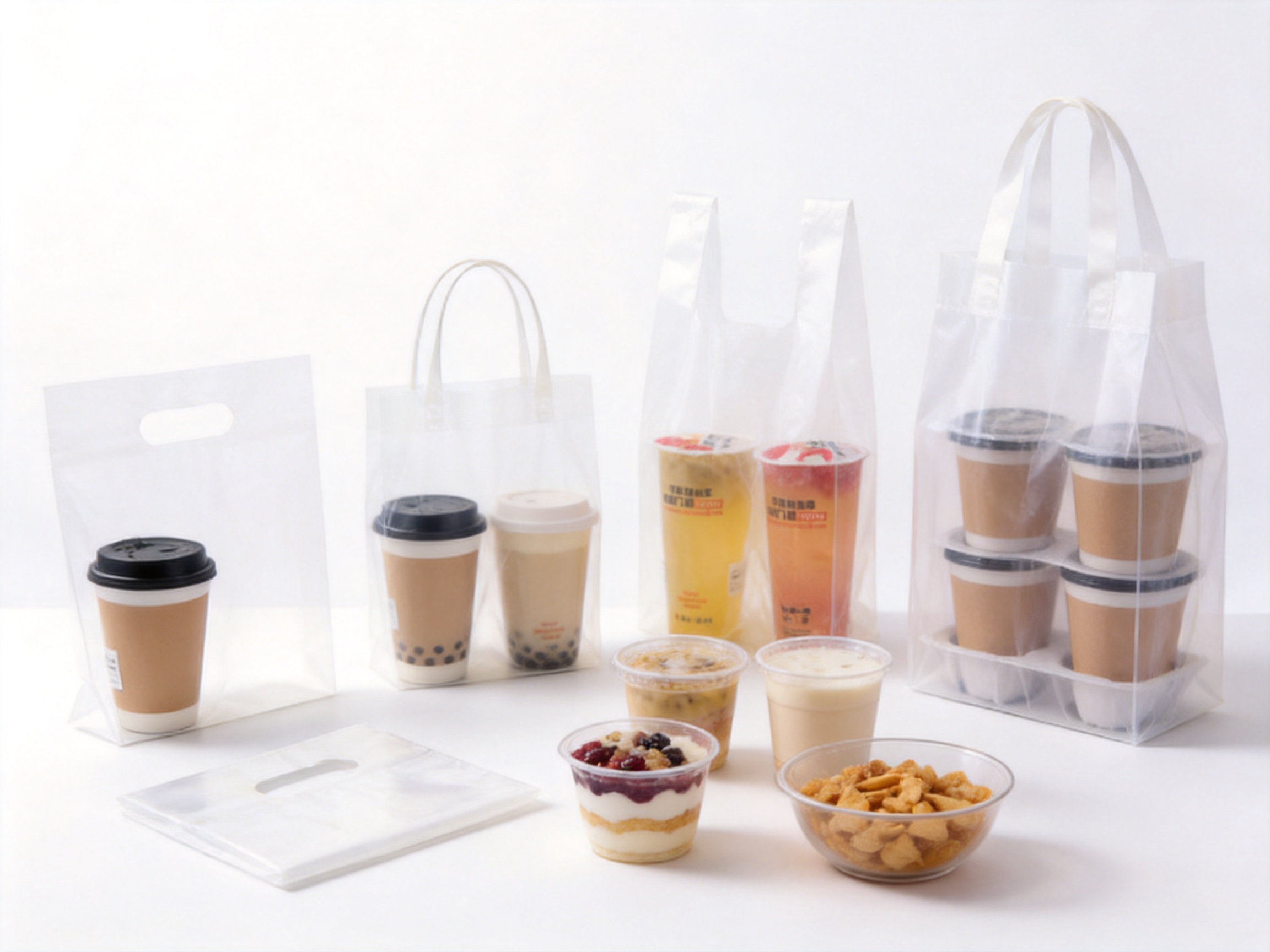
The product can be supplied in several common types: single-cup flat bag, double-cup flat bag, single-cup tote bag, double-cup tote bag, and four-cup tote bag. These formats are designed to meet different carrying and display needs. For example, a single-cup flat bag may be used for simple beverage packaging, while a double-cup tote bag is suitable for customers purchasing two drinks. A four-cup tote bag supports higher-volume takeaway orders and improves convenience for delivery or customer carryout.
Customization is one of the major strengths of this product. Dimensions can be adjusted according to customer requirements, including width, height, handle form, thickness, bag opening, and structural style. Customized sizing helps reduce material waste because the bag can be designed to fit the specific cup or container rather than using an oversized universal bag. It also supports better packaging presentation and improved operational efficiency at the service counter.
The product’s main features include biodegradable material, food packaging suitability, non-toxic and harmless composition, customizable size, multiple bag types, and environmental friendliness. For buyers, these features translate into practical advantages: safer packaging, improved customer perception, regulatory readiness, and a lower environmental burden compared with traditional plastic bag options.
Why Biodegradable PLA Packaging Bags Are Superior to Conventional Plastic Bags
Conventional plastic bags are widely used because they are inexpensive, lightweight, and familiar. However, they have major limitations in an era of sustainability-driven procurement. They are usually made from fossil-based polymers such as polyethylene or polypropylene. These materials are durable, but their durability becomes a disadvantage when they leak into the environment. They can fragment into microplastics, contribute to pollution, and create long-term disposal challenges.
Biodegradable PLA packaging bags provide a more forward-looking alternative. Their renewable material source reduces dependence on petroleum resources. Their biodegradability offers a better end-of-life pathway when managed through appropriate composting or controlled degradation systems. Their non-toxic and harmless composition supports food packaging safety and consumer confidence. Their clean appearance and customizable structure allow food service brands to maintain professional packaging standards without sacrificing environmental responsibility.
Another advantage is market differentiation. Businesses using PLA packaging can communicate their sustainability values more clearly. Consumers increasingly notice whether restaurants, tea shops, coffee chains, bakeries, and takeaway brands use environmentally friendly packaging. A biodegradable PLA packaging bag can become part of the customer experience. It shows that the business is actively reducing plastic pollution and choosing better materials.
PLA packaging also supports compliance with emerging regulations. Many countries and regions are restricting single-use petroleum-based plastics or encouraging biodegradable and compostable alternatives. Businesses that adopt PLA packaging earlier can adapt more smoothly to regulatory changes and avoid sudden supply disruptions or costly packaging redesigns.
Advantages Compared with Competing Biodegradable Packaging Options
Not all biodegradable packaging bags are the same. Some products use blended materials with uncertain composition, inconsistent quality, or limited traceability. Others may use degradable additives in conventional plastics, which can create confusion because fragmentation is not the same as true biodegradation. A high-quality PLA packaging bag made from clearly selected materials offers a more dependable and transparent solution.
Compared with paper bags, PLA bags can offer better moisture resistance and a cleaner lightweight structure for certain beverage packaging scenarios. Paper may absorb moisture, weaken during use, or require additional coatings. A PLA bag can help protect cup surfaces and maintain carrying convenience, especially for cold drinks, condensation, and takeaway beverage environments.
Compared with low-grade compostable blends, a well-manufactured PLA bag provides better consistency in film quality, sealing performance, appearance, and dimensional accuracy. Consistent bag quality is critical for food service operations because weak seals, inaccurate sizing, or uneven film thickness can slow service, create customer complaints, and increase waste.
Compared with generic imported packaging options, an OEM-produced PLA bag from a professional manufacturer can provide stronger customization and better quality control. Buyers can match the bag to their exact cup sizes, takeaway bowl dimensions, brand requirements, and distribution channels. This customized approach improves packaging functionality and avoids the compromises often associated with standard off-the-shelf products.
Key Product Types and Applications
The single-cup flat bag is designed for individual beverage packaging. It is suitable for coffee, milk tea, juice, smoothies, dessert cups, and similar products. The flat structure is simple, lightweight, and economical, making it ideal for high-volume beverage shops and takeaway counters.
The double-cup flat bag is useful when customers purchase two drinks. It supports paired beverage packaging and can improve convenience compared with carrying two separate bags. For operators, it reduces handling time and creates a more organized takeaway process.
The single-cup tote bag includes a handle structure for easier carrying. This style is particularly useful when customers need to transport a drink over a longer distance. It can improve customer satisfaction because the product is easier to hold, especially during commuting, office delivery, or outdoor takeaway consumption.
The double-cup tote bag offers improved convenience for two-cup orders. It is suitable for coffee shops, tea beverage chains, dessert stores, quick-service restaurants, and delivery platforms. The tote format helps keep beverages together and can reduce the risk of dropping or mishandling.
The four-cup tote bag is designed for group orders, family orders, office deliveries, and takeaway platforms. It can hold multiple cups in one convenient carrier, helping improve order efficiency and customer convenience. When combined with properly sized cup holders or internal structures, it can support stable transport and a cleaner delivery experience.
Customized PLA packaging bags can also be developed for special cup dimensions, bowl boxes, dessert containers, promotional packaging, event packaging, or private-label food packaging solutions. OEM customization allows buyers to select structure, size, thickness, quantity, and design requirements according to real market needs.
Product Features at a Glance
| Feature | Description | Customer Benefit |
|---|---|---|
| Material | Biodegradable PLA derived from renewable resources | Reduces dependence on petroleum-based plastics |
| Safety | Non-toxic and harmless, without harmful chemicals | Suitable for food packaging applications |
| Customization | Size, structure, and type can be adjusted | Better fit for cups, bowls, and takeaway containers |
| Bag Types | Single-cup, double-cup, four-cup, flat and tote formats | Meets different takeaway and delivery needs |
| Sustainability | Designed to support biodegradation under appropriate conditions | Helps reduce plastic pollution and supports circular economy goals |
| Manufacturing Support | Produced by an experienced OEM food packaging manufacturer | Stable quality, scalable supply, and professional service |
Food Safety and Consumer Confidence
Food packaging must protect consumers. Even when a bag does not directly contact unpackaged food, it is still part of the food service environment. Customers expect packaging to be clean, safe, odor-free, and reliable. PLA packaging bags meet these expectations when produced with proper raw material control, hygienic manufacturing management, and strict inspection procedures.
The biodegradable PLA packaging bag is non-toxic and harmless and does not contain harmful chemicals. This is important for beverage and takeaway food businesses because packaging may come into contact with cup rims, lids, containers, and outer surfaces that consumers handle directly. A safer packaging material helps reduce risk and supports brand trust.
The company’s certifications and quality management systems further strengthen consumer confidence. ISO9001 supports systematic quality control. BRC certification is highly relevant to packaging used in food-related supply chains. DIN safety certification and EU ROHS+ testing reflect additional attention to safety and restricted substances. Together, these systems help customers verify that the manufacturer operates under recognized standards rather than relying only on claims.
For chain restaurants, beverage brands, and distributors, consistent food packaging quality is essential. Packaging failure can damage not only a single order but also the reputation of the business. By choosing a manufacturer with established production management and testing systems, buyers reduce the risk of inconsistency and strengthen long-term supply reliability.
Environmental Advantages and Circular Economy Value
The environmental value of biodegradable PLA packaging bags begins with renewable material sourcing. PLA is produced from plant-based resources such as corn starch or sugarcane. These resources are renewable on an agricultural cycle, unlike petroleum resources that require geological time to form. By using PLA, packaging buyers can reduce their reliance on finite fossil resources.
The second environmental advantage is biodegradability. PLA can degrade under suitable composting or controlled environmental conditions. This provides an alternative to conventional plastic waste accumulation. Although proper disposal systems are still important, PLA creates opportunities for more sustainable waste management and supports the development of composting and circular economy infrastructure.
The third environmental advantage is carbon reduction potential. The life-cycle carbon emissions of PLA are generally lower than those of many traditional plastics. Plant-based feedstocks absorb carbon dioxide during growth, and this can help reduce the net carbon footprint of the material. For companies with sustainability reports, green procurement targets, or carbon neutrality strategies, PLA packaging is a practical step toward measurable improvement.
The fourth advantage is public education. When customers see biodegradable packaging in daily food service, they become more aware of sustainable consumption. Packaging becomes a communication tool. It helps promote better environmental habits and encourages the acceptance of circular materials.
The fifth advantage is pollution reduction. Traditional plastic bags are light and easily dispersed by wind, making them a common source of environmental litter. Replacing petroleum-based plastic bags with biodegradable alternatives can help reduce the long-term impact of packaging waste, especially when combined with responsible collection and disposal practices.
Advanced Manufacturing Strengths
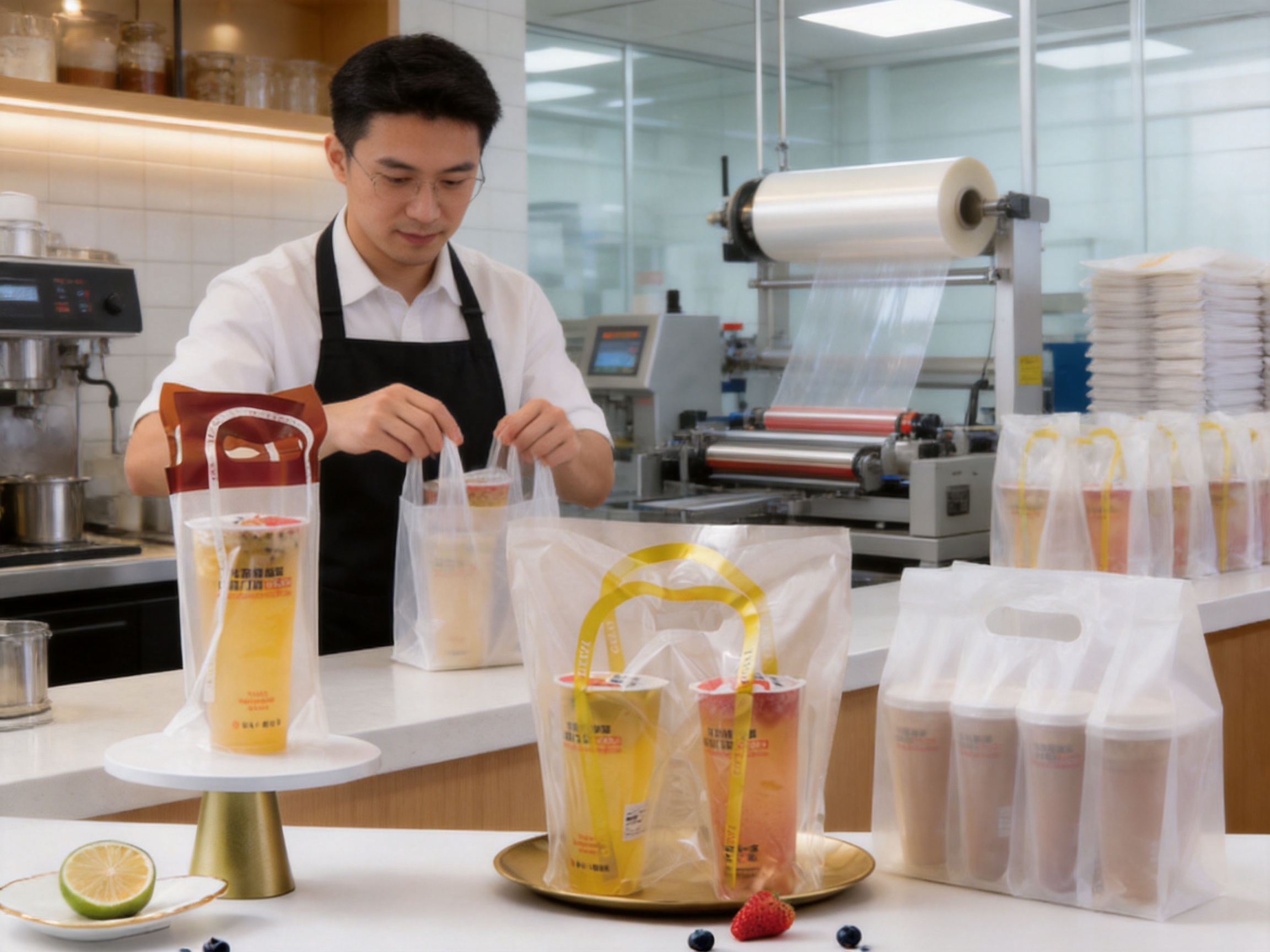
High-quality biodegradable PLA packaging requires more than simply selecting a green material. PLA film processing requires technical understanding of material behavior, temperature control, film formation, cutting, sealing, and dimensional stability. The manufacturer must be able to maintain consistent product performance while meeting customized specifications for different customers.
Yuqian Packaging Technology (Jiangsu) Co., Ltd. has been engaged in new food packaging materials and products since its establishment in 2010. With a production base of about 30,000 square meters, the company has the manufacturing capacity to support both standard orders and customized OEM projects. Its long-term focus on biodegradable new materials and food packaging products gives it a strong technical foundation for PLA packaging bag production.
Advanced manufacturing begins with material selection. PLA resin quality affects film clarity, flexibility, strength, sealing behavior, and biodegradation performance. A professional manufacturer must evaluate raw materials carefully and maintain stable supplier management. This helps ensure that every production batch meets expected standards.
The next stage is process control. Film extrusion and bag-making processes must be managed with accurate temperature and tension control. If processing conditions are unstable, the film may become brittle, uneven, wrinkled, or weak at the sealing area. Skilled process management helps create smooth, consistent, and reliable bags.
Cutting and sealing are also important. For cup bags and tote bags, accurate dimensions determine whether the bag fits the intended container. Strong seals determine whether the bag can hold products safely. Handle structure is particularly important for tote formats because customers rely on the handle when carrying beverages. A professional manufacturer tests and adjusts these details to reduce failure risk.
Quality inspection is the final safeguard. Dimensional checks, appearance inspection, sealing tests, and packaging checks help ensure that products delivered to customers are consistent. For food packaging buyers, this consistency reduces operational problems and helps maintain a professional customer experience.
OEM Customization for Food Packaging Buyers
OEM customization is one of the strongest advantages of the biodegradable PLA packaging bag. Food service packaging is not one-size-fits-all. Different cups vary in diameter, height, lid shape, and packaging method. Different restaurants and beverage shops have different service models. Some need compact single-cup bags for fast turnover, while others need four-cup bags for delivery platforms and group orders.
Customization allows the bag to be designed around the product rather than forcing the product into a generic bag. This improves fit, reduces unnecessary material use, and enhances the carrying experience. A properly fitted PLA packaging bag can reduce shaking, improve presentation, and make takeaway service smoother.
Customized bag dimensions can also support cost control. Oversized bags waste material and may increase shipping volume. Undersized bags create frustration and may damage products. By working with an experienced OEM manufacturer, customers can find the best balance between performance, sustainability, and cost.
Customization can also include product structure. Flat bags may be selected for simple and economical packaging. Tote bags may be chosen for better carrying convenience. Multi-cup bags may be designed for delivery operations. The product can be adapted to different food packaging systems and market positioning.
For distributors and private-label buyers, OEM services create opportunities to build differentiated product lines. Instead of selling generic bags, distributors can offer specialized biodegradable PLA packaging solutions for coffee shops, bubble tea stores, bakeries, convenience stores, and takeaway platforms. This creates stronger market competitiveness.
Applications in the Disposable Food Packaging Container Market
The biodegradable PLA packaging bag is closely connected with the broader disposable food packaging container market. Cups, cup lids, takeaway bowls, straws, boxes, and peripheral packaging products all need coordinated packaging systems. A food service business may use a plastic cup, a biodegradable cup, a lid, a straw, a bowl, and a carry bag in one order. The bag is the final packaging component that brings these items together for the customer.
When the carry bag is made from conventional plastic, the overall sustainability of the order is weakened. Even if the cup or bowl uses better materials, a petroleum-based plastic bag may still create environmental concerns. A biodegradable PLA packaging bag helps create a more consistent green packaging system.
For takeaway beverage businesses, the bag is especially important. Drinks often involve condensation, lids, straws, and movement during transport. A well-designed PLA bag helps protect the order and makes the customer experience more convenient. For delivery platforms, multi-cup tote bags can improve handling and reduce packaging disorder.
For supermarkets and convenience stores, PLA packaging bags can be used for pre-packed beverages, desserts, snacks, or light food containers. Their clean appearance and sustainability positioning can improve shelf appeal and support green retail policies.
For events, festivals, exhibitions, schools, and corporate catering, biodegradable PLA packaging bags provide an environmentally responsible option for high-volume food service. They help organizers reduce the environmental footprint of disposable packaging while maintaining convenience.
How PLA Packaging Bags Support Brand Value
Packaging is part of brand communication. Customers often interact with packaging before consuming the product. A biodegradable PLA packaging bag sends a message of responsibility, cleanliness, and modernity. This can be especially valuable for food and beverage businesses targeting young consumers, office workers, families, and environmentally conscious customers.
Consumers are increasingly willing to support businesses that use sustainable packaging. While price and taste remain important, environmental responsibility can influence purchasing decisions. A biodegradable bag can become a subtle but meaningful reason for customers to feel better about their purchase.
For chain brands, consistent use of biodegradable packaging across stores can strengthen identity and support ESG communication. For independent stores, it can create differentiation from competitors still using ordinary plastic bags. For distributors, it can expand product appeal to customers seeking regulatory-ready and eco-friendly solutions.
The product also supports storytelling. Businesses can explain that the bag is made from PLA, a material derived from renewable plant resources, and that it supports reduced plastic pollution. This creates educational value and strengthens customer engagement.
Quality Control from Raw Material to Finished Product
Quality control is essential because biodegradable materials require professional handling. PLA has different processing characteristics from traditional polyethylene. It requires careful temperature control, moisture management, and production parameter adjustment. Without proper process expertise, the final bag may lack strength or consistency.
A reliable manufacturing process begins with raw material inspection. The manufacturer must verify material identity, quality, and suitability for the intended product. Raw materials should be stored under controlled conditions to prevent moisture absorption and contamination.
During production, process parameters must be monitored to maintain stable film formation. Film thickness uniformity affects strength, appearance, and cost. If the film is too thin, the bag may fail during use. If it is too thick, material consumption increases unnecessarily. Balanced film design helps achieve performance and sustainability at the same time.
After film production, bag-making operations must maintain accurate cutting, sealing, and shaping. For tote bags, handle performance is a critical inspection point. For flat bags, opening and seam consistency are important. Multi-cup bags require structural reliability because they may carry heavier loads.
Finished products are inspected for appearance, dimension, sealing quality, contamination, and packaging condition. This helps ensure that customers receive products ready for food service use. Professional quality control reduces returns, complaints, and operational waste.
Manufacturing Certifications and Their Importance
Certifications are not just decorative documents. They show that a manufacturer has invested in standardized management and external verification. For packaging buyers, especially those serving food and beverage markets, certifications help reduce procurement risk.
The QS national industrial product production license demonstrates production qualification in the Chinese industrial product system. ISO9001 certification indicates that the company has established a quality management system focused on consistency and continuous improvement. BRC certification is particularly meaningful for food packaging supply chains because it emphasizes product safety, hygiene, traceability, and risk management.
German DIN safety certification and EU ROHS+ testing indicate attention to safety and restricted substances. These are valuable for customers seeking packaging that can meet demanding market expectations. For export buyers, such certifications help simplify supplier evaluation and support compliance reviews.
When customers compare suppliers, these qualifications can become a decisive advantage. A low-cost supplier without verified management systems may create hidden risks. A certified manufacturer offers stronger confidence in production stability, documentation, and long-term cooperation.
Operational Benefits for Food Service Businesses
Food service operations require speed. Packaging must be easy to open, easy to use, and suitable for repeated handling during busy service hours. A PLA packaging bag designed for specific cup or bowl sizes can improve service efficiency because staff do not need to struggle with poor fit.
For beverage shops, correctly sized single-cup and double-cup bags speed up takeaway preparation. For delivery orders, multi-cup tote bags help staff organize drinks more efficiently. For restaurants, customized bags can match takeaway bowls or meal containers, improving order presentation and reducing spillage risk.
Operational convenience also affects labor cost. If packaging is difficult to use, each order takes longer. In high-volume stores, even a few seconds per order can accumulate into significant time loss. Better packaging design supports smoother workflows.
Customer convenience is equally important. A strong handle, suitable bag size, and stable structure reduce the chance of dropping or spilling. Customers remember packaging experiences, especially when they are negative. Reliable PLA packaging helps protect the customer relationship.
Cost Considerations and Long-Term Value
Biodegradable PLA packaging bags may sometimes have a higher unit cost than ordinary petroleum-based plastic bags. However, purchase decisions should consider total value rather than unit price alone. The long-term value includes environmental compliance, brand enhancement, customer satisfaction, operational efficiency, and risk reduction.
If a business continues using traditional plastic bags in a market moving toward plastic restrictions, it may face future replacement costs, regulatory pressure, or reputational criticism. Switching to PLA packaging earlier can reduce these risks and create a smoother transition.
Customized sizing can also help manage cost. A bag designed precisely for the product avoids unnecessary material use. Professional manufacturing can optimize thickness and structure to achieve reliable performance without overengineering. This balance helps customers control cost while maintaining quality.
For brands that use packaging as part of their marketing, PLA bags can contribute to perceived value. Customers may view eco-friendly packaging as a sign of higher quality and responsibility. This can support premium positioning and customer loyalty.
Role in Reducing Plastic Pollution
Plastic pollution is one of the major environmental challenges facing the world. Disposable packaging contributes significantly to visible litter and waste management pressure. Lightweight bags are especially problematic because they can easily escape collection systems and spread into waterways, soil, and urban environments.
Biodegradable PLA packaging bags are not a complete solution by themselves, but they are an important part of a broader strategy. When combined with waste sorting, composting infrastructure, responsible consumer behavior, and better packaging design, they help reduce the persistence of plastic waste.
The use of renewable and biodegradable materials also encourages industry transformation. As more businesses choose PLA and other sustainable materials, production capacity grows, technology improves, and costs become more competitive. This supports the long-term development of greener packaging systems.
By producing degradable PLA packaging bags, the manufacturer contributes to reducing plastic waste generation and promoting sustainable resource use. This aligns with circular economy principles, where materials are selected, used, recovered, and returned to natural or industrial cycles more responsibly.
Design Considerations for Selecting the Right PLA Packaging Bag
Choosing the right PLA packaging bag requires understanding the product to be packed. Buyers should consider cup diameter, cup height, lid type, number of cups per order, expected carrying distance, and whether the bag will be used for in-store takeaway, delivery, or retail display.
For single drinks, a single-cup flat bag may be sufficient if the carrying distance is short. If customers often walk or commute, a single-cup tote bag may be more convenient. For paired beverage orders, a double-cup bag improves organization. For delivery platforms, a four-cup tote bag may be necessary to handle group orders efficiently.
Thickness should be selected according to load requirements. A thicker bag may provide better strength but uses more material. A professional manufacturer can recommend appropriate specifications based on product weight and usage conditions.
Bag opening design is also important. Staff should be able to insert cups quickly, especially during busy periods. The handle should be comfortable and reliable. Seal areas should be strong enough for the expected load.
Storage and logistics should also be considered. Packaging bags should be easy to store, count, and distribute. Efficient packing reduces warehouse space and shipping cost. PLA materials should be stored properly to maintain performance before use.
Why Manufacturer Experience Matters
Experience is critical in biodegradable packaging because the materials and processing requirements differ from conventional plastics. A supplier with limited experience may struggle with brittleness, weak sealing, inconsistent sizing, or delayed delivery. These problems can disrupt customer operations.
Yuqian Packaging Technology (Jiangsu) Co., Ltd. has long focused on new food packaging materials and products. Its experience covers biodegradable materials and food packaging categories including plastic cups, cup lids, takeaway bowls, disposable straws, recycle bags, peripheral products, and injection film lining cup and bowl boxes. This broad product understanding helps the company design PLA packaging bags that fit real food service systems.
The company’s establishment of a Shanghai branch in 2019 also reflects its commitment to service expansion and business channel development. For customers, this means stronger communication, broader market support, and improved service responsiveness.
Manufacturer experience also supports problem solving. When customers need a special size, a different bag type, or advice on product matching, an experienced team can provide practical recommendations. This reduces trial-and-error costs and speeds up product development.
Market Trends Driving Demand for PLA Packaging Bags
Several trends are increasing demand for biodegradable PLA packaging bags. The first is regulatory pressure. Governments are introducing restrictions on single-use plastics, encouraging compostable materials, and setting waste reduction targets. Businesses need packaging that can adapt to these policy changes.
The second trend is consumer awareness. Customers are more informed about plastic pollution and climate change. They increasingly prefer businesses that demonstrate environmental responsibility. Packaging is one of the most visible signs of that responsibility.
The third trend is growth in takeaway and delivery. Food delivery and takeaway beverage markets continue to expand. This creates demand for practical, reliable, and sustainable carry packaging. PLA bags can meet this demand while reducing reliance on conventional plastic.
The fourth trend is corporate ESG management. Restaurants, retail chains, distributors, and food brands are setting sustainability goals. Packaging procurement is often one of the first areas where measurable improvements can be made. PLA packaging bags provide a clear and practical option.
The fifth trend is material innovation. As biodegradable material technology improves, PLA packaging products are becoming more reliable, more versatile, and more commercially attractive. Early adopters can gain market advantage by building sustainable packaging systems before competitors.
Q&A: Common Questions About Biodegradable PLA Packaging Bags
What is a biodegradable PLA packaging bag?
A biodegradable PLA packaging bag is a food service packaging bag made from polylactic acid, a bio-based material commonly derived from renewable resources such as corn starch or sugarcane. It is designed to replace conventional petroleum-based plastic bags in applications such as cup carrying, takeaway beverage packaging, dessert packaging, and disposable food packaging container support.
Is PLA safe for food packaging?
PLA is widely used in food packaging applications when manufactured according to proper safety and quality requirements. The biodegradable PLA packaging bag described here is non-toxic and harmless and does not contain harmful chemicals. The manufacturer’s quality systems and certifications further support food packaging safety and reliability.
Can the size of the bag be customized?
Yes. Size customization is one of the main advantages of the product. Customers can request bag dimensions according to their cups, bowls, containers, or packaging systems. Customization can include single-cup, double-cup, four-cup, flat, and tote bag formats.
What types of PLA packaging bags are available?
Available types include single-cup flat bags, double-cup flat bags, single-cup tote bags, double-cup tote bags, four-cup tote bags, and other customized designs. The appropriate type depends on the product size, carrying requirements, and service scenario.
How does PLA compare with traditional plastic?
Traditional plastic is usually made from petroleum resources and may persist in the environment for a very long time. PLA is derived from renewable resources and is designed to biodegrade under suitable conditions. It also supports lower fossil resource dependence and can help businesses reduce plastic pollution.
Does PLA biodegrade everywhere?
PLA biodegrades best under appropriate industrial composting or controlled degradation conditions. It should still be collected and disposed of responsibly. Biodegradability is a major advantage, but proper waste management remains important.
Why should a food service business choose PLA packaging bags?
A food service business should choose PLA packaging bags to improve sustainability, support customer trust, prepare for plastic reduction regulations, enhance brand image, and provide practical takeaway packaging. The bags combine environmental value with real operational convenience.
What makes this product competitive?
The product is competitive because it uses biodegradable PLA material, offers multiple bag types, supports custom sizes, is non-toxic and harmless, and is produced by an experienced OEM food packaging manufacturer with recognized certifications and advanced manufacturing management.
Are PLA bags suitable for beverage shops?
Yes. PLA bags are especially suitable for beverage shops, coffee stores, milk tea shops, juice bars, dessert shops, and takeaway drink businesses. Single-cup, double-cup, and four-cup designs can support different order sizes and customer needs.
How can buyers start a customized order?
Buyers should prepare product dimensions, cup or container type, expected load, preferred bag style, usage scenario, and order quantity. The manufacturer can then recommend suitable specifications and develop a customized PLA packaging bag solution.
Practical Buying Guide
When purchasing biodegradable PLA packaging bags, buyers should evaluate material authenticity, production capability, quality certifications, customization service, delivery capacity, and supplier experience. A low price may be attractive, but it should not come at the expense of safety, consistency, or reliability.
Buyers should first confirm that the bag is made from PLA or an appropriate biodegradable material system. They should ask about product safety, food packaging suitability, and available testing documentation. For export or chain procurement, documentation is especially important.
Second, buyers should review the manufacturer’s production capacity and experience. A factory with a large production base and long-term focus on food packaging is better positioned to support stable supply. This is important for businesses with recurring orders or seasonal demand peaks.
Third, customization capability should be assessed. The supplier should be able to adjust size and structure according to the buyer’s packaging system. A supplier that only offers standard products may not provide the best fit or cost efficiency.
Fourth, buyers should consider communication and service. OEM packaging development often requires sample confirmation, specification adjustment, and production coordination. A responsive manufacturer can make the process smoother and reduce delays.
Finally, buyers should consider long-term cooperation. Sustainable packaging is not a one-time purchase; it is part of a business strategy. Working with a reliable manufacturer allows continuous improvement in product design, material use, and cost control.
Company Strengths Behind the Product
Yuqian Packaging Technology (Jiangsu) Co., Ltd. was established in 2010 and is located at No. 8 Tongyang Road, Suchen Town, Taizhou City, Jiangsu Province, China. The company is a high-tech enterprise focusing on research, development, production, and sales of new food packaging materials and products. Its plant area of approximately 30,000 square meters supports large-scale manufacturing and continuous product development.
The company has taken the lead in obtaining important industry qualifications and certifications, including QS national industrial product production license, ISO9001 quality management system certification, BRC certification, German DIN safety certification, and EU ROHS+ testing. These qualifications reflect a strong commitment to product safety, standardized production, and international quality expectations.
The company’s product scope includes biodegradable new materials and food packaging products. Its experience in plastic cups, cup lids, takeaway bowls, disposable straws, recycle bags, and related food packaging products gives it a broad understanding of customer needs. This helps the company develop PLA packaging bags that work well within complete disposable food packaging container systems.
Innovation is a core driver. The company continues to promote the green transformation of the packaging industry through research and development of degradable materials. Its biodegradable PLA packaging bags reflect this mission by combining environmental responsibility with practical packaging performance.
Quality is another core strength. From material selection to finished product inspection, professional manufacturing systems help ensure consistency. This is especially important for customers who need stable supply and reliable packaging for daily operations.
Service capability is also important. The company provides diversified sizes and customized services, allowing customers to develop packaging bags that match specific products and market needs. This OEM flexibility makes the product suitable for beverage chains, restaurants, distributors, wholesalers, and private-label packaging buyers.
Future Outlook for Biodegradable Packaging
The future of food packaging will be shaped by sustainability, safety, material innovation, and circular economy development. Biodegradable PLA packaging bags are well positioned within this future because they respond to several urgent needs at once: reducing fossil plastic use, supporting food packaging safety, improving customer perception, and enabling customized packaging solutions.
As composting infrastructure develops and consumers become more familiar with biodegradable materials, PLA packaging is likely to become increasingly common. Businesses that adopt it now can gain experience, build supplier relationships, and strengthen their sustainability image before the market becomes more demanding.
Manufacturers will also continue improving PLA processing technology, film strength, heat resistance, flexibility, and cost efficiency. These improvements will expand the range of applications and make biodegradable packaging more accessible to different market segments.
For food service operators, the shift to PLA packaging is not only an environmental decision. It is also a strategic business decision. Better packaging can improve operations, protect brand reputation, meet customer expectations, and prepare for future regulations.
Conclusion
Biodegradable PLA packaging bags provide a practical and responsible alternative to conventional plastic bags in the food service and disposable food packaging container market. Made from renewable PLA material, they are biodegradable under appropriate conditions, non-toxic and harmless, and suitable for a variety of takeaway packaging scenarios. With options such as single-cup flat bags, double-cup flat bags, single-cup tote bags, double-cup tote bags, and four-cup tote bags, the product meets diverse operational needs.
The main advantages of the product include environmental friendliness, food packaging safety, customization flexibility, multiple structural options, and strong market relevance. Compared with traditional plastic bags, PLA bags reduce dependence on fossil resources and help address plastic pollution. Compared with many competing biodegradable options, professionally manufactured PLA bags offer clearer material value, better customization, and more reliable quality.
The strengths of Yuqian Packaging Technology (Jiangsu) Co., Ltd. further enhance the product’s value. With a 30,000-square-meter production base, long-term experience in new food packaging materials, recognized certifications, and OEM customization capability, the company can provide stable and professional biodegradable PLA packaging bag solutions. Its focus on innovation, quality, and environmental protection supports the green transformation of the packaging industry.
For beverage shops, restaurants, distributors, supermarkets, takeaway platforms, and food packaging brands, biodegradable PLA packaging bags are more than a packaging accessory. They are a step toward safer, cleaner, and more sustainable food service. By choosing high-quality PLA packaging from an experienced manufacturer, businesses can improve customer experience, support environmental goals, and build stronger competitiveness in a market that increasingly values responsible packaging.
References
European Bioplastics. Bioplastics Market Data and Material Information.
ISO 9001 Quality Management Systems: Requirements and Implementation Guidance.
BRCGS Packaging Materials Standard: Food Packaging Safety and Quality Management Principles.
DIN Standards for Material Safety and Product Testing in Packaging Applications.
United Nations Environment Programme. Reports on Single-Use Plastics and Plastic Pollution Reduction.
Narayan, R. Biobased and Biodegradable Polymer Materials for Sustainable Packaging.
Auras, R., Lim, L. T., Selke, S. E. M., and Tsuji, H. Poly(lactic acid): Synthesis, Structures, Properties, Processing, and Applications.